


|
Getting your Trinity Audio player ready...
|
On Monday morning, Santa Clara looked like a town waking up after a very expensive house party.
The barricades were coming down around Levi’s Stadium. The rental cars were streaming back toward the airport. Hotel staff flipped rooms at record speed. By lunchtime, the Super Bowl had already begun to recede into memory — another successful weekend, another headline about economic impact, another notch in the region’s belt proving it can host the world.
And then there was everything else.
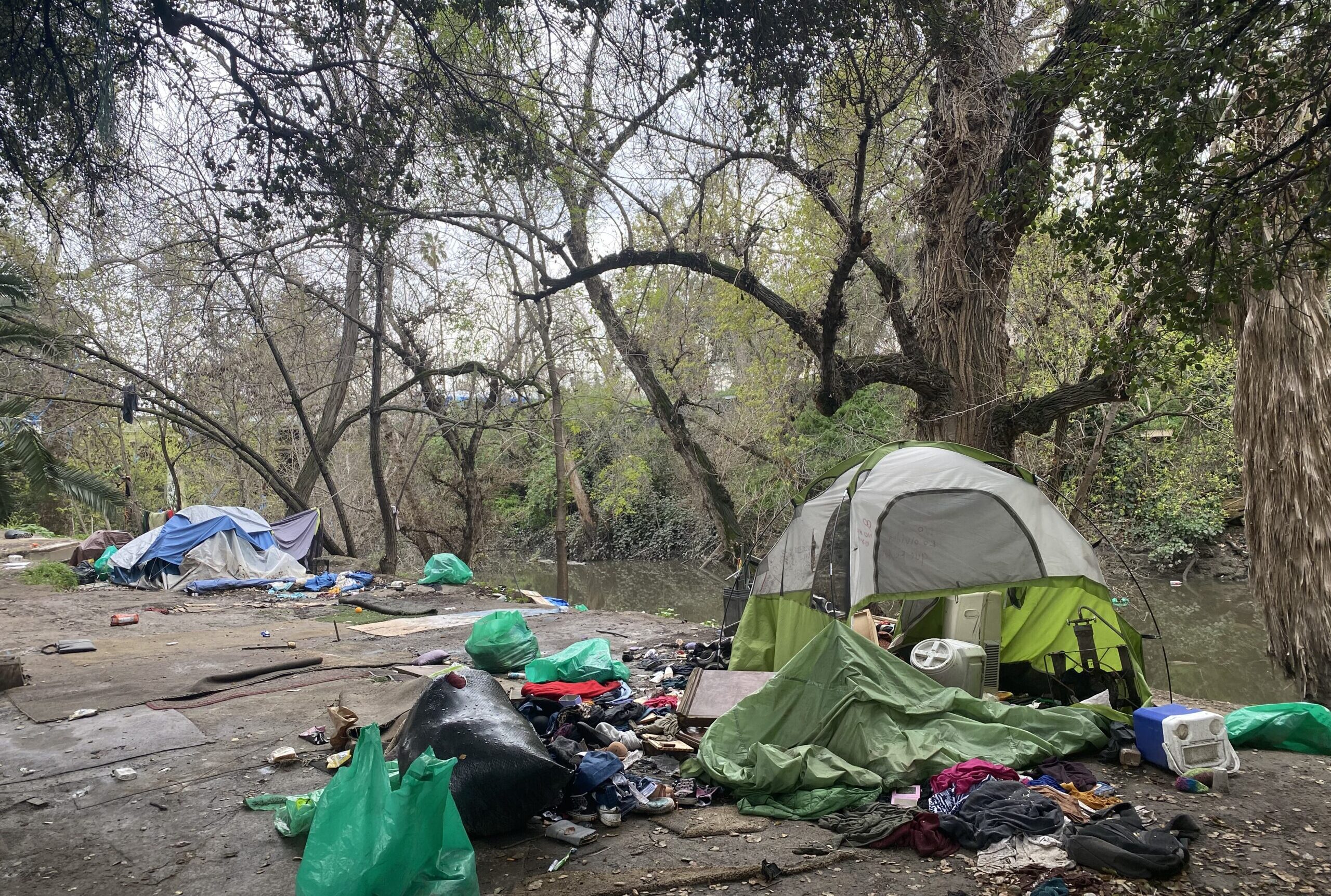
The tents along Coyote Creek didn’t move. The families sheltering in minivans didn’t disappear. The seniors sleeping in encampments didn’t get a victory parade. Homelessness didn’t care who won on Sunday night.
That contrast is the real Monday morning story.
We just demonstrated — again — that when we decide something matters, we can mobilize staggering resources with ease. Hundreds of millions of dollars in spending. Tens of thousands of visitors. Seamless coordination between cities, law enforcement, businesses, transit agencies and private sponsors. All for a single weekend. All for a game.
This isn’t an argument against football. It’s an argument against the myth we tell ourselves about homelessness.
We say homelessness is too big. Too complicated. Too expensive. But that story collapses under its own weight the moment you watch a Super Bowl leave town.
Ending and preventing homelessness requires money, yes — but not Super Bowl money. It requires consistency, coordination and the political will to invest upstream instead of paying endlessly on the back end. It requires us to treat housing stability like infrastructure, not charity.
Right now, Silicon Valley spends an enormous amount responding to homelessness after it happens: emergency rooms, police calls, sanitation, crisis services and Band-Aid measures. That money doesn’t solve the problem — it manages it. And managing homelessness indefinitely is far more expensive than preventing it in the first place.
A meaningful response for people looks almost boring by comparison. A few thousand dollars to stop an eviction. Short-term rental assistance after a job loss. Supportive housing for people with disabilities. Basic furnishings so someone exiting homelessness doesn’t sleep on the floor of an empty apartment.
None of that comes with fireworks or halftime shows. But it works.
We know this because the organizations doing the work see it every day. When people get housed with the right supports, emergency costs drop. Hospital visits decline. Encampments shrink. Kids stay in school. Employers get workers back. Neighborhoods stabilize.
That’s not ideology. That’s return on investment.
And here’s the part we don’t like to say out loud: the resources exist. They always have. What’s been missing is urgency.
The Super Bowl gets urgency because it’s finite. It has a date on the calendar. Homelessness feels endless, so we treat it like background noise. We fund it just enough to keep it from boiling over, but never enough to end it.
Imagine if we treated homelessness like we treated Sunday’s game. Imagine a countdown clock. Imagine clear goals, timelines and accountability. Imagine public and private dollars aligned toward prevention instead of spectacle.
What if we decided that keeping people housed mattered as much as hosting a championship?
On Sunday night, one team hoisted a trophy. On Monday morning, Silicon Valley returned to business as usual. That should bother us — not because the Super Bowl happened, but because of what it reveals.
We are capable of bold, coordinated action. We simply reserve it for moments that feel celebratory rather than necessary.
Homelessness isn’t a mystery. It’s a policy choice, reinforced every time we spend freely on temporary excitement while rationing long-term solutions. The real question this week isn’t whether the Super Bowl was worth it.
It’s whether we’re willing to apply that same ambition to the people who never got to leave town when the crowds did.
Because unlike the Super Bowl, homelessness doesn’t end on Sunday night.
And unlike football, losing this game just isn’t an option.
San José Spotlight columnist Ray Bramson is the chief operating officer at Destination: Home, a nonprofit that works to end homelessness in Silicon Valley. His columns appear every second Monday of the month. Contact Ray at [email protected] follow @rbramson on X.
Leave a Reply
You must be logged in to post a comment.