


|
Getting your Trinity Audio player ready...
|
The next “Dying to Stay Here” podcast will feature a panel discussing what we call our criminal justice system. The panel reflected on a recent election in California, where voters were asked, in plain language, whether they wanted to remove slavery from our constitution, where it’s still allowed “as punishment for a crime,” and voted to keep it.
As we celebrate another Black History Month, I reflect on the disproportionate number of Black people behind bars. That’s not past history — that’s right now, and it tells you this system still claims the right to capture Black bodies, chain them and call it justice.
When I sat down with the panelists — Ray Goins, a man who spent most of his adult life in prison; Keeonna Harris, an author, mother and wife of an incarcerated man; Damon Silver, a public defender; Dan Okonkwo, a Santa Clara County prosecutor; and Sean Allen, and a former cop turned civil rights leader — I wasn’t just moderating a panel. I was asking a Black History Month question in real time: For Black folks who are generations removed from slavery on paper but still treated as recapturable in practice, what does “justice” really mean?
A key question: With Black and Latino incarceration and arrest rates so high, are we just more prone to criminality?
Formerly incarcerated community leader Ray answered with his life story. From age five, when police gave him the “criminal experience” for stealing at school, he felt hunted, never invited to imagine a future beyond prison or death. Damon, the public defender, pointed to what the numbers really show: Not some genetic tendency toward crime, but “outcomes” produced by a broader system that reliably overrepresents Black and brown people in jails and prisons at every level, local, state and national.
Keeonna went further, naming what she called a “larger project” that began when slavery ended and reemerged as Black codes, Jim Crow and a criminal legal regime where “anything that we do is criminal.”
If you want to understand disproportionality, you have to start where the system starts: with who the police choose to see. Damon noted that diversion programs, especially for youth, are far more robust in affluent communities, which means many white kids never even arrive at the DA’s door for the same behavior that gets Black and brown kids suspended, expelled or arrested. He reminded us that we don’t flood college campuses with narcotics officers, even though research shows heavy drug use there. Instead, our enforcement resources are deployed in poor communities of color.
Sean, who has worn a badge and now leads the NAACP San Jose/Silicon Valley, called that pattern by its name: overpolicing. He described being explicitly trained to police differently in affluent white neighborhoods than in communities of color, and now watches unhoused people learn which cities will jail them on sight and which will merely move them along.
In San Jose, we’ve layered a “requirement to shelter” for our unhoused neighbors on top of this, in a county where Black people are roughly 2% of the population but 19% of the unsheltered, and arrest rates for Black residents are at epidemic levels — a policy architecture that will create a new prison pipeline for Black and brown people if we let it.
When our conversation turned to “charging” what crimes get filed and with what sentences, the tension in the room jumped. Veteran prosecutor Dan insisted that in Santa Clara County, charging decisions are “statistically race neutral,” citing internal and Harvard studies, and procedures that strip race from case packets before attorneys review them.
Ray wasn’t having it — he answered with the roll call from our own jail: People doing 30 years on probation violations, a man serving 25 to life for stealing candy, Black and brown faces packed into every pod he’d ever been housed in.
Damon tried to hold both truths at once. He was clear that he doesn’t see Dan or most people in these agencies as consciously racist, but he refused to pretend the outcomes aren’t racialized. The question, he argued, isn’t just individual intent. It’s the impact of implicit bias across a system where every upstream decision from who gets stopped to who gets diverted shapes who arrives at the DA’s desk. California’s new Racial Justice Act, he said, is finally giving defenders tools to test whether “race-neutral” charging really is what it claims to be, but the analysis is complex and ongoing.
When asked what all this is for, Dan reminded us the stated goal of the system is public safety and that victims, disproportionately Black and Latino themselves, also deserve justice. He talked about pre‑filing diversion and community grants as ways his office is trying, within its limited mandate, to keep people out of the system or invest in harmed communities. But Damon offered an image that’s hard to shake: incarceration, he said, is the “sugar high” of the system. It can make victims and the public feel better in the short term by translating harm into a number of days in a “cement closet,” but it does almost nothing to keep that harm from happening again.
Damon noted that the vast majority of people we lock up are coming home. We send them back with no housing, limited access to work, civic rights stripped and the fabric of their communities shredded by mass incarceration. And then we act surprised when people struggle to rebuild.
If the purpose of a justice system is to repair harm and build safety, then what we have is misnamed. Right now, we operate a capture‑and‑release machine that reliably recaptures the same people and neighborhoods while failing both those accused of crime and those harmed by it.
Everyone at that table works in or around this system, often doing our best from inside our lanes. But until we are willing to admit that the system we inherited was designed to inhibit Black freedom, not protect Black life, we will keep trying to fine-tune a machine that’s doing exactly what it was built to do.
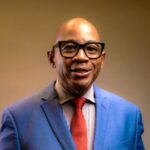
Chuck Cantrell is an economist, San Jose planning commissioner and creator of “Dying to Stay Here,” a video and podcast series that explores the entrenched economic and social barriers facing Black communities in Silicon Valley. His columns appear every third Thursday of the month. Contact Chuck at [email protected].
Leave a Reply
You must be logged in to post a comment.