


|
Getting your Trinity Audio player ready...
|
The price of housing in Mountain View has gotten so high that the City Council is now looking for ways to help people earning up to nearly $275,000 a year afford a home, with the limit going higher for couples and families.
Last week, the City Council reviewed a plan that staff has been developing to try to expand homeownership opportunities for the so-called “missing middle,” moderate-income residents who typically make too much to qualify for subsidized housing but still struggle to get a foothold in the real estate market. Recognizing the high cost of housing, city staff recommended targeting support at those earning up to 200% of the area’s median income.
In Santa Clara County, the median income for an individual is $136,650, according to state data. That means that someone earning up to $273,000 annually would fall into the income bracket that the city is looking to find ways to assist. For a couple, 200% AMI equates to $312,300 annually. For a family of four, it’s $390,400.
The City Council backed the staff’s recommendation, which also included a particular focus on encouraging condominium developments.
“I’m very excited to be talking about expanding our portfolio and what we can offer for homeownership,” Mayor Ellen Kamei said at the Dec. 16 council meeting. “No matter where someone is in their housing journey, I want them to feel like they can do that here.”
Currently, homeownership is far out of reach even for families earning well above the area median income, according to Julie Barnard, the city’s affordable housing manager.
A two-bedroom condo in Mountain View costs an average of $972,000. For a two-bedroom rowhome or townhouse, it’s $1.3 million, according to a city analysis
“Although the numbers start to pencil out on paper at around about 150% AMI, this does not reflect the real hurdles that home buyers face, such as saving for a 20% down payment, competing in bidding wars and qualifying for financing in a very volatile market,” Barnard said.
A couple earning 150% AMI could generally only afford a house costing up to $750,000, according to the council report. If they earned 200% AMI, they could buy a place costing up to $1.07 million.
Another challenge facing prospective homebuyers in Mountain View is the city’s housing supply. Approximately 60% of total housing units in Mountain View are rentals while 40% are ownership units, the council report said. In most cities, that proportion is inverted.
City looks to encourage condo development
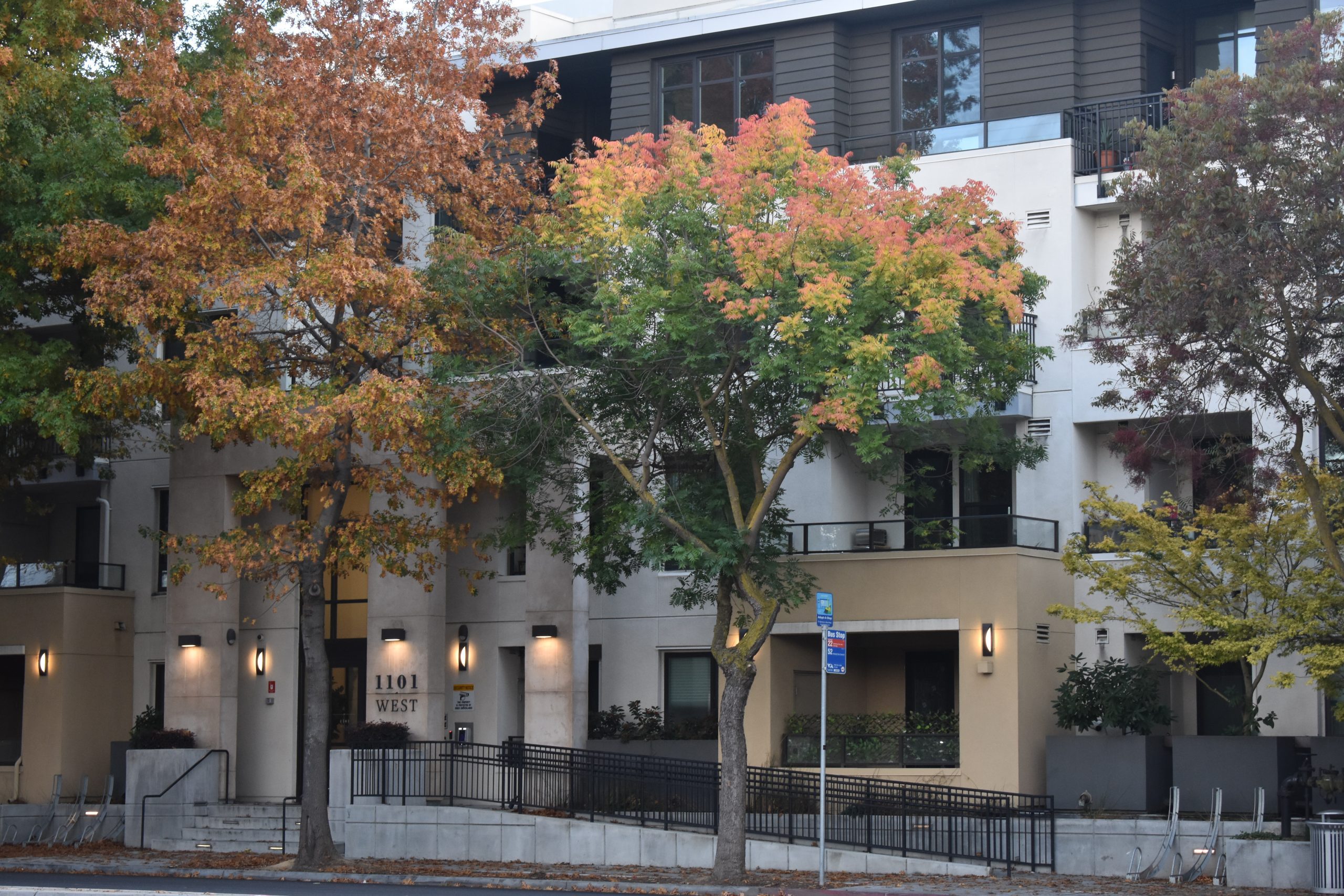
For those looking to buy a home, condominiums are often seen as the most attainable path to ownership. Typically smaller in size, condos have a lower price point than rowhomes, townhomes and single-family homes. They also are well-suited for first-time buyers and older adults looking to downsize, according to the council report.
The issue is that Mountain View has not seen a lot of condominium construction. Developers generally have preferred to build rowhouses and townhomes, which are pricier than condos and tend to yield a lower number of units. One recent exception has been a proposal for a 195-unit rowhouse development in East Whisman.
As Bernard noted, the city can’t force developers to build ownership units, as opposed to apartments. There are other challenges to getting them built as well, like construction costs, insurance requirements and a state law that protects buyers from bearing the cost of fixing defects in newly-built homes.
“It does seem like every time you talk to a builder about condos, construction liability is the first or second thing out of their mouth,” Council member Pat Showalter said.
On the flip side, the council report highlighted ways the city could facilitate the construction of more condos. City staff plan to take a close look at development standards, regulations, approval processes and fees that could offset or reduce some of the barriers to getting condos built.
Council and public weigh in on homeownership strategy
On the whole, the City Council supported the plan for a homeownership strategy, describing it as a positive step forward for the city.
The strategy sets out seven specific tasks, including information gathering, community outreach and exploring funding and partnership opportunities. The city also plans to evaluate the feasibility of developing a city-owned site in North Bayshore as an affordable homeownership project.
However, Council member Lucas Ramirez questioned whether it was necessary to do so much planning for a plan.
“I’m happy to support it,” Ramirez said. “Do we really need to do it, though? Can we just start doing the work?” he asked.
A few public commentators also questioned whether a focus on homeownership would detract from some of the city’s other housing priorities.
“We shouldn’t be looking necessarily at home ownership as opposed to rental units,” said Mountain View resident Daniel Hulse. “It should really be about enabling homeownership where rentals wouldn’t really make sense.”
Hulse urged the council to take a close look at AB 1033, a state law that enables homeowners to sell accessory dwelling units separately from the primary residence. It would require a local ordinance to implement it but could increase the number of starter homes in the city, he said.
Responding to some of these concerns, Council member Emily Ann Ramos noted that the homeownership strategy was not detracting from the city’s other affordable housing priorities and instead was filling a gap.
“I am addicted to Zillow,” she said. “The current ownership market right now does not meet the needs of those who are making even 120% AMI.”
Other council members agreed, backing the city’s plan to explore more homeownership opportunities with some also expressing interest in a local version of AB 1033.
City staff will bring the strategy back to the council for adoption at the end of next year, according to the council report.
Leave a Reply
You must be logged in to post a comment.