


|
Getting your Trinity Audio player ready...
|
In light of the regional economy downturn, federal cuts and an uncertain political future for the country, Palo Alto leaders are staring down the barrel of years of budget deficits totaling more than $80 million, according to a new financial forecast.
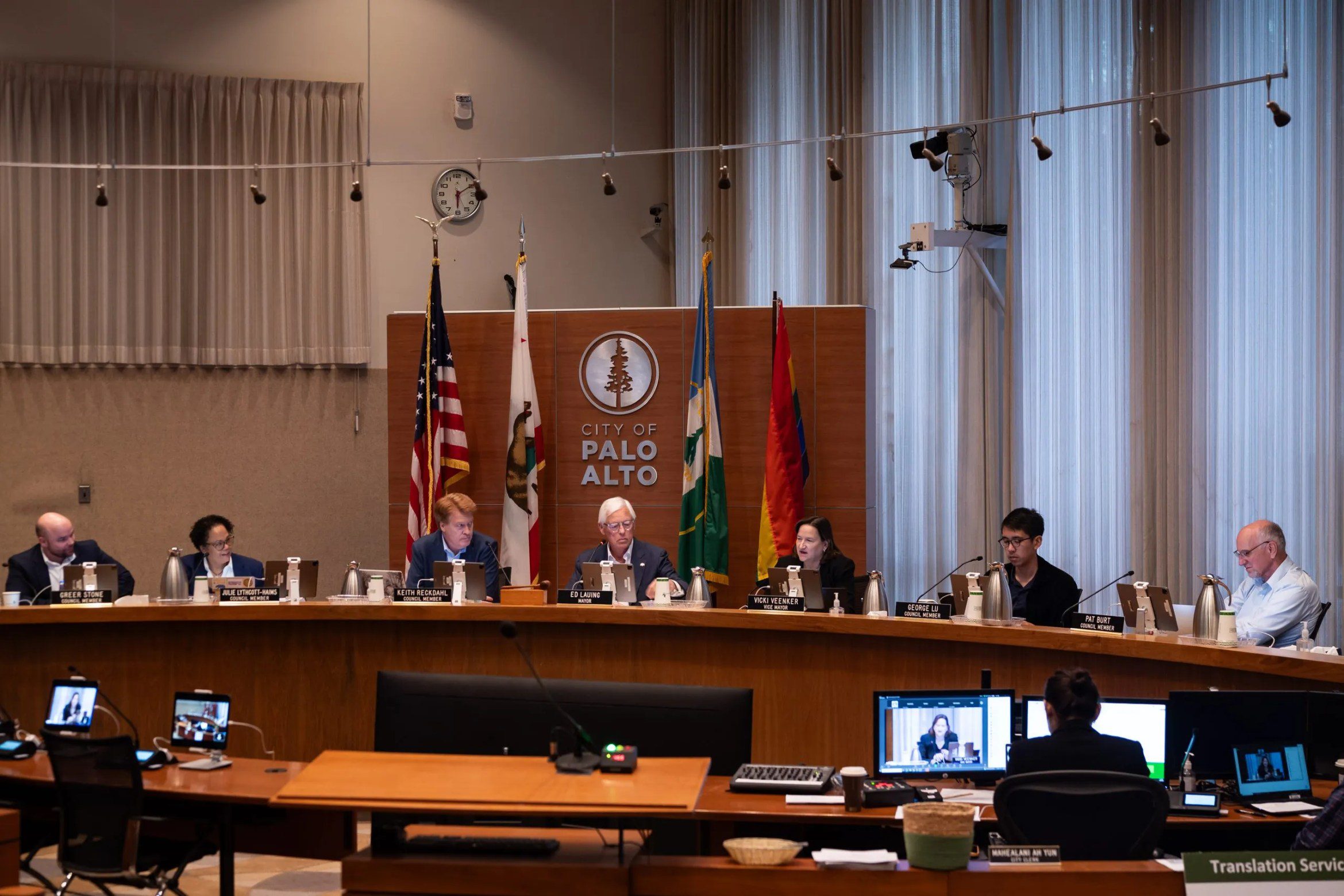
While the budget allocation process doesn’t truly begin until next month during the mid-year review, the City Council received an update Tuesday about the Long-Range Financial Forecast that plans for the next decade of city revenue and expenditures. The forecast predicts a $14.9-million deficit for the next fiscal year, and deficits remaining in the double-digit millions until fiscal year 2032. Palo Alto isn’t expected to emerge with a surplus in revenue until fiscal year 2033, according to the forecast.
Overall, city staff described the issue as a structural outpacing of spending over revenue growth, driven largely by personnel costs and long-term liabilities such as pensions.
“We are in a changing landscape, financially,” Palo Alto Chief Financial Officer Lauren Lai said during a presentation to the council. “While prior forecasts did show deficits in the general fund, this forecast does show a greater challenge specifically driven by lower sales tax and property tax.”
According to Jonathan Rewers in the Office of Management and Budget, the city is “currently managing a disconnect between a strong national economy and a sluggish regional economy.” He explained that while property taxes remain a stable revenue source for the city, sales and hotel taxes are more volatile. The sales tax in particular is subject to modified state regulations that limit the take-home value for Palo Alto, forcing the city to adjust its models going forward.
For example, Rewers said the city can expect to lose between $8 million and $9 million from sales tax revenue due to changes in the auto leasing sector.
To address the most pressing deficit next fiscal year, the forecast presents a balancing strategy that includes additional budget reductions, capital improvement project deferrals and a transfer of $2 million from the budget stabilization reserve to manage some of the fallout. Those strategies, in addition to an expected increase of $800,000 in revenue, would eliminate the fiscal year 2027 deficit. The city council will strategize further during the budget development process that begins in May.
“This forecast assumes zero new positions, flat head count, over the 10-year horizon,” Rewers told the council. “The expenditure growth you see is purely the rise in cost of our existing workforce due to approved labor contracts and pension liabilities, not an expansion of government or community services in any way.”
The council discussion shifted to the city workforce, recalling similar conversations last year when the council was tasked with finding $6 million in savings to bolster the city’s emergency reserves. One of the primary strategies back then was to cut vacant positions to save on cost, but the council scaled back the cuts in order to preserve some positions in the Police Department, City Manager’s Office and the Junior Museum and Zoo.
The city council may soon find itself under a similar pressure to cut vacant positions — a strategy that Councilmember Keith Reckdahl said he would prefer to layoffs.
“That will be a high, high priority to remove vacant positions and not remove workers,” Reckdahl said. “I think we can make the cuts that we have to do without laying off people.”
The council previously also found a number of cuts by deferring some lower-priority capital improvement projects to future years, which may have to happen again to preserve the cost-savings as expenditures increase.
Additionally, the city is trying to maintain 18.5% of the general fund in the budget stabilization reserve. By the beginning of fiscal year 2027, the reserve is anticipated to be at $56.8 million. In light of the economic unpredictability locally and nationally, Mayor Vicki Veenker said she feels “even more resolved” to have the reserve protection in the city’s back pocket.
The council will return in February to discuss the mid-year budget for fiscal year 2026, and then again in May to plan for strategies for fiscal year 2027 budget balancing. In the meantime, city staff will conduct additional fee studies and financial plans.
“It gets worse and worse every time it comes before us, but I always at least feel comfort in knowing that we have such a strong team working on it,” Vice Mayor Greer Stone said.
This story originally appeared in Palo Alto Weekly. Riley Cooke is a reporter at Palo Alto Weekly and Palo Alto Online focusing on city government.
Leave a Reply
You must be logged in to post a comment.