


Dozens of people living in RVs are scrambling to find another location after San Jose cleared out Columbus Park.
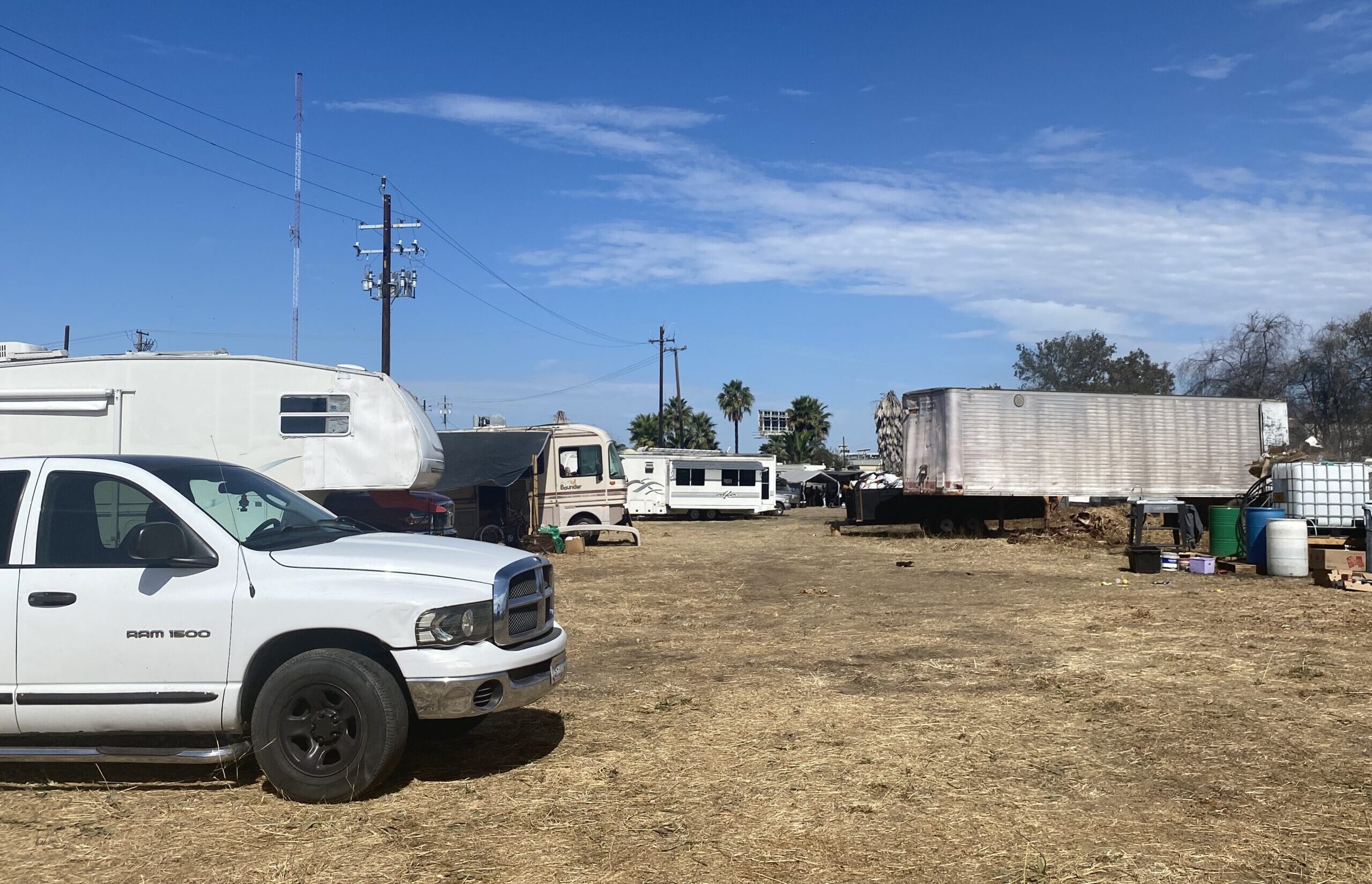
Last month, the city started sweeping Columbus Park where roughly 370 people lived in tents, vehicles and makeshift shelters. By Sept. 15, the park had been completely cleared and the city installed fences to prevent re-encampment. The city moved about 200 people from the park into motels recently converted into homeless housing, but some people chose not to give up their RVs. A tight-knit community of about 40 Latino residents relocated their 21 RVs to an empty lot owned by Kellanova, formerly known as Kellogg.
The lot by Highway 101 and East Taylor Street was scheduled to be swept Thursday morning, but police postponed the sweep until 5 p.m. after advocates pressed for more time.
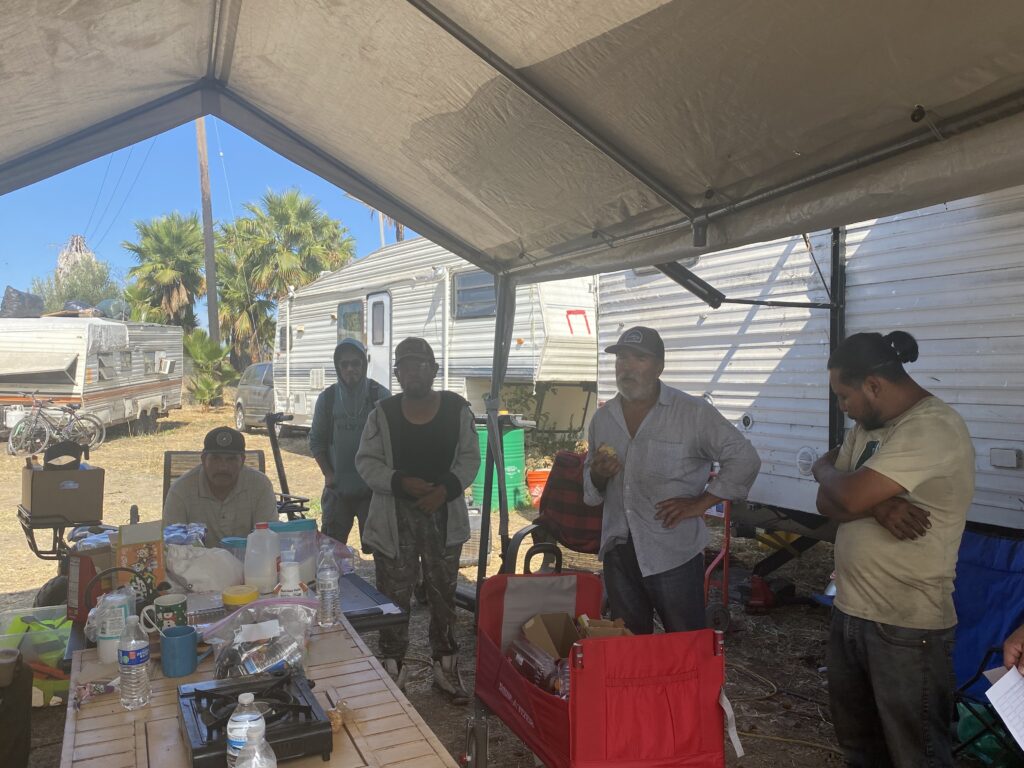
Santa Clara County Supervisor Betty Duong, whose District 2 includes the Kellanova site, said her office received notice of the sweep less than 24 hours before it was supposed to happen. Duong arrived at the property Thursday morning to work with advocates, police and property owners to come up with a plan to safely move the people and their RVs. So far, they’ve been able to find five safe parking spaces.
As of Thursday, RVs have moved from the Kellanova property to another part of the city. Some residents are still seeking a permanent site for their RVs.
“Unfortunately, the sad reality is that all the sites are full to capacity,” Duong told San José Spotlight. “We don’t have enough safe parking sites, so we’re looking for where we can find spots for them right now, because we don’t want them to be in neighborhoods and have further conflict with other residents. We want them to be in safe spaces where we know we can provide them with support and continue their road to permanent supportive housing.”
San Jose has two safe parking sites, one at the Santa Teresa VTA light rail station, which has 42 spaces, and the other at Berryessa, with 86 spaces, which are both full. There are more than 1,000 lived-in vehicles in the city.
Amanda Flores, a homeless resident who moved from Columbus Park to the Kellanova lot, said she feels frustrated with constantly being on the move. She said they are doing everything to keep the space free of trash, have created community rules, share food with one another and look out for each other. The residents have cleared the lot of weeds.
“(Kellanova doesn’t) care about this property. We were maintaining it, it wasn’t like Columbus Park,” Flores, 43 told San José Spotlight. “And they are separating us, we’re a community. I can’t be stable, everywhere we go they are kicking us out.”
Kellanova did not respond to a request for comment.
Earlier this year, San Jose swept dozens of people living in RVs and tents who were encamped next to the future home of a Microsoft data center site, leaving them with no place to go.
Flores said she doesn’t want to part with her RV and the motels that San Jose has converted into homeless housing won’t allow her to keep her eight pets.
Advocates and outreach workers from nonprofits HomeFirst and Amigos de Guadalupe worked with the residents to come up with a compromise. HomeFirst workers signed people up for motel rooms.
Amigos de Guadalupe Organizing Manager Misrayn Mendoza said they are exploring better options for the residents. One possibility is to place them in motels and put the RVs into temporary storage.
Flores said the city needs to build more affordable housing instead of spending it on converting motels. Many people are struggling to pay rent even with a job, including the RV residents, she said.
 The 2025 homeless count conducted in January reports more Santa Clara County residents are falling into homelessness for the first time as the cost of living rises.
There are a record 10,711 homeless people living in the county this year. The county surveyed 1,534 homeless people during that time and 58% reported being newly homeless, according to recently released data. That’s almost double the 34% of people who reported being homeless for the first time during the previous count in 2023. The loss of a job or income is the primary reason people report becoming homeless.
“More people are becoming unhoused,” Flores said. “It could happen to anyone.”
Contact Joyce Chu at [email protected] or @joyce_speaks on X.
Leave a Reply
You must be logged in to post a comment.