


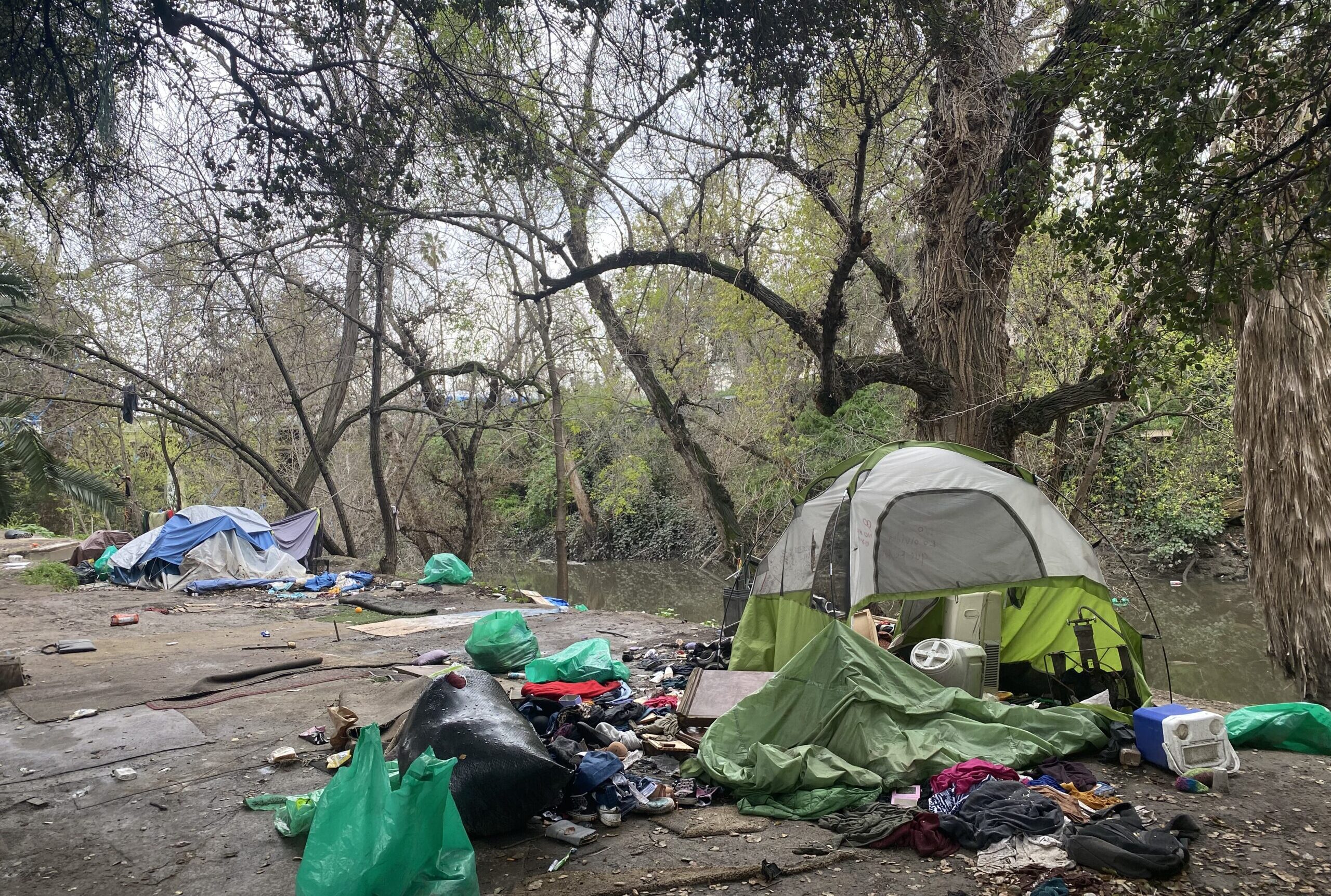
Despite Latinos making up a large portion of the Santa Clara County’s homeless population, the group tends to be invisible.
The Latino homeless population has exploded over the years. In 2007, Latinos made up 28% of Santa Clara County’s homeless residents, peaking at 47% in 2022 — they’re now 40% of the homeless population, according to a 2023 point in time count.
The group faces unique challenges that lead them into homelessness, including underemployment, according to a 2023 study of homelessness in California by the UCSF Benioff Homelessness and Housing Initiative. Dr. Margot Kushel with the initiative said homeless Latinos are often undercounted due to factors such as language and technology barriers, as well as a hesitancy to engage in services.
In addition, Latino households can live under one roof with extended family or other households. When the person on the lease gets evicted, everyone else gets thrown out too.
“There are issues of under counting,” Kushel told San José Spotlight. “If you’re living in a really crowded, unsustainable environment with people, technically you don’t count as homeless. But if you’re the 14th person in a one-bedroom apartment, at what point does that experience count?”
Latinos live in poverty at double the rate of other families in Santa Clara County, according to a recent county health assessment report. From 2017 to 2021, Latinos’ per capita income was $31,662, less than half of what it was for all county residents. In addition, Latino renters were more cost-burdened, at 57% compared to 45% of all households renting. Fewer Latinos said they lived in a stable environment.
“It’s important in our work that we look at the structural disparities,” Maritza Maldonado, founder of nonprofit Amigos de Guadalupe, told San José Spotlight. “From redlining, to schools, to food access to Mayfair being 10% hotter than other places because of no trees in our neighborhoods. Systems continue to just impact our community in very different ways.”
Hilary Armstrong, deputy director for the Santa Clara County Office of Supportive Housing, said the county is aware of the challenges that disproportionately affect Latino residents and is working with community partners to address the disparities.
“The county requires providers to ensure language access, emphasizes the need to hire bilingual and bicultural staff and works with staff to ensure that they are trained to understand the unique needs and vulnerabilities of this population,” Armstrong told San José Spotlight.
Working toward change
Amigos de Guadalupe is working to close some of the structural gaps. The nonprofit provides rental assistance, runs three hotel programs that provide temporary shelter, operates several tiny homes and has four safe parking sites to allow people spaces to park their vehicles without fear of getting towed. Most importantly, the group has been intentional about meeting the needs of this population.
“Our folks like to meet in person,” Aurora Olivares, director of economic empowerment for Amigos de Guadalupe, told San José Spotlight. “And so when agencies say, ‘Oh, call us,’ it seems it’s a deterrent. Our door is open. People walk in, they get greeted. We are client centered.”
Olivares said Amigos does door-to-door outreach and education around tenant rights. The group encourages residents to obtain a written lease agreement, even if they are renting out a room or subletting, so there is protection and they can qualify for rental assistance.
Laura Delgado, housing programs director for Amigos de Guadalupe, said knowing there are people who speak the same language and have the same cultural understanding goes a long way in making people feel comfortable in seeking assistance.
“It makes a huge difference that we speak the language, that we look like them,” Delgado told San José Spotlight. “It’s a safe space here.”
Santa Clara County is also preparing for federal cuts and bolstering resources for the immigrant community. For this fiscal year, the county has replaced $59.6 million in federal funding with local sources, nearly half of which is for supportive housing, Armstrong said. The county has also invested $8 million in immigration legal services, outreach and the Rapid Response Network, an emergency hotline for immigrants.
Some recommendations laid out in the Benioff report include providing legal aid, focusing on anti-discrimination efforts and offering workforce development, since the Latino homeless population tends to be younger. Centering strategies on family reunification is also key, as a large number of homeless adults reported being separated from their children. In addition, creating programs that partner with community-based organizations is essential, as many sought help within their existing social networks — family, friends or religious institutions.
 Due to the communal nature of Latinos, Delgado said everything is done in and through community. Solutions are formed with each other, like two single mothers in Amigos’ shelter program who decided to pair up to rent an apartment.
“Our community has the answers already,” Maldonado said. “They’ve converted their living rooms into a rental, they’ve had the comadre live in the RV in the back. So our community is finding their own solutions to their own problems, but we live in hope every day, we live in si se puede every day here.”
Contact Joyce Chu at [email protected] or @joyce_speaks on X.
Leave a Reply
You must be logged in to post a comment.