


Santa Clara County and a coalition of 10 other local governments and nonprofits are filing a lawsuit against President Donald Trump’s administration for upending federal grants for permanent housing.
The lawsuit, filed Monday, alleges changes the U.S. Department of Housing and Urban Development (HUD) has made to federal Continuum of Care grants are unlawful and go against Congress’ direction to support proven strategies focused on permanent housing programs. HUD plans to cap permanent housing funds at 30% and shift the rest to temporary housing.
The lawsuit also alleges HUD’s new point system for rewarding the grants — where projects that align with Trump’s agenda will be ranked higher and others that do not meet certain requirements will be rejected from receiving funding — is illegal.
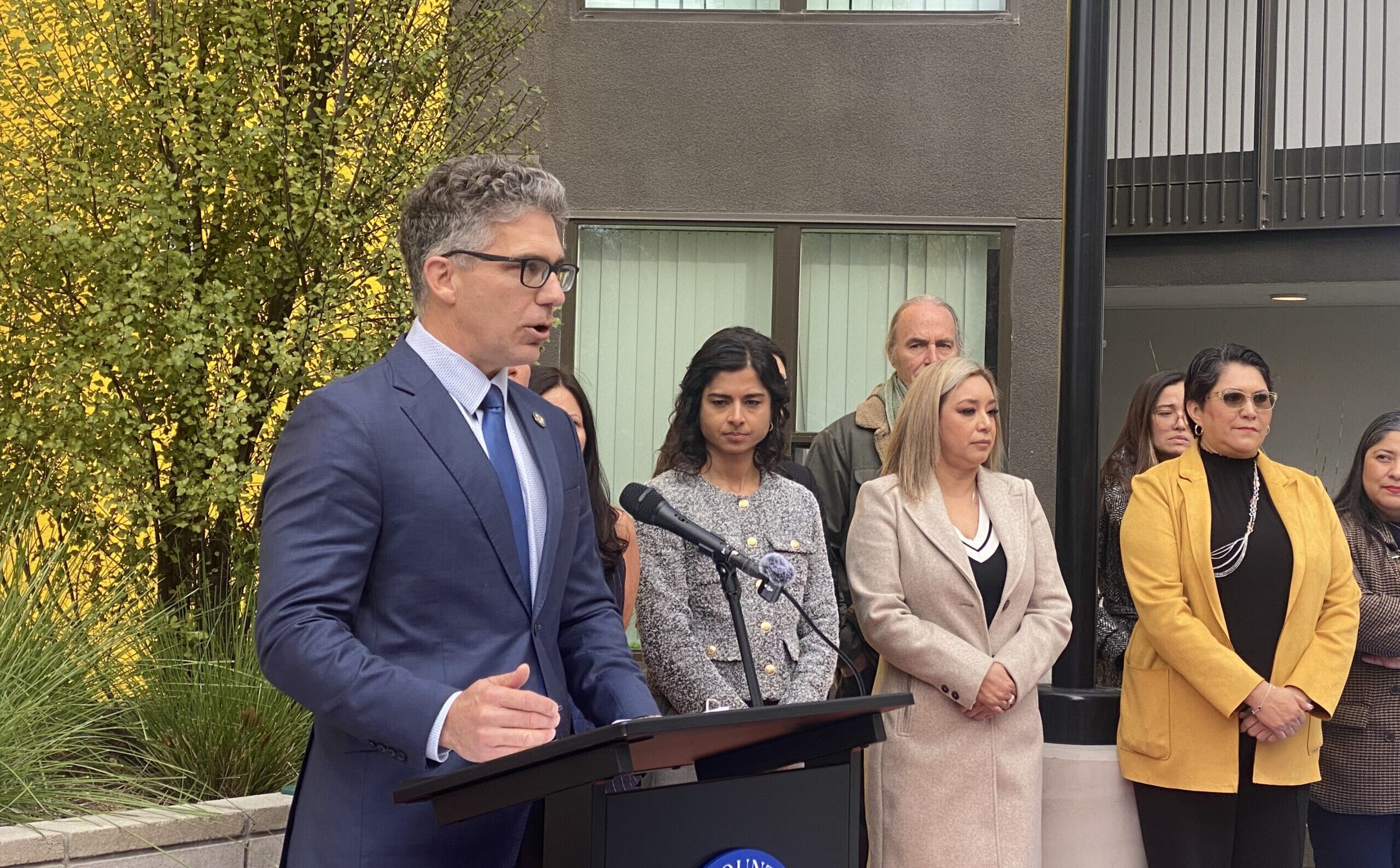
“The president and this administration are attempting to claim and exercise power that belongs to Congress and Congress alone,” County Counsel Tony LoPresti said at a Wednesday news conference. “They are taking action that is arbitrary and ignoring the legally required processes designed to protect our democracy and the rule of law.”
Plaintiffs in the lawsuit include National Alliance to End Homelessness, National Low Income Housing Coalition and the cities of San Francisco and Tucson, Arizona. The coalition is seeking an injunction to stop the rules from being implemented. It’s one of multiple lawsuits Santa Clara County has filed against the Trump administration this year, including one seeking to block an executive order ending birthright citizenship.
LoPresti said that by law, HUD must guarantee a baseline percentage for permanent housing, where the majority of the funding has been historically used. The formula also prioritized renewals of existing grants to provide local governments with a dedicated stream of funding.
However, Continuum of Care grants are now competitive across the nation, rather than previously awarded grants being renewed almost automatically. One criteria for federal funding is a requirement for participants to engage in supportive services such as case management, substance use treatment or employment training. If projects don’t meet a certain threshold, they will be rejected from receiving funding.
“HUD’s new rules penalize local governments and providers that use the data-proven ‘housing first’ model that ensures folks have a home so they can securely address substance abuse disorders, a model that has become a national standard,” LoPresti said.
The county received nearly $48 million in Continuum of Care grants in January to provide rental subsidies and supportive services to vulnerable populations. It also funds rapid rehousing programs, which provides time-limited rental subsidies.
 Funding for future permanent housing programs will be capped at 30%, leaving Santa Clara County with an estimated $33 million hole. More than 1,800 households are at risk of losing their housing, officials said.
“The change carelessly discards years of progress and taxpayer investment,” District 5 Supervisor Margaret Abe-Koga said at the news conference. “It could create a crisis that overwhelms our entire community… the administration’s shift towards short term programs is a costly illusion.”
Contact Joyce Chu at [email protected] or @joyce_speaks on X.
Leave a Reply
You must be logged in to post a comment.