


For most people, walking across a stage in a cap and gown signals the start of adulthood. However, for individuals with intellectual and developmental disabilities (IDD), it too often marks the end of formal education.
Despite the Lanterman Act’s promise of lifelong learning, California stops offering equitable opportunities once students leave high school or vocational transition programs. A handful of pilots at CSU campuses and the UC Davis Redwood SEED Scholars program exist, but they are capped at four years. In California, opportunities for adults with IDD virtually disappear after age 22 — a service cliff that leaves families scrambling for options.
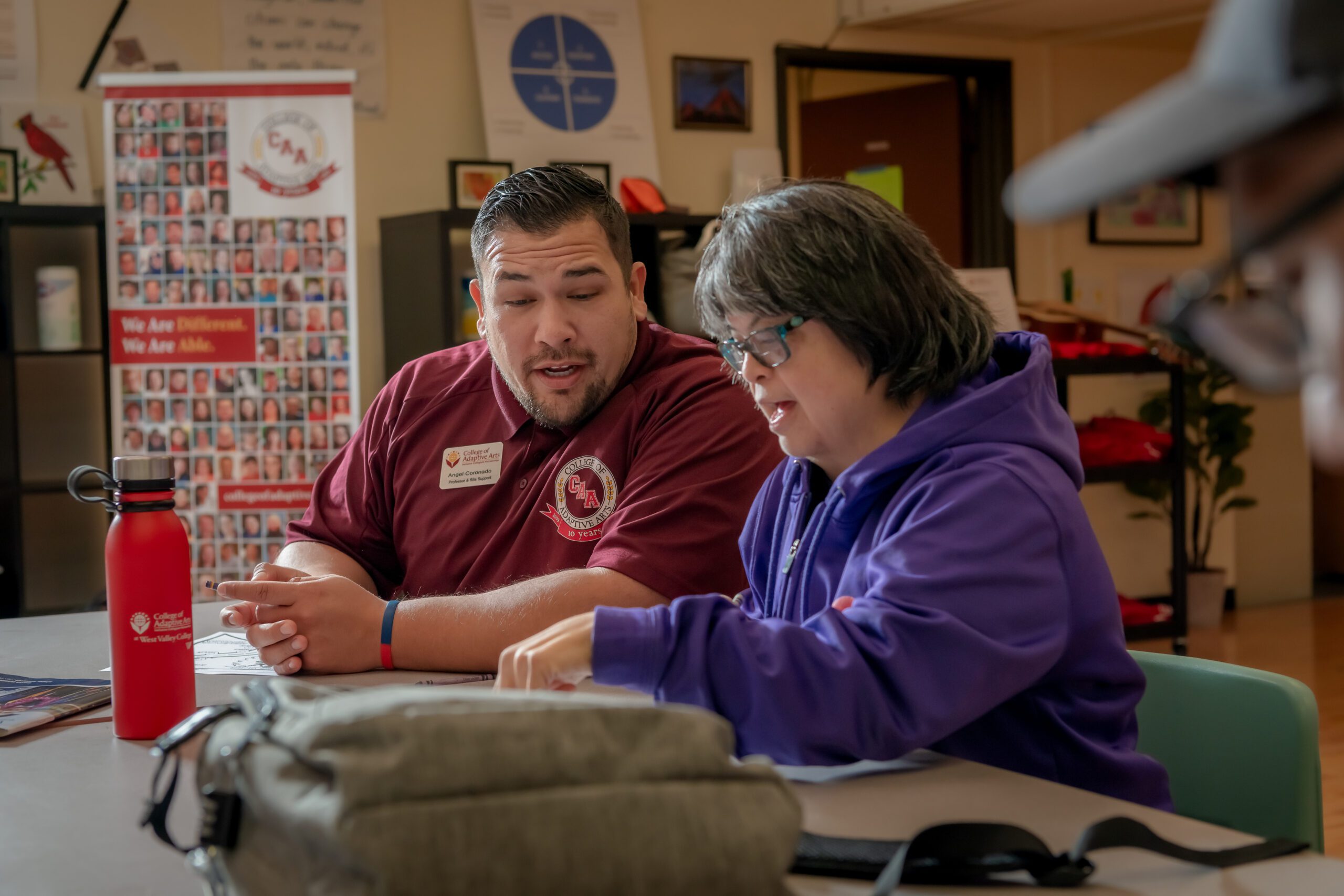
At West Valley College in Saratoga, the College of Adaptive Arts (CAA) is filling this gap with a sustainable model of inclusive, lifelong higher education. More than 270 students take college-style courses — on campus and remotely — in subjects ranging from theater and computer coding to astronomy and photography. Enrollment has doubled in five years, proof of both success and demand.
But this progress rests on shaky ground. CAA relies on a pandemic-era waiver — Assembly Bill 637 — that reimburses online and remote learning. For students who cannot attend in person due to mobility, health or transportation challenges, this waiver has been a lifeline, covering nearly 80% of CAA’s operating costs. Developing accessible online courses, maintaining platforms and providing specialized support all require sustained investment. Yet while the waiver was recently extended, temporary fixes cannot sustain lifelong learning.
Funding is another setback. Reimbursement remains frozen at $27.24 per student hour — a figure unchanged for nearly a decade while costs have soared. Without an increase, CAA must lean heavily on donors, fundraising and corporate support to keep pace with demand.
These students deserve more than outdated rates and short-term waivers. California should commit to permanent, inflation-adjusted funding for adaptive higher education — recognizing adults with IDD as full college students. Adults with IDD deserve the same recognition and support as any other college student.
The stakes are high. In California, only 13.8% of adults with developmental disabilities are employed, compared to more than 60% of the general workforce, and just 17% earn a living wage. Research shows inclusive postsecondary programs improve employment and independence for adults with IDD and are cost-effective over time. By contrast, traditional day programs often cost taxpayers far more, with behavioral day services at a 1:1 ratio exceeding $100,000 per person annually under state rate models. Because these programs are funded entirely through the Department of Developmental Services, taxpayers carry an unsustainable financial burden.
Investing in programs like CAA will not only save taxpayers money in the long run, but will create stronger communities where adults with IDD can have more independence, autonomy and opportunity.
California has the chance to lead the nation in making adaptive higher education permanent, sustainable and inclusive. Every adult, no matter their ability, deserves the chance to keep learning. Let’s build a system that makes that possible.
Nicole Kim is executive director of the College of Adaptive Arts.
Leave a Reply
You must be logged in to post a comment.