


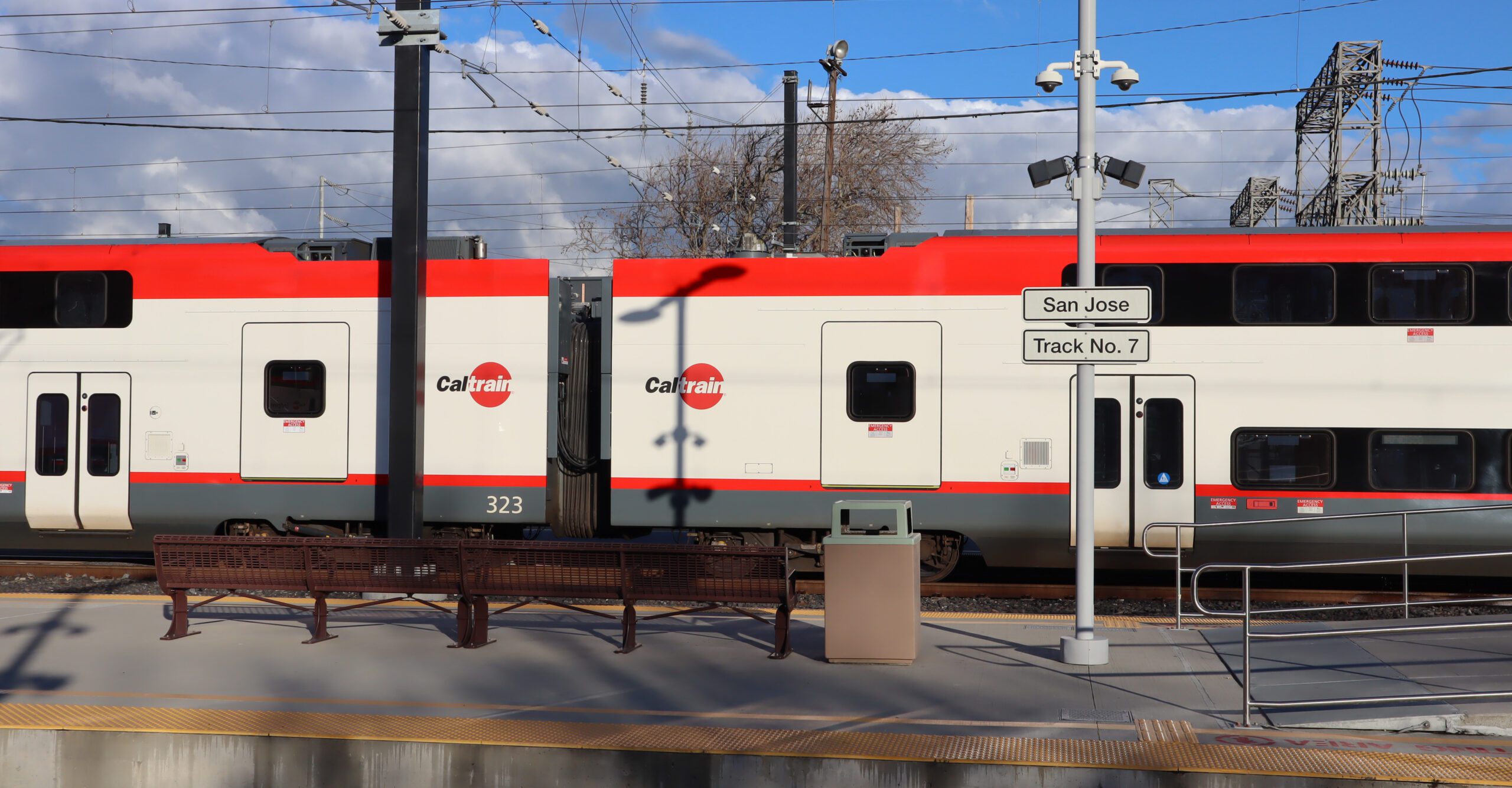
Last September, I took the very first train on Caltrain’s opening day of electric service. After decades of advocacy, hard work, setbacks, and doubts, it finally happened. That moment zooming up the peninsula on a quiet eclectic train felt historic, and now — just under a year later — the results are undeniable.
In July, Caltrain carried more than 40,000 riders on an average weekday, a 72% increase compared to last year. For the first time since the pandemic, which crippled transit ridership nationwide, monthly Caltrain ridership hit 1 million trips.
But this story is about more than trains. It’s about proving something larger: California can still do big things for transit, even when powerful voices tell us we can’t.
Today, that lesson is even more urgent. Under President Trump, California has faced constant attacks. Transit funding has been threatened for projects like high-speed rail, environmental protections have been rolled back and our state and governor have been singled out as a punching bag in national politics. Over and over again, Trump has threatened to cut funding for California infrastructure — making it harder for us to build projects we desperately need.
And yet, we’re still making projects happen. The success of Caltrain’s modernization shows anything is possible when communities and local leaders never give up. Despite federal hostility and political obstacles during Trump’s first term, when Caltrain received a full funding grant agreement for electrification, California moved forward anyway. The results are clear: faster trains, cleaner air and tens of thousands of riders coming back every day.
That’s the message we need to carry into the fights ahead. Big projects don’t happen overnight. They take persistence, creativity and faith. For years, skeptics said electrification would never happen. As a transit advocate during the pandemic, I heard time and time again that ridership wouldn’t recover. But here we are — with ridership surging and proof that the public will take transit when we build and improve it.
The psychological shift here is just as important as the physical one. Seeing an electric train zooming up the peninsula isn’t just a transportation upgrade — it’s a reminder California can defy the critics and cynics, including those in Washington, and prove progress is possible. That shift in mindset is what we need to power the next big projects like California High Speed Rail.
None of that will be easy. We know Trump will continue to attack California’s priorities, especially when it comes to climate, transit and infrastructure. But if this past year has shown anything, it’s that persistence works. Sometimes it takes decades to make big projects happen, but when we stay consistent and fight for what we want, we can overcome even the strongest opposition.
I’ve spent years riding transit and advocating for local projects, and there have certainly been times when I’ve felt like giving up. But seeing projects like Caltrain electrification come to fruition and be successful is a huge reminder that so much is possible.
As our governor often points out, California’s story has always been about taking bold stances, pushing for progress and proving doubters wrong. In this political moment, that’s not just a hopeful message — it’s a necessary one.
San José Spotlight columnist Monica Mallon is a transit advocate and rider in Santa Clara County. Monica’s columns appear on the first Thursday of every other month. Contact Monica at [email protected] or follow @MonicaMallon on X.
Leave a Reply
You must be logged in to post a comment.