


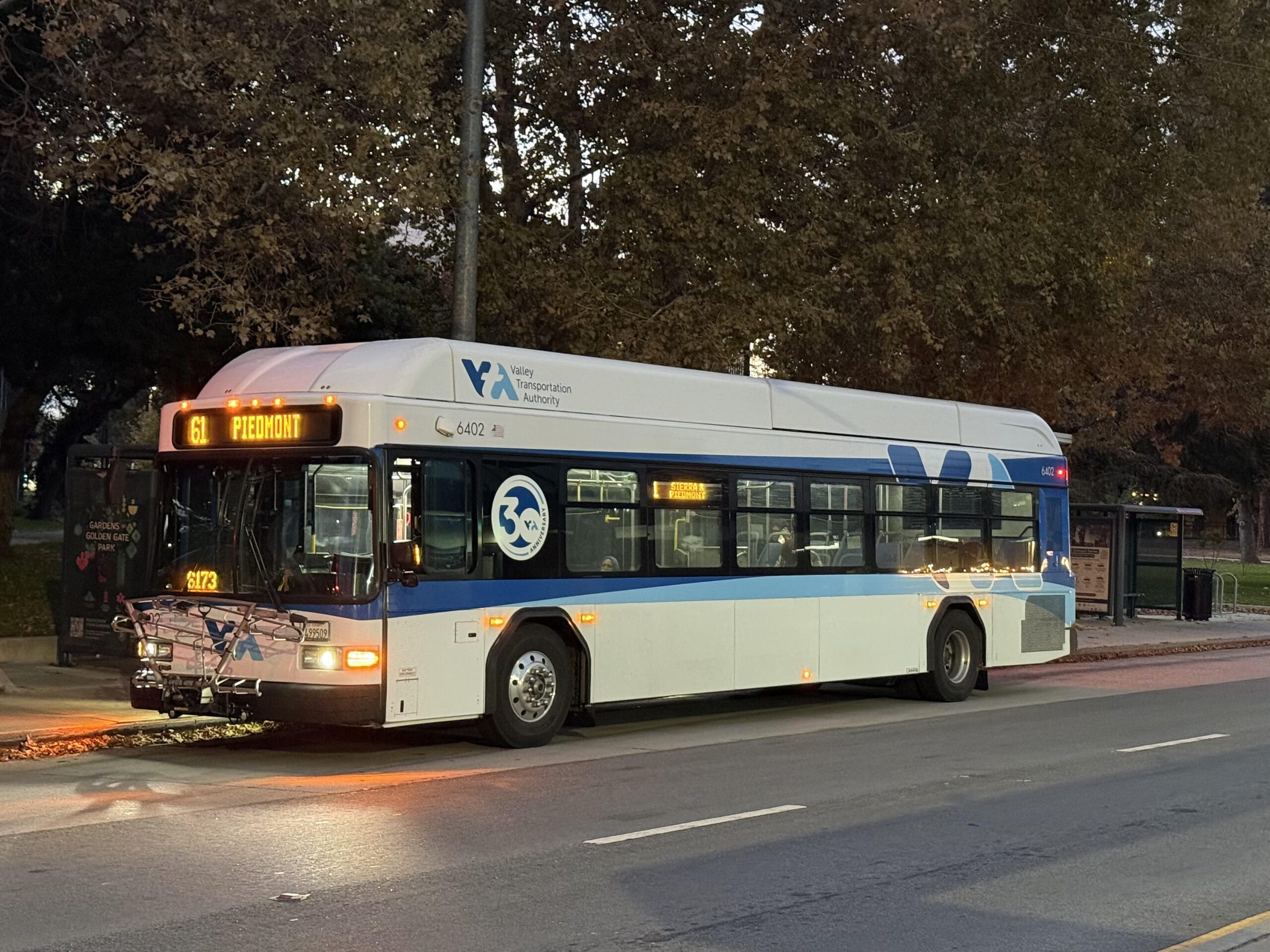
If you’ve ridden a VTA bus or light rail lately, you may have noticed a “VTA 30th Anniversary” logo displayed across the fleet. It’s a small symbol of how far the agency has come and how much work remains to make our transportation system all it can be.
VTA officially became the Santa Clara Valley Transportation Authority in 1995 as a result of a merger between the Santa Clara County Transit District and the county’s congestion management agency. However, as discussed in a previous column, Santa Clara County public transit has an even longer history.
That history truly began in 1972 when voters approved the formation of the transit district, and the first transit district buses rolled out on Jan. 1, 1973. What started as a small county operation has expanded to a transit network serving hundreds of thousands of riders every day and a comprehensive multimodal transportation system.
Those three decades have brought major milestones — from the expansion of bus service to the opening of the light rail system in the 1980s and BART SV Phase I extension to Berryessa/North San Jose in 2020, to the forthcoming BART Silicon Valley Phase II extension that will finally connect to San Jose and Santa Clara. Yet, there have also been numerous challenges.
VTA has dealt with multiple economic downturns, funding shortfalls and service cuts — and more recently, the COVID-19 pandemic, which drastically reduced ridership nationwide. VTA faced another significant challenge last March: its first labor strike in 30 years. For more than two weeks, buses and light rail were shut down, leaving riders stranded and operators without pay. It was a stark reminder of how essential transit is for our riders and region — and how critical it is to ensure the system works for both the public and employees.
Despite those struggles, there’s still reason for hope and optimism. Even with an 18-day service shutdown during the strike, overall ridership for fiscal year 2025 was higher than 2024 — showing just how much riders rely on the service. That resilience reflects not only the dedication of riders and employees, but also a growing awareness that transit is vital for our future.
Looking ahead, VTA’s Visionary Network aims to dramatically expand bus and light rail service — nearly doubling service hours and making transit a more frequent, reliable option for more people throughout Santa Clara County. This, combined with the progress on BART SV Phase II and efforts to improve and modernize the system, could make the next 30 years of VTA even more transformative.
But all of that depends on whether we choose to believe a better future is possible and fight for it.
Building the transportation system our county deserves will take a strong vision, leadership and community support — especially as the current federal administration attempts to stall progress on transit in our state and region. But moments like this anniversary remind us why the future of transportation in Santa Clara County is worth fighting for.
When you see that 30-year logo on a bus, remember that it’s not just to recognize the past — it’s to realize what’s possible for the future if we put in the work.
San José Spotlight columnist Monica Mallon is a transit advocate and rider in Santa Clara County. Mallon’s columns appear on the first Thursday of every other month. Contact Mallon at [email protected] or follow @MonicaMallon on X.
Leave a Reply
You must be logged in to post a comment.