


|
Getting your Trinity Audio player ready...
|
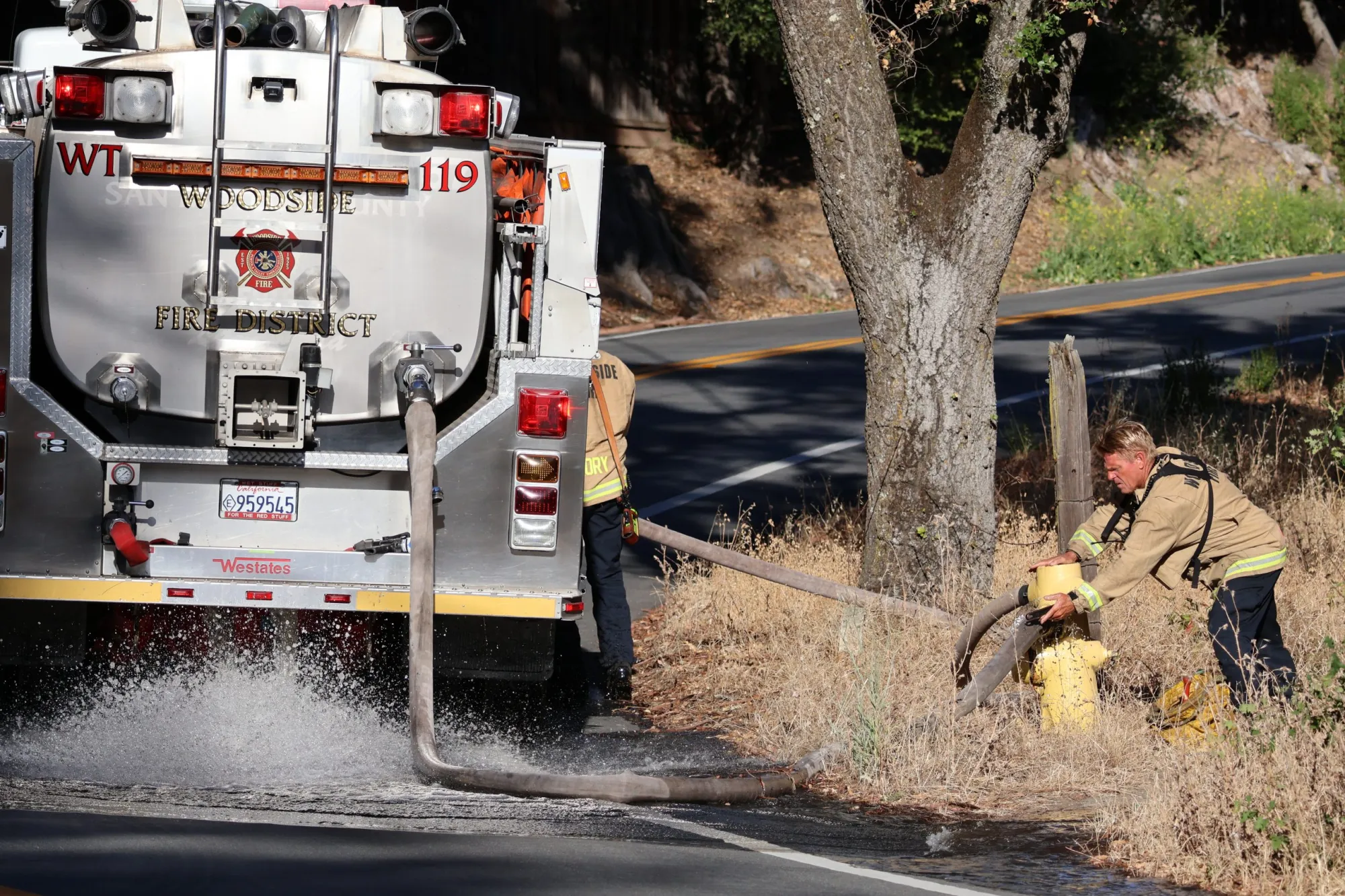
Palo Alto received a stark reminder about wildfire danger on June 22, when about 4 acres went up in flames near Arastradero Road, near the Portola Valley border, prompting a regional response.
The blaze, which began shortly before 5 p.m., was contained within the hour. While there were no structures involved, the areas were temporarily closed to the public through June 30, according to city staff.
While the June 22 wildfire was relatively modest, Palo Alto is in the final stages an ambitious project aimed at protecting residents from a larger blaze: removing all the city-operated power lines in the foothills and burying them.
Kenneth Dueker, director of the city’s Office of Emergency Services, said at a June 30 meeting that the undergrounding of power lines is set to be completed within a month.
Dueker noted that other utilities, including PG&E and Edison, have experienced problems with overhead lines coming down on very windy days, creating a fire hazard. To avoid that, the city has buried about 49,200 feet of electric overhead lines and fiber optic cable, a project that kicked off in 2021 and has a price tag of $11 million.
“Frankly, we the city of Palo Alto, as an electric utility operator, do not want to be the cause of the fire,” Dueker said. “So, a very large and costly effort has been going on, which is basically being completed this month … to remove from the wildland-urban interface these overhead power lines that the city controls.”
The relocation of the power lines is one of several measures that crews from the Utilities, Public Works and Community Services departments are implementing to lower the fire risk. Dueker cited various other strategies the city is employing, including using controlled burns to remove invasive species such as weeds.
“If you have a bunch of impacted leaf litter and detritus and plants growing too close together that’s a recipe for disaster,” Dueker said.
He noted that the June 22 fire at the Arastradero Preserve was witnessed by multiple people, who quickly called it in.
“One of our concerns in public safety is what happens when the same type of ignition starts at 2 a.m., when there no one there to witness that,” he said.
Fire prevention efforts often pick up at this time of the year. Much like in past years, Palo Alto recently opened Fire Station 8 at Foothills Nature Preserve, a seasonal station that the city operates jointly with the Santa Clara County Fire Department. The city has also been clearing vegetation at its nature preserve and ensuring there are fire breaks.
Fire inspectors have also been visiting homes in the foothills to make sure they are adequately prepared for a wildfire, according to Fire Marshal Tammy Jasso.
“It’s a really important way to keep the whole neighborhood safe and it’s also important because our engine companies get familiar with the area in the event that they will return for a fire, especially in the evening,” Jasso said.
During the June 30 meeting, Fire Chief Stephen Lindsey recalled some of Palo Alto’s most severe wildfires: the 1962 Leib Fire that burned about 1,300 acres northwest of Palo Alto, near Skyline Boulevard; the 1985 Liddicoat Fire, which burned more than 1,000 acres between Los Altos Hills and Palo Alto; and the more recent CZU fire in 2020, which burned about 35,000 acres and destroyed forest lands in San Mateo and Santa Cruz counties.
Lindsey touted the importance of protecting “Zone Zero,” the first 5 feet around the house. By reducing flammable materials such as boxes, leaf litter, dried vegetation and furniture and fences touching the house, residents can significantly increase the odds of their homes surviving a wildfire, he said.
This story originally appeared in Palo Alto Weekly. Gennady Sheyner is the editor of Palo Alto Weekly and Palo Alto Online. As a former staff writer, he has won awards for his coverage of elections, land use, business, technology and breaking news.

Leave a Reply
You must be logged in to post a comment.