


|
Getting your Trinity Audio player ready...
|
In the weeks since another death on the Caltrain tracks in Palo Alto rocked the community on Feb. 3, city leaders have scrambled to find the right policies to respond to the ongoing crisis.
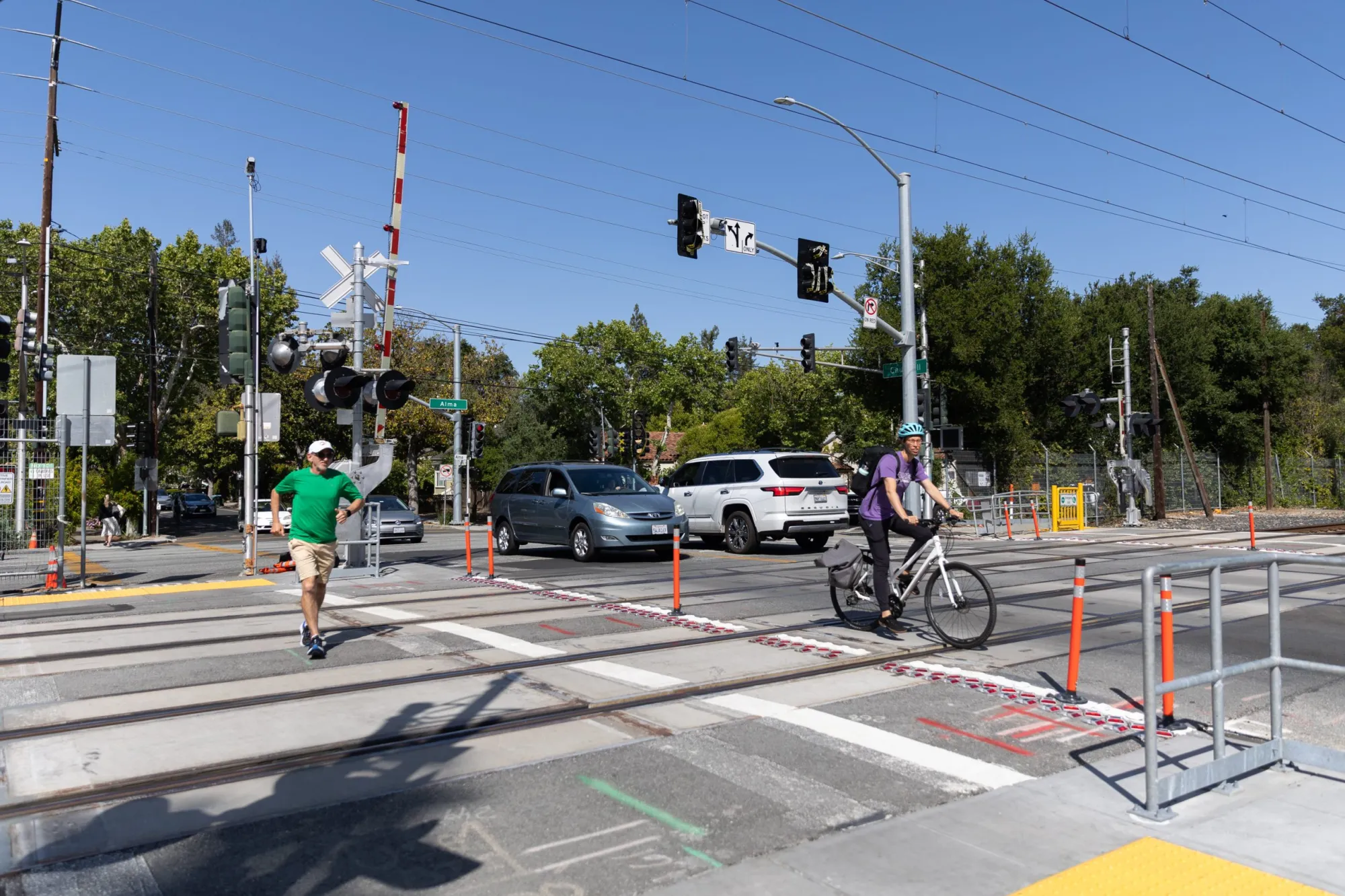
They have recommitted to funding mental health services for youth, hired security guards to monitor the tracks and, most controversially, revived an idea that has been thoroughly debated and largely discarded five years ago: the closure of the Churchill Avenue rail crossing to cars and pedestrians.
The closure of Churchill, at least on a temporary basis, is the most dramatic and contentious policy proposal being considered by the City Council’s recently reinstated Rail Safety Committee, which consists of Councilmembers Julie Lythcott-Haims, Pat Burt and Vice Mayor Greer Stone. The group, which was reconvened after the February death by suicide on the tracks, is tasked with developing a meaningful policy proposal that addresses safety and traffic impacts near the train tracks.
Since then, the committee has acted with a sense of urgency. Last month, the council approved a contract with a private security company to employ crossing guards at all four rail intersections in the city 24 hours a day, seven days a week — extending the work that volunteers with Track Watch have done throughout the years to monitor the crossings.
Although the increased human presence at the tracks is a welcome addition for the community, many parents, students and advocates say the city should go one step further and close the Churchill crossing in the near future.
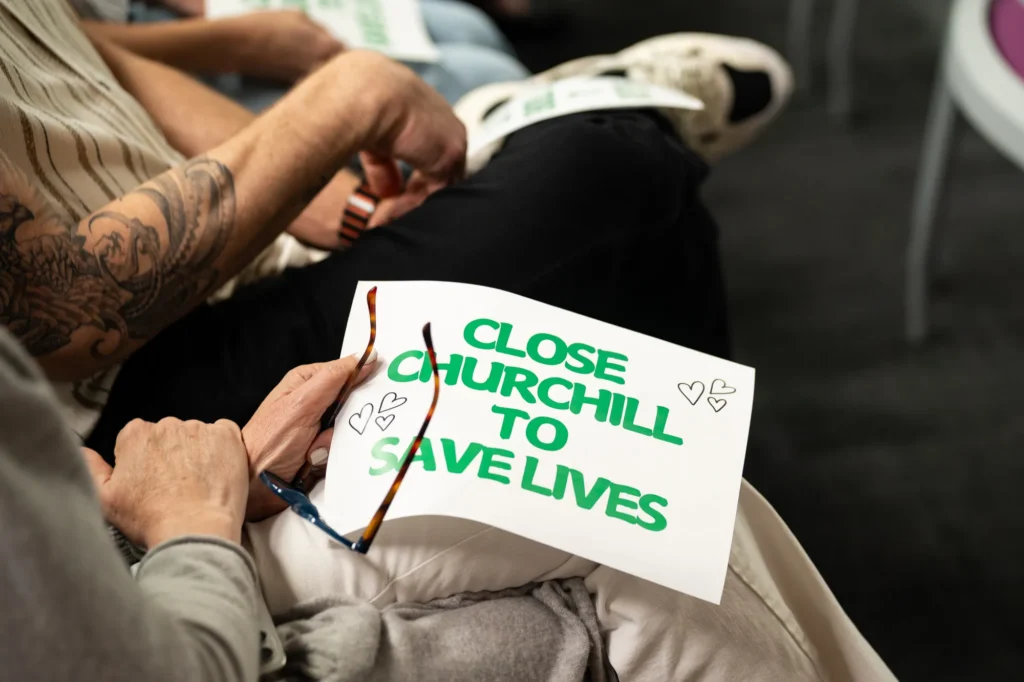
At a community meeting last week, most attendees implored the city to act fast to remove the easy access to lethal means, even if it means rerouting traffic and making east-west trips across Palo Alto more difficult. The Churchill crossing is most critical because of its proximity to Palo Alto High School, and the two most recent deaths by suicide were students, proponents of the closure argue.
“In the past, I have opposed closing the Churchill crossing because of the significant traffic it serves, including school buses and district maintenance vehicles,” former Palo Alto Unified Superintendent Don Austin wrote to the council on Feb. 5, two days after the most recent death. “Those operational considerations are real. They are also secondary to the continued loss of life at a specific and identifiable location.”
This is not the first time the city has considered closing the crossing. Resident Greg Brail previously served on the Expanded Community Advisory Panel, where nine residents explored options to improve safety and reduce fatalities on the tracks through grade separation. That means fully separating vehicle, bicycle and pedestrian traffic from the train, whether by raising the tracks above traffic or lowering the roads beneath the Caltrain tracks.
At the time the community advisory panel was formed in 2019, the grade separation effort was driven by the traffic congestion caused by increased Caltrain service, forcing the crossings to close the gates more frequently and worsening the gridlock on Alma Street and surrounding neighborhoods.
But removing the grade crossing entirely creates a different set of traffic impacts. Instead of cars stuck behind the crossing gates, they would be forced to find different crossings. Critics of Churchill closure have maintained throughout the planning process that the loss of a critical east-west route in Palo Alto would create traffic jams well beyond the Churchill area.
The report issued by the panel in 2021 recommended the closure of Churchill, with a bike and pedestrian tunnel to accommodate cross-town trips that don’t require a car. Vehicle traffic, however, would have to be rerouted to Embarcadero Road or the Page Mill Road-Oregon Expressway, and could snarl the intersections there with the addition of 10,000 cars that otherwise cross at Churchill every day, according to traffic analysis.
During the community advisory panel process, multiple traffic studies confirmed these concerns. A more recent analysis spearheaded by Caltrain also suggests that traffic delays on Alma around Churchill would be longer with a closure than with a partial underpass, though the wait time at the main traffic light would actually decrease compared to existing conditions. But critics have said this would come at the expense of other arteries like Embarcadero, which would get more clogged, and neighborhood streets such as Coleridge and Kellogg Avenues.
Supporters of the closure concede there may be impacts, but argue it is a price worth paying.
“Traffic would get worse, and then it begs the question, ‘How much more traffic are you willing to accept?’ If the answer is none, then you can never change anything in Palo Alto,” Brail, who supported the closure, said.
Since the most recent death by suicide, the calls to close the crossing have ramped up citywide even despite the traffic complications.
Brail said he thinks the best option moving forward now is to close the crossing and mitigate the traffic impacts as they arise. Although the community advisory panel report recommended the bike tunnel at Churchill, the city is instead exploring a grade separation project that involves a partial underpass, responding to an outpouring of complaints from residents of Southgate and Professorville about the loss of vehicle access and the increase in neighborhood traffic.
Closure of the crossing remained a backup option in the council’s December 2021 decision.
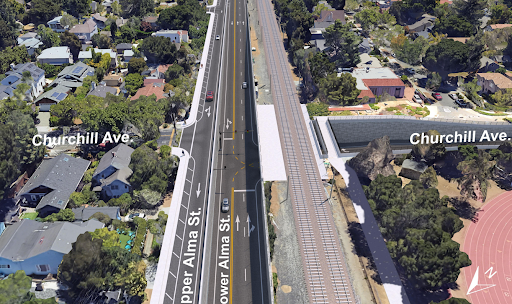
The partial underpass would depress the eastbound roadway under the tracks at Churchill and allow drivers to turn left or right onto Alma Street. A wall would separate the northbound and southbound lanes of Alma, and bicyclists and pedestrians would be able to cross through a tunnel at Seale Avenue, according to the most recent planning documents.
Further south, the city is also exploring designs for a tunnel at El Dorado Avenue to make it easier and safer to cross the tracks for cyclists and pedestrians. The El Dorado location aims to fill the gap between California Avenue and San Antonio Road.
Grade separation for vehicle traffic, though, is a massive infrastructure undertaking in every aspect, especially financially. Palo Alto has been exploring the possibilities at Churchill, Meadow and Charleston for over a decade, with priority given to the latter two. Actual construction would not be complete for at least another decade — not to mention finding the hundreds of millions in funding necessary to complete the grade separation at Charleston Road and Meadow Drive, too.
Even though the Churchill closure is the cheapest option on the table, staff estimates shutting down the crossing and adding traffic mitigations and tunnels for bikes and pedestrians will cost between $95 million and $115 million. For the partial underpass, the price tag is estimated at between $260 million and $320 million.
“We picked a more complicated option, it’s taking years to decide how to do the engineering, and in the meantime, some people have died,” Brail said.
Not everyone on community advisory panel shared his view. Keith Reckdahl, a former planning commissioner who now serves on the city council, was one of three members who voted against closure. The three dissenters deemed existing traffic analysis insufficient and argued that the closure of Churchill would “inequitably distribute traffic to other neighborhoods,” according to the report.
Beyond everyday car trips, Reckdahl said emergency services could also be impacted by the closure of Churchill.
Reckdahl said the fire department confirmed to the city that rerouting emergency vehicles would likely cause delays in response to fires, accidents or other issues. That would be compounded by the rerouting of everyday vehicle traffic, and first responders would have to navigate worsening gridlock at either Embarcadero Road or the Oregon Expressway to get across town.
“In this case, we’re considering closing Churchill for public safety, but yet we don’t know the full ramifications of other public safety aspects and fire response,” Reckdahl said.
Palo Alto has closed a crossing in the past, though. The community advisory panel report states an accident near Palo Alto High School in 1927 was the impetus for the Embarcadero underpass that was completed nine years later.
According to rail fatality data compiled by Brail, there have been 50 accidents on the Caltrain tracks since 2000, with 15 at Churchill. Of those at Churchill, four were fatal, and all four involved pedestrians, not vehicles.
Across all the intersections, only three involving a vehicle resulted in a fatality: two of these were at the Charleston crossing, and one was at Meadow.
Brail explained that Palo Alto finds itself in a unique situation with regard to its four train crossings. He described the high speed of the trains, combined with the amount of cyclists and pedestrians who cross each day and the ease of access to the tracks near Paly, as “uniquely dangerous.”
“There’s lots of things to work on as a town and as a society, but then you add on this very effective means of suicide that’s right there for all of us to see every day,” he said. “I think we need to do everything we can to reduce the risk.”
The need for immediate action is the one thing that both supporters and opponents of the closure agree on. Reckdahl, who also used to be a Track Watch volunteer, pointed to the steps the city has already taken in the past month. New private security guards are about to start mental health training to learn best practices for communicating with distressed people who enter the tracks, he said. In the meantime, the human presence at the crossings serves as an additional deterrent to those who may seek to harm themselves.
“You’re trying to really help someone who’s having a problem and just be compassionate, and it’s high stakes, right?” Reckdahl said. “You have this stranger, and you have to be compassionate and warm to them.”
The contract will last for at least a year because the first year after a death by suicide is most critical in preventing copycat attempts or suicide clusters, Reckdahl added. Experts at Stanford Health have said in the past that Palo Alto is currently in the middle of its third cluster, categorized as a period of time where multiple deaths by suicide occur.
The council rail safety committee is expected to return to the full council on April 13 with either a study session or recommendation for actions that Palo Alto can take. It remains to be seen if closing Churchill, even temporarily, is one that city leaders can get behind.
Brail, for his part, hopes it is.
“It’s really hard to imagine how any of this stuff gets resolved in the long run, so what can we do that will have an impact that would make it safer for at least some people?” Brail said. “I think this is the option that gives us the most safety for the least impact.”
This story originally appeared in Palo Alto Weekly. Riley Cooke is a reporter at Palo Alto Weekly and Palo Alto Online focusing on city government.
Leave a Reply
You must be logged in to post a comment.