


|
Getting your Trinity Audio player ready...
|
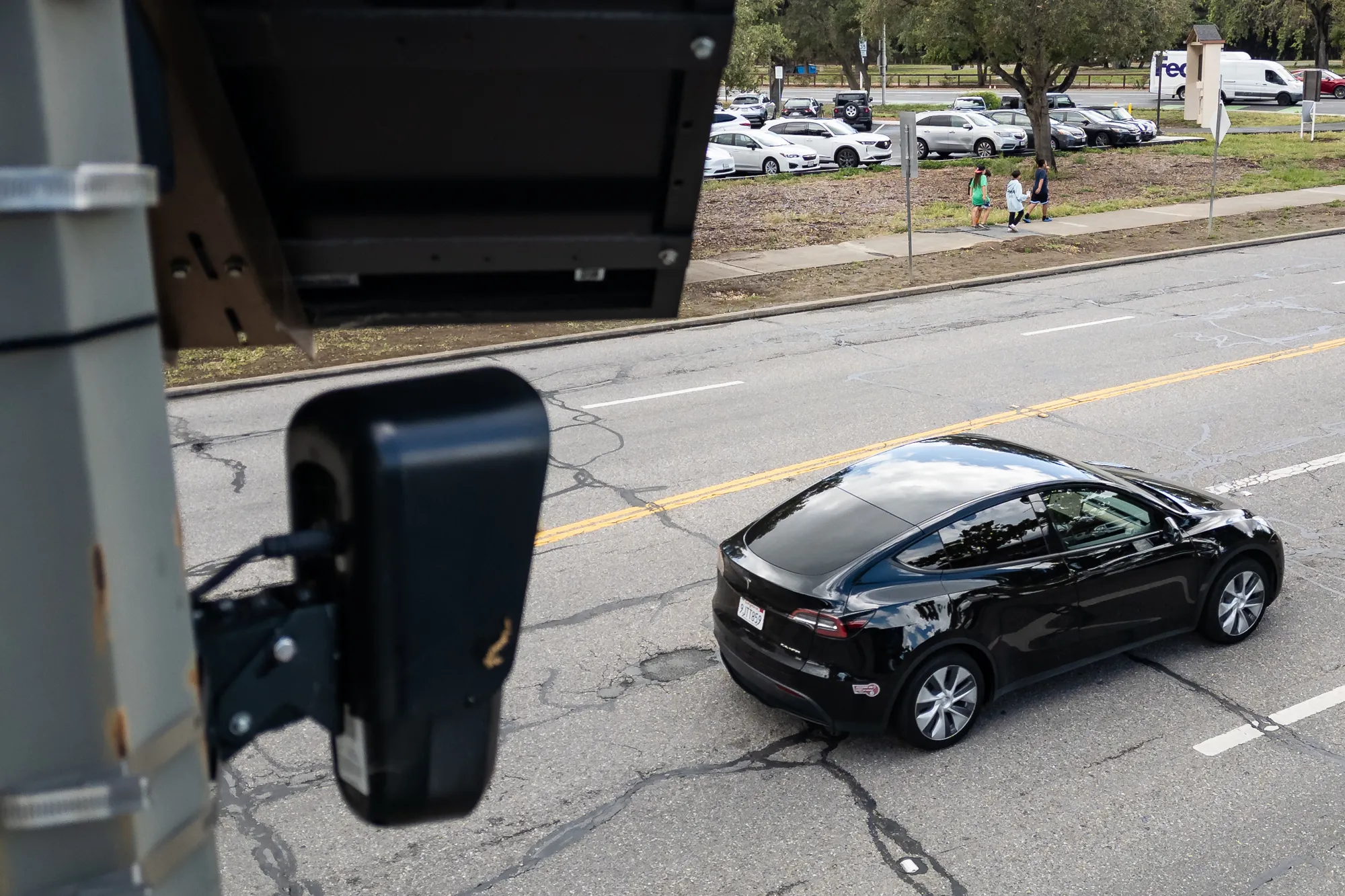
After watching numerous neighboring jurisdictions pull the plug on Flock Safety in the aftermath of data breaches, Palo Alto remains on the fence about its own relationship with the controversial company that operates automated license plate readers throughout the U.S., including 30 on local streets.
Next week, the Palo Alto City Council plans to take a step that will bring it closer to a decision when it approves an audit of Flock technology. With the city’s regular auditor, BakerTilly, unable to perform the review because of its own work with Flock, the task of reviewing the company’s conduct will fall to OIR Group, the city’s independent police auditor. OIR Group also provides oversight for the Santa Clara County Sheriff’s Office.
The council will finalize the scope of the audit during its semi-annual Monday meeting with the firm, which generally focuses on incidents that involve use of force and citizen complaints against local officers. If the council approves the proposed scope of the audit, OIR Group will evaluate existing policies on data sharing, external access and data retention.
The auditing team will also evaluate how the technology is being used and issue an “overall assessment of the system’s value relative to its use and impact(s),” according to a new report. OIR will also identify opportunities to “strengthen safeguards, accountability and effectiveness.”
The review comes months after Palo Alto Weekly reported that the city’s data had been shared with hundreds of other agencies throughout the U.S., which runs contrary to the city’s official policy of only sharing data with agencies that have signed formal agreements with the Palo Alto Police Department. In June, councilmembers flirted with the idea of backing out of Flock but ultimately agreed to conduct a review before making any big change. More than two months later, they are still refining the scope of the review.
The technology remains deeply divisive, with some seeing it as a valuable crime-fighting tool and others characterizing it as a threat to privacy and civil liberties.
On the one hand, license plate readers have recently helped local officers locate an elderly man with dementia, apprehend suspects in a pair of armed robberies and provide support to a teenager in a mental health crisis who made threats of suicide before driving off from his home, according to a new report from City Manager Ed Shikada.
Police Chief James Reifschneider told the council in June that the department has pinpointed more than 130 cases in which Flock has played an important evidentiary role in identifying and arresting suspects. He also noted that the city has seen a 13% reduction in residential burglaries and a 24% reduction in auto burglaries between 2025 and 2026.
“I recognize that some of these reductions have multiple factors that are contributing to these, but I can tell you with confidence that I do think Flock is a contributing factor and a significant one,” Reifschneider said.
Yet Flock’s history of data breaches has made the company a bugaboo in the eyes of privacy advocates and civil rights group. Last year, the city learned that Flock had included Palo Alto in a national database that other agencies were able query, in violation of local policies and state laws. The nationwide lookup feature was in place between mid-2023 and October 2024. The department found out about it in December 2025.
While Reifschneider assured city officials in June that local data had not been accessed by federal agencies, many urged the council in the following two months to leave Flock. Several other neighboring jurisdictions, including Stanford University and Mountain View, have recently done so.
Cara Silver, a local attorney who belongs to a nascent anti-Flock coalition called Safety Over Surveillance, was one of dozens of residents who argued against Flock, citing instances in other jurisdictions where ICE was able to access data. Palo Alto has many immigrant contractors and service employees who drive past Flock cameras to report to work, she said at a June public hearing.
“We hear over and over again how immigrants fear driving because of the threat of Flock following them,” Silver said.
She urged the city to stop taking part in the national network, noting that local policies have failed to stop other agencies from searching local data.
“Clearly, the guardrails were not effective here,” Silver said.
Melissa Dinwiddie, member of Indivisible PA+ and SOS, similarly suggested that the cameras pose a risk to residents’ civil liberties and Fourth Amendment rights. She raised concerns about U.S. Immigration and Customs Enforcement (ICE) accessing Flock data, noting the recent efforts by the federal government to open a detention center in South County, near Gilroy.
“In light of revelation that ICE uses Flock, Flock has not provided sufficient guarantees that Palo Alto’s data is not currently, nor will be used for immigration enforcement,” Dinwiddie said.
Several councilmembers said they have lost trust in Flock Safety even as they lauded the local policies that had aimed to curb data breaches. Mayor Vicki Veenker called it a “troubling issue” that the city should needs to deeply evaluate.
“There is this coalescence of growing distrust with some of our federal government behavior,” Veenker said. “There’s also a growing distrust of the tech industry and AI. And this is kind of this messy intersection of both.”
Councilmember George Lu said he would like to learn about specific crimes that were cleared due to Flock.
“Getting that, and getting something that we can actually weigh so that we can understand what the tradeoff of public safety and privacy actually looks like is useful,” Lu said.
This story originally appeared in Palo Alto Weekly. Gennady Sheyner is the editor of Palo Alto Weekly and Palo Alto Online. As a former staff writer, he has won awards for his coverage of elections, land use, business, technology and breaking news.

Leave a Reply
You must be logged in to post a comment.