


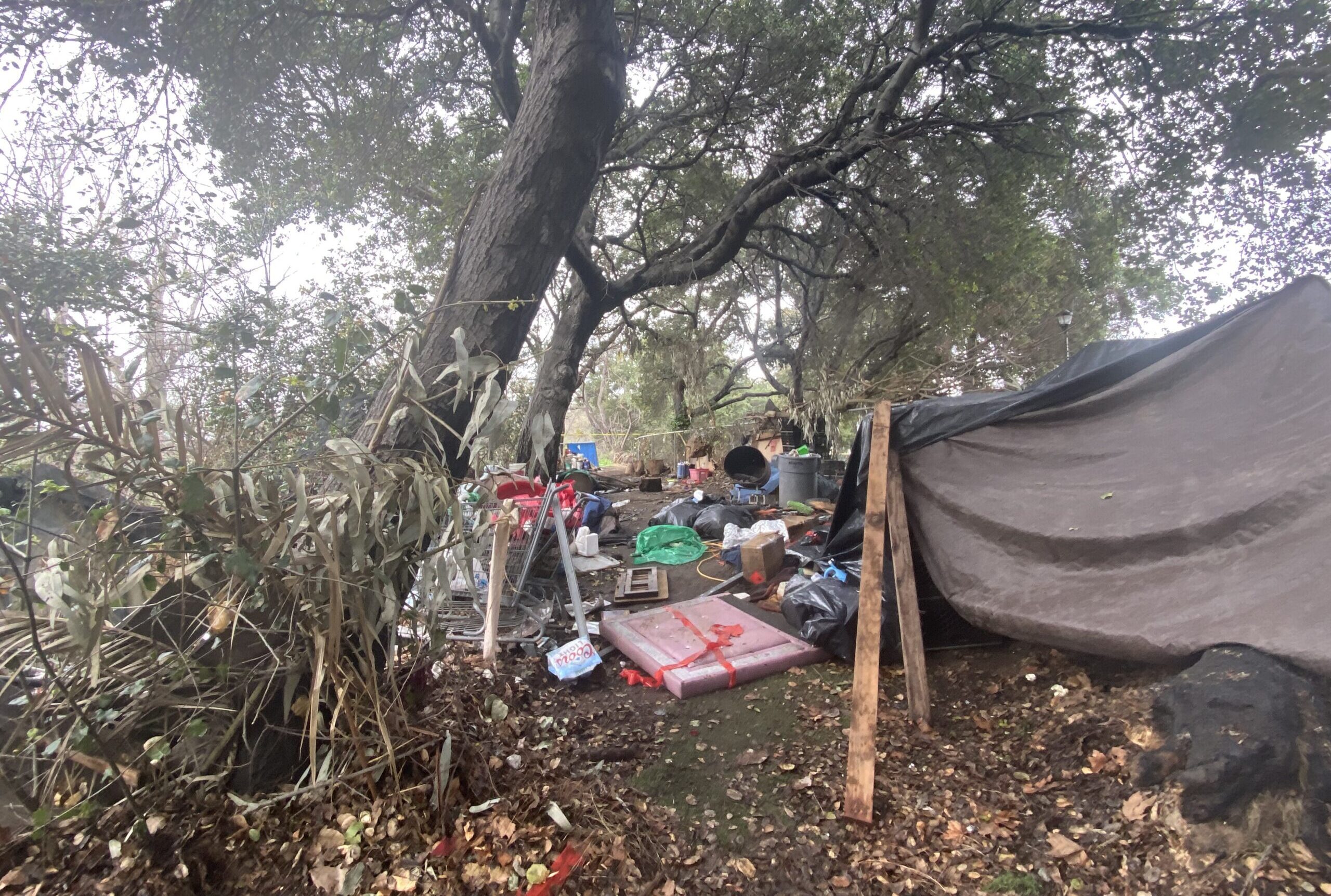
Across the country, policymakers are criminalizing homelessness. The intent, they say, is to attend to the unhoused and revitalize public spaces. But service providers know enforcement-based approaches won’t solve homelessness — they will make it worse.
The federal administration recently issued an executive order that contradicts proven best practices for tackling homelessness. It even deployed the National Guard to Washington D.C. as a response to the city’s crime and homelessness, and it has threatened to do the same in other cities including Oakland and San Francisco.
Following a Supreme Court ruling last year, we saw changes at the local level, as numerous cities rushed to pass camping bans. Fremont made national news when it attempted to make helping the unhoused a misdemeanor. Earlier this year, San Jose implemented its Responsibility to Shelter policy, enabling the arrest of unhoused residents who decline shelter three times within an 18-month period. In similar spirit, San Francisco recently banned large vehicles from parking on city streets for more than two hours at a time and overnight, targeting people living in RVs.
These laws don’t reduce homelessness. Rather, enforcement-based approaches impede progress toward housing. They cause relocation to higher risk areas, disrupt access to support including health care and lead to the loss of personal belongings.
According to the National Alliance to End Homelessness, while there have been laws criminalizing homelessness in some cities for decades, there is no evidence indicating this works. Enforcement-based approaches then, are a lose-lose: People remain unhoused as valuable dollars are spent on ineffective policy implementation.
To solve homelessness, local, state and federal governments should look to service providers for guidance. We know firsthand the solution to homelessness lies in the Housing First model. The model calls for housing people quickly without excessive requirements for program entry, including sobriety. It also promotes wraparound supportive services and giving people choice.
The federal government, and some local municipalities, dismiss the Housing First approach. The federal administration claims Housing First policies “deprioritize accountability” and “…fail to promote treatment, recovery, and self-sufficiency…,” but service providers know the truth. The Housing First model recognizes that housing offers the stability needed to tackle challenges ranging from addiction to finding work. These programs are also effective in keeping people housed. At HomeFirst, for example, the Housing First agency I lead, 83% of people who have exited our programs to permanent housing in the last five years have retained it.
Service providers also know that homelessness will only be solved through collaboration — it won’t happen in silos.
In 2020, we experienced the power of coming together when Santa Clara County achieved functional zero veteran homelessness, meaning the number of veterans being housed exceeded the number needing housing. This success was made possible by partnership between the county, San Jose, the Department of Veterans Affairs and nonprofits including Destination: Home and HomeFirst. Together, we made an impact, and since 2015 we’ve ended homelessness for more than 3,000 veterans in our community.
With similar political will, the same can be done for the unhoused community as a whole.
Communities and governments are right to demand solutions, but punishing people for being poor will not make tents disappear for good. To solve homelessness, let’s invest in what works. Success will require compassion and kindness, not indifference. Evidence, not myths. Political will and true partnership with the experts that do this work daily — our service providers. Criminalizing the unhoused won’t get us to our goal.
René Ramirez is CEO of HomeFirst, a nonprofit organization working to end homelessness. The agency had been serving the community for 45 years.
Leave a Reply
You must be logged in to post a comment.