


Homeless residents who moved from San Jose’s largest encampment into shelters earlier this year are being asked to move again — or end up back on the streets.
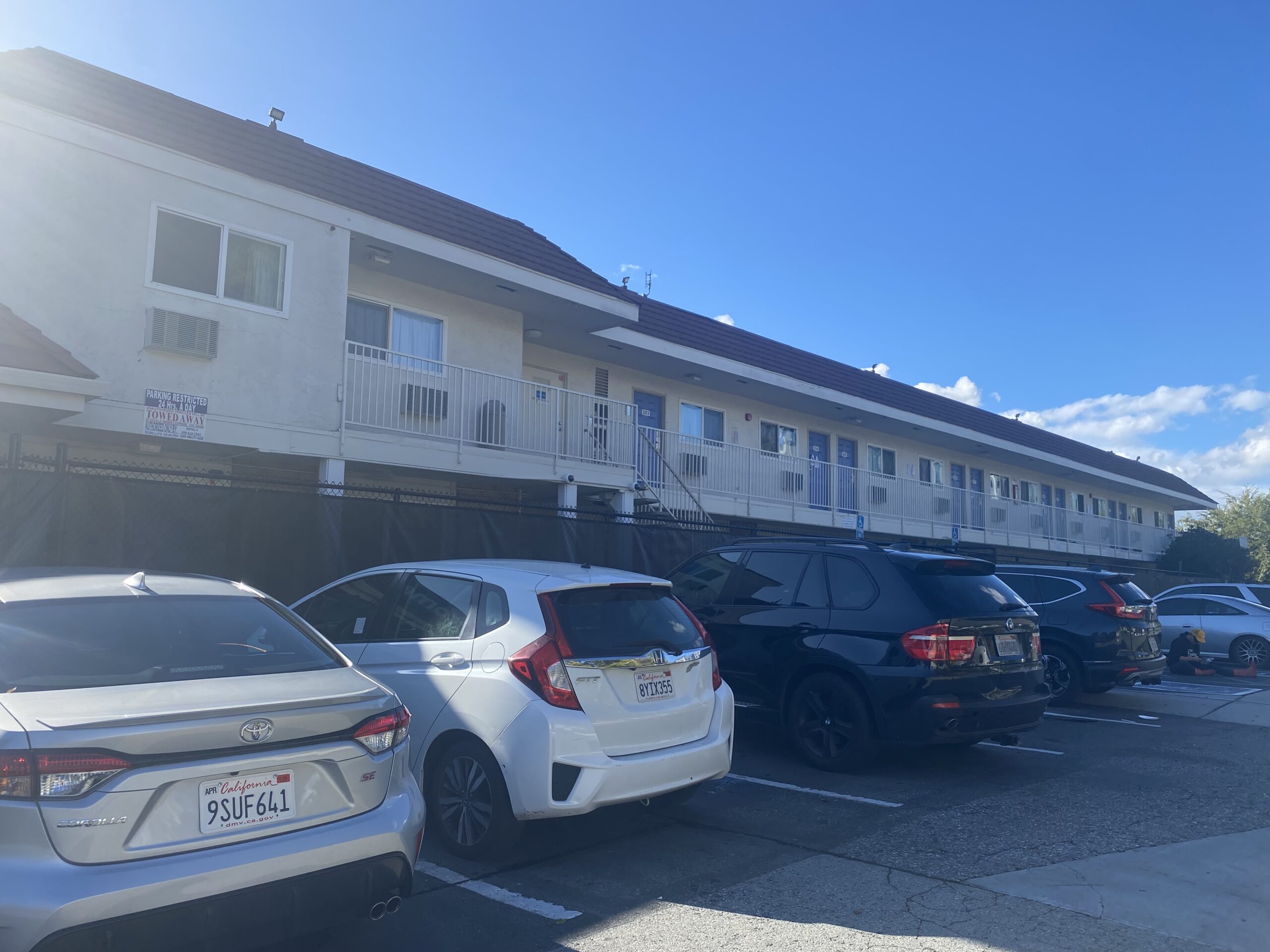
San Jose moved hundreds of people living at Columbus Park into five motels converted to homeless shelters when it swept the park this summer. Now they’re being asked to sign an agreement to trade a motel room for a tiny home as space becomes available at other temporary housing sites. Failure to meet those terms will result in an eviction from the motels, according to a Nov. 10 letter from nonprofit operator HomeFirst reviewed by San José Spotlight.
Residents said they’re frustrated with the abrupt process of moving out after only staying at the motels for a few months.
“They really gave us no choice on it at the end of the day, it was either a tiny home or get out,” Robert, who declined to give his last name for privacy reasons, told San José Spotlight.
Robert lives at the Casa Linda Motel and said being pushed into a tiny home doesn’t feel like a reprieve from the streets. He said HomeFirst told residents at that motel they’ll transfer to the Rue Ferrari tiny home village at the end of the year, which recently added 144 beds.
HomeFirst has managed the motels — Alura Inn, Fontaine Inn, Motel 6, Bristol Hotel and Casa Linda Motel — since the Columbus Park sweep in August. People living at the motels have taken issue with rules they said are too restrictive. Robert said residents aren’t allowed visitors and have restrictions on when they can visit other people in the motel. He said room inspections are “invasive” and an initial 10 p.m. curfew, which has been removed, was unreasonable.
“It made us all feel like we were in a prison,” he said. “That’s not what we signed up for. We signed up for a place to live, and it’s what I feared it would be, which was them trying to micromanage every aspect of our life.”
He fears the rules are going to be more restrictive at the tiny home village. Robert said he’s reluctantly moving to remain with the community of friends he’s developed.
HomeFirst spokesperson Fiona Brodie said its motel and temporary housing sites have no curfew, and residents are able to come and go. In terms of the no visitors policy, she said HomeFirst takes the first few months when a site opens to determine whether having visitors is feasible. She directed questions about the transfers to the city.
“HomeFirst provides services at these housing sites, but we do not make decisions about the placement of participants at these sites or the transfer of participants to new sites,” Brodie told San José Spotlight.

Housing Department spokesperson Sarah Fields said transferring motel residents to tiny homes is the next step in their housing journey.
“The throughput model is designed to meet individuals where they are, providing progressively increased support as they stabilize and progress through the system,” Fields told San José Spotlight.
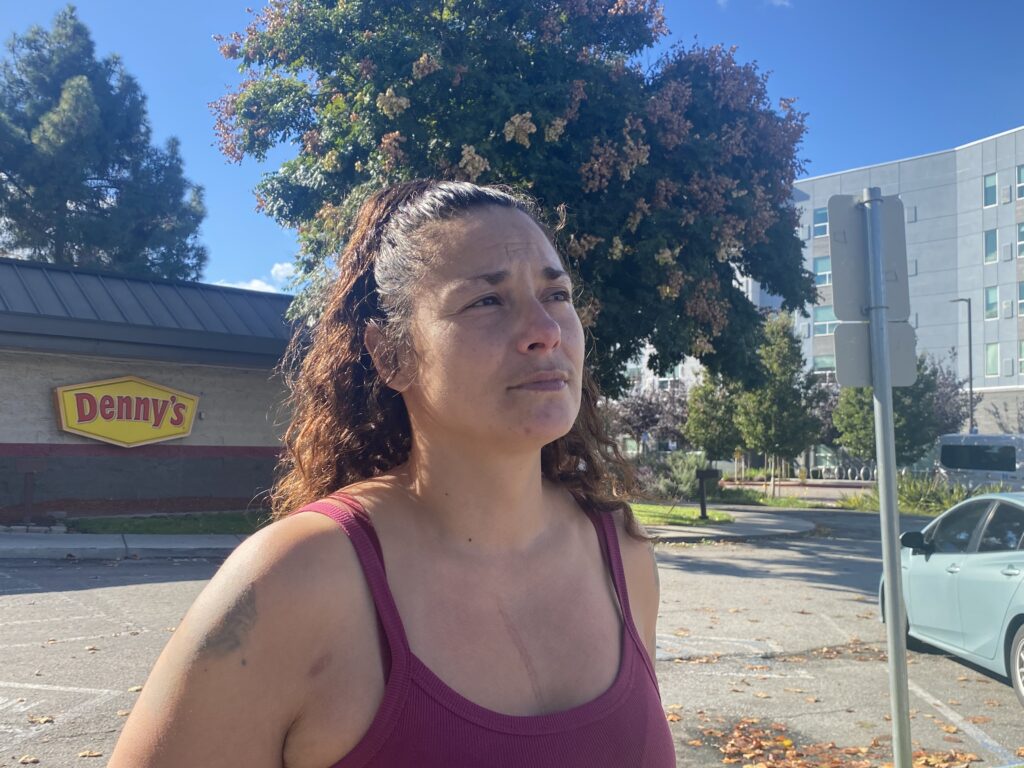
Amanda Flores, who lives at the Motel 6, said not having visitors is hard. She doesn’t like how residents can’t do laundry or cook in their rooms, but is thankful to have a roof over her head and a shower.
“I feel like we’re being caged in, but the staff are very nice,” Flores told San José Spotlight.
HomeFirst has managed all five motels up to this point, but two other service providers — People Assisting the Homeless (PATH) and WeHOPE — will be taking over some locations over the next couple months. PATH took over Bristol Hotel Monday and will operate Fontaine Inn Jan. 1, while WeHOPE will take over Motel 6 operations Jan. 1. HomeFirst will continue managing the Alura Inn, but it’s unclear if it will keep overseeing Casa Linda Motel.
A PATH spokesperson said the nonprofit hasn’t finalized its operating plans yet, so it’s too early to discuss how it will run the site and what rules will be in place.
WeHOPE representatives said they plan to meet motel residents where they are, including finding compromises to certain rules to best suit resident needs. They plan to host monthly meetings to give residents a chance to provide feedback.
“The biggest obstacle in dealing with chronically homeless people is the fact that they have trust issues,” WeHOPE Chief Operating Officer Alicia Garcia told San José Spotlight. “A lot of the things that you’re doing is building trust with them and then also making sure that they feel heard.”
The nonprofit already operates the Berryessa safe parking site in San Jose, which has moved 35 people into permanent and temporary housing in eight months. It will provide services in December to the Arena Hotel, another temporary housing site. WeHOPE has been working with chronically homeless people in the Bay Area since 2001.
 Homeless advocate Jennette Holzworth said requiring people to sign papers to agree to a transfer — or be evicted if they refuse — takes the humanity and autonomy away from homeless residents.
“Anytime you cater to any group as a monolith, people are going to fall through the cracks,” Holzworth told San José Spotlight.
Contact Joyce Chu at [email protected] or @joyce_speaks on X.
Leave a Reply
You must be logged in to post a comment.