


|
Getting your Trinity Audio player ready...
|
To make guaranteed basic income a reality, Santa Clara County leaders turned to a real world trial. Now their efforts are making strides, but it couldn’t come at a darker time for the county’s social safety net outlook.
A historic set of four simultaneous pilot programs is providing $1,200 in guaranteed basic income per month with no strings attached for two years, totaling $28,800. The money is going to a select pool of low-income county residents. Meanwhile, a pool of people selected for each program’s control group receives no money — just supportive services. Each program targets different categories of people who rely on county services, largely coming from regions of highest need: South County, East San Jose and pockets of North County.
Yet just as the programs are finding their footing, future funding looks uncertain with massive federal spending cuts threatening $1 billion in losses to the county annually.
“I am philosophically committed to making this permanent,” District 4 Supervisor Susan Ellenberg, who has championed the county’s guaranteed basic income project, told San José Spotlight. “Ultimately I don’t think this is going to be an ongoing county program because we don’t have the ongoing funding stream.”
Ellenberg said she sees the study as part of a broader effort to collect data from similar pilot programs nationwide and build a federal case for guaranteed income funding. There are several other non-county guaranteed income pilot projects underway across Silicon Valley.
“The goal really has to be state and federal funding — not county funding,” Ellenberg said.
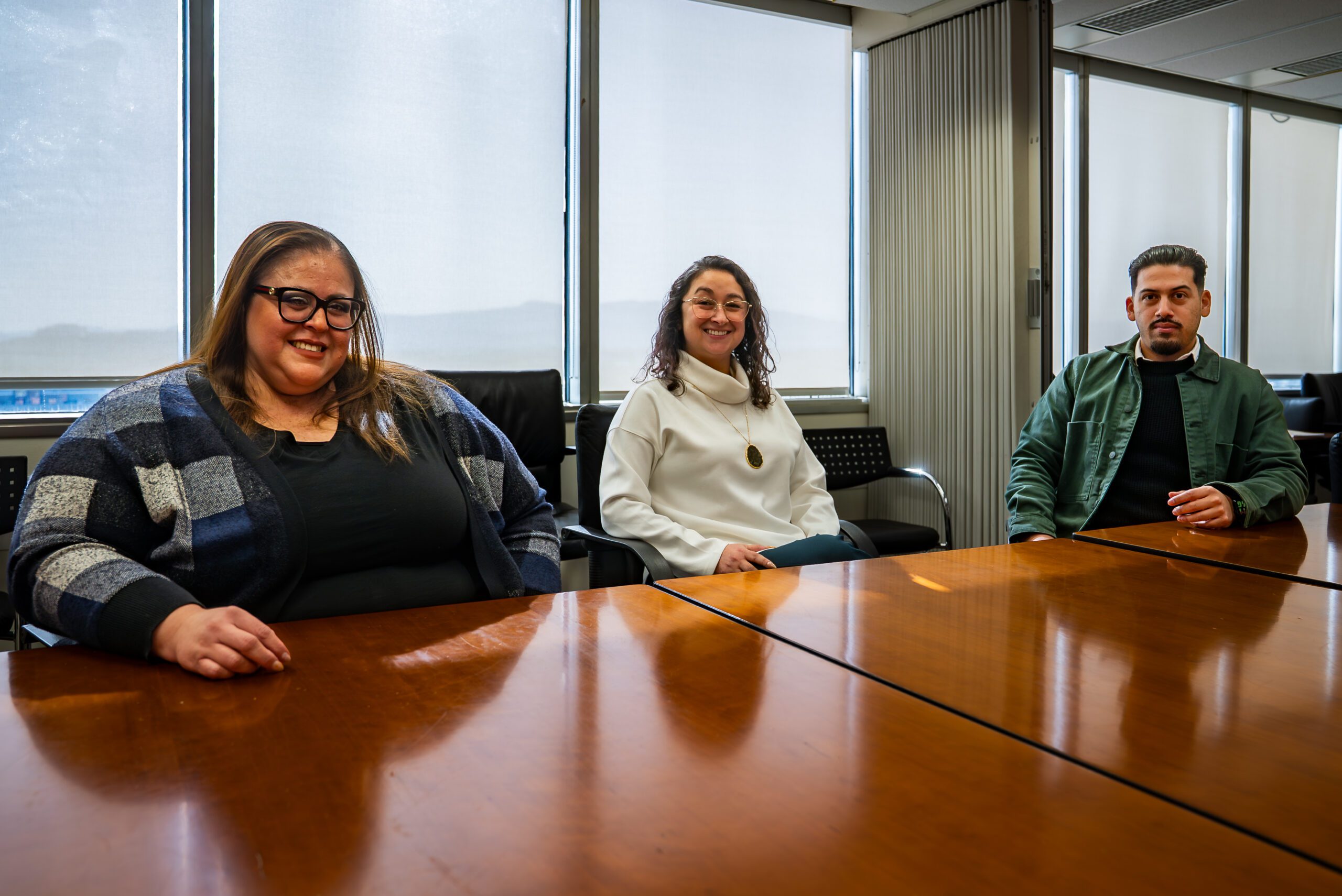
The program has reaped encouraging quality of life results for County Program Manager Melanie Jimenez Perez. It’s been refreshing for her to see recipients — accustomed to other more restrictive social services programs — discover the autonomy that guaranteed income gives them. But it hasn’t always been easy. A major part of the study requires her to tell hundreds of disadvantaged people, in all four pilot programs, they were randomly selected for the group receiving no money.
While the group receiving guaranteed basic income can now pay for things like child day care and clothes, Jimenez Perez has seen people in the other group — who only receive in-kind county social services — move out of Silicon Valley entirely, unable to shoulder the region’s crushing cost of living.
“That is the hardest part of the entire program,” Jimenez Perez told San José Spotlight. “We’re very clear with participants what their chances are of being in the group that receives (guaranteed basic income). And I have the responsibility of calling every single one to inform them.”
But it’s also the most vital component. The income pilot’s impact cannot be rigorously measured — or championed — without evidence of a disparity.
“It’s critical, if we want to move from a pilot to permanency, that we have that gold standard of evaluation and see how one group fares better than the other,” Jimenez Perez said. “One fantastic thing we’ve found is that once you’ve given people a bit of relief — that their monthly bills can be met and they can cover their basic needs — they are more open to engaging with additional services and connecting with their community.”
One of the county’s four pilot programs is in its second round of participants, focusing on youth who aged out of foster care services in 2023. Fifty people receive money and 50 do not. Another focuses on homeless high school students. In that group, 75 people receive money while 100 are unpaid.
An additional program enrolls people who were recently released from jail or prison and had been incarcerated for at least six consecutive months. In that group, 110 people receive monthly payments while 190 do not. The final group targets people from ages 14 to 26 who are either pregnant or caring for young children. Almost 100 people in that group receive monthly payments while 130 do not.
The groups receive their money in the form of prepaid debit cards through U.S. Bank or a savings account through Federal Credit Union. The county pilot program team gets high-level, anonymized transaction data from card providers to know if people are transferring to savings as they’re advised to do, or if they’re overdrafting or getting fees for using the wrong ATM.
The foster youth cohort stopped receiving money in July. Jimenez Perez said that program is now in a phase where the county is starting to collect data.
“This is where we start to ask, what impact did the money make? What are they still able to do now that the money has ended? What are their plans for the future?” Jimenez Perez said. “We’ll be gathering that information between now and next August.”
The other cohorts are still receiving payments because they started later. She said participants are often surprised at how much discretion they have to spend their money.
“We get questions like, ‘Can I use this money to buy my sister clothes?’ ‘Can I use this money to get my child into day care so that they’re with other kids their age?'” Jimenez Perez said. “Because many of them have been in safety net programs for so long, they are conditioned to think they have to ask us for approval to spend the money on certain things. That’s not how this program goes. We need to build that trust with them.”
Jimenez Perez said she’s been surprised that participation in program workshops has roughly been equal between the groups that get money and the groups that don’t. She also said participants have started forming a community with each other through their regular meetings. For example, mothers in the young parents cohort have been passing around baby clothes and other supplies they don’t use.
“They’re in such need for services that the participants actually determine the kinds of topics we cover each month,” she said.
Contact Brandon Pho at [email protected] or @brandonphooo on X.
Leave a Reply
You must be logged in to post a comment.