

|
Getting your Trinity Audio player ready...
|
For more than five decades, an anti-war protest known as the Chicano Moratorium has remained a touchstone for activists who fought for greater recognition, equality and an end to discrimination against their community. This weekend, San Jose organizers will once again bring that history to the city while drawing attention to the federal detention of immigrants in the South Bay.
The 56th Chicano Moratorium commemoration will take place Saturday at Backesto Park from 3 p.m. to sunset, marking the first time organizers have convened at the park. The gathering is organized by Community Service Organization San Jose and will feature music, cultural performances, vendors and resource tables. Ramon J. Martinez, secretary of the La Raza Historical Society of Santa Clara Valley, who participated in the original protest in 1970, is the keynote speaker.
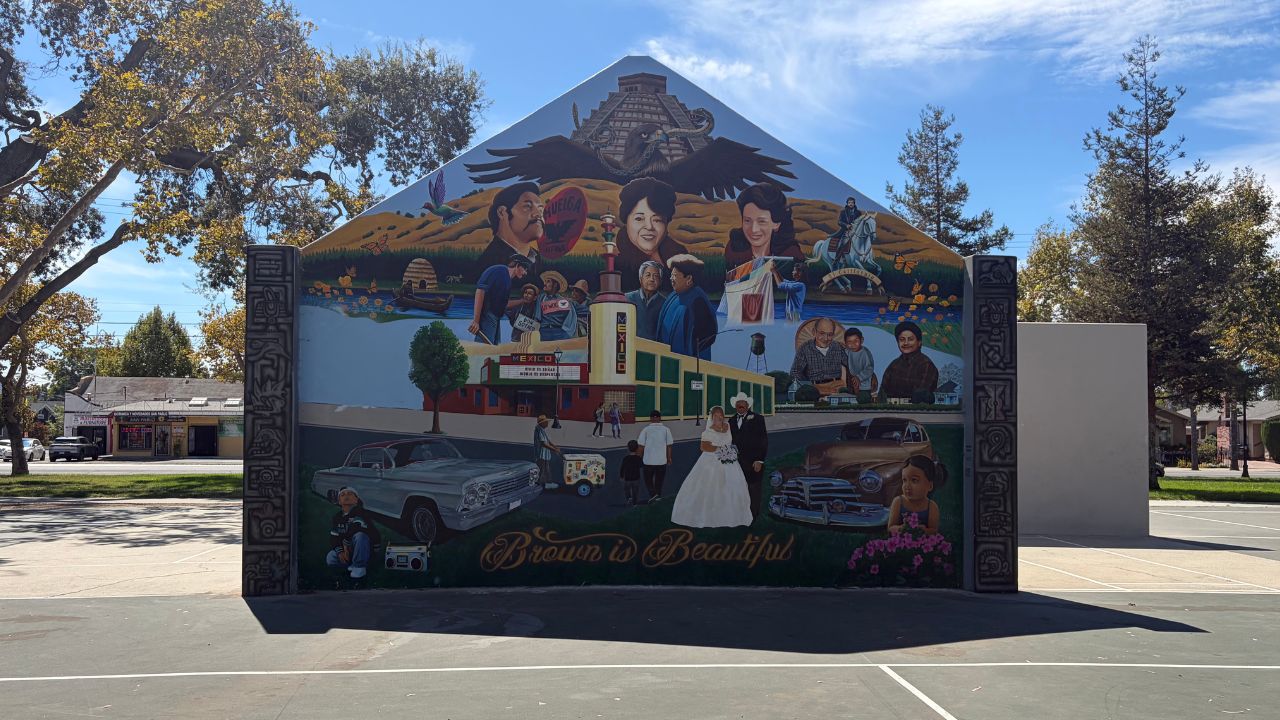
Organizers chose Backesto Park in part because of its recently completed mural, highlighting people and themes tied to San Jose’s Chicano history. This year’s event will also focus on opposition to a proposed U.S. Immigration and Customs Enforcement (ICE) facility just outside Gilroy, which organizers said could affect communities throughout the South Bay, while giving younger generations a chance to learn directly from people who participated in the movement decades ago.
“We need to commemorate international solidarity,” Uriel Magdaleno, chair of Community Service Organization San Jose, formerly known as the Silicon Valley Immigration Committee, told San José Spotlight. “It’s not only just a commemoration, it’s an actual Chicano Moratorium over again.”
Magdaleno said the event is intended to carry that history forward rather than simply reflecting on the past. He wants San Jose residents to understand how immigration enforcement in neighboring cities such as Gilroy could impact the broader South Bay. While Santa Clara County has not seen mass immigration enforcement operations, roughly 232 residents have been detained since the start of 2025 to June 2026, according to the Rapid Response Network of Santa Clara County.
The original Chicano Moratorium took place Aug. 29, 1970 in East Los Angeles, drawing tens of thousands of people to protest the Vietnam War and the disproportionate number of Chicanos killed in the conflict. The demonstration also became a protest against police brutality and discrimination at home.
The demonstration ended in a confrontation with law enforcement, and journalist Ruben Salazar and two Brown Beret members were killed by police. The Brown Berets were a community-based social justice organization that played a prominent role in the Chicano civil rights movement, advocating around issues including educational inequality, healthcare, police brutality and wartime casualties. The Chicano Moratorium is recognized on the National Register of Historic Places.
Victor Vasquez, co-executive director of SOMOS Mayfair, said many people outside the Chicano community are unfamiliar with the history behind the original protest, making local events like these gathering opportunities to preserve that history and connect it to issues facing residents today.
“It’s a reminder to come back and focus on the problems in our communities, instead of promoting war,” Vasquez told San José Spotlight.

The event is also intended to bridge the gap between generations of activists. Magdaleno said college students and youth who attend the gathering will hear firsthand experiences from older activists in the Chicano movement, including Martinez, who participated in the original 1970 demonstration. He has spent decades studying and documenting Chicano history in the Santa Clara Valley.
“Young people have to be dreamers, or else nothing will improve,” Martinez told San José Spotlight. “If some people don’t dream, if young people don’t believe they’re gonna make it, they’re gonna fix it, it’s not gonna get fixed. Because they are all we have. You are the future.”
Contact Maryanne Casas-Perez at [email protected] or @CasasPerezRed on X.
Leave a Reply
You must be logged in to post a comment.