


|
Getting your Trinity Audio player ready...
|
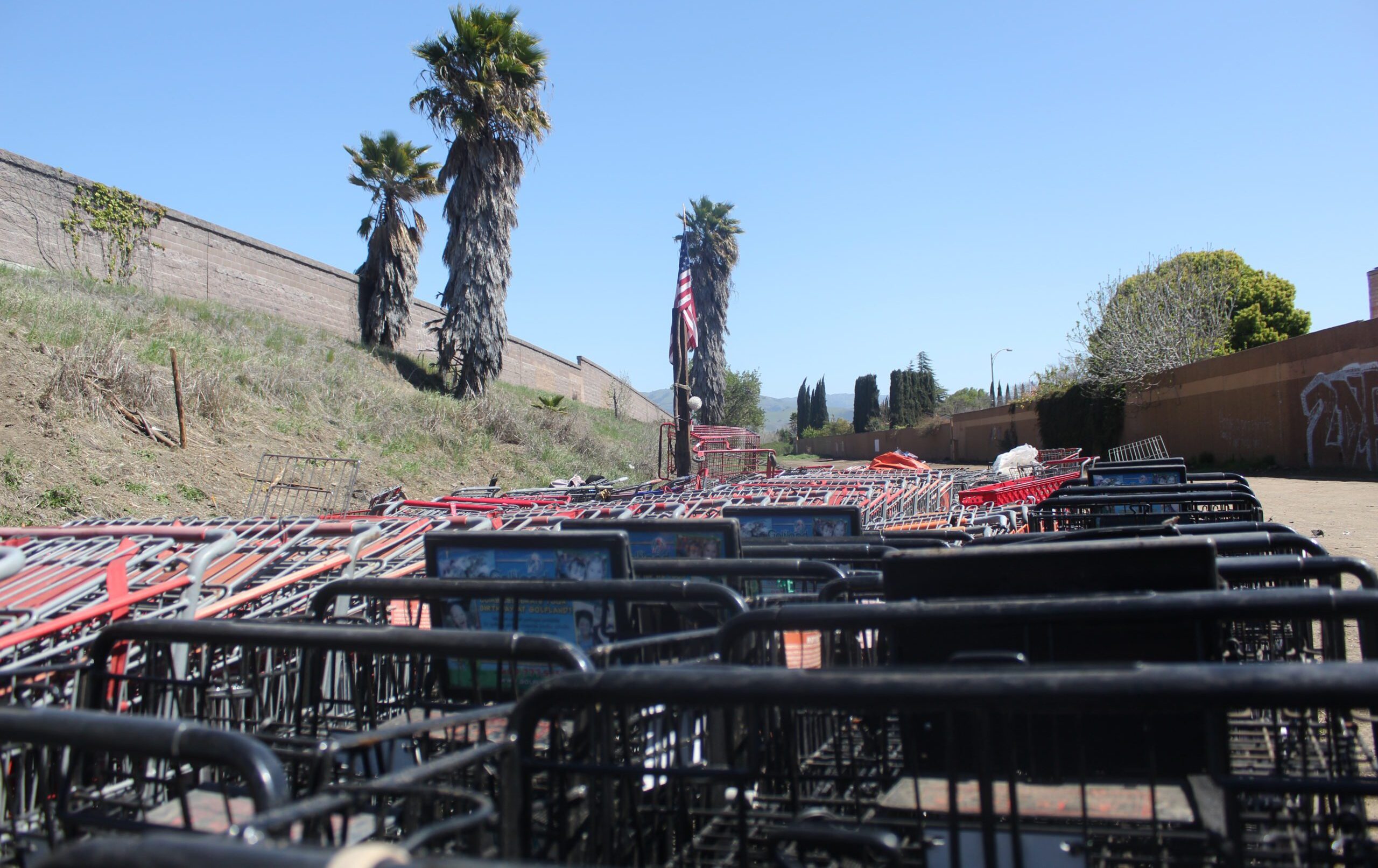
As part of a year-long effort to rein in San Jose’s problem with abandoned shopping carts, the city has been reviewing proposals to hire a company to retrieve and return carts to grocery stores.
A three-month pilot program shows such a retrieval service could easily recoup its costs through fees charged to grocers. However, the hundreds of thousands of dollars in projected upfront expenses has made some councilmembers squeamish.
“We have a challenging budget year, next year. We’re going to be in service preservation mode as a council,” District 8 Councilmember Domingo Candelas said during Tuesday’s City Council meeting.
While Councilmembers didn’t approve any specific action during the pilot program review, officials are working on proposals for a permanent program that could launch as soon as next summer — if approved.
It would mark the latest effort to deal with the vexing shopping cart abandonment problem that has plagued San Jose for decades.
“The thousands of carts that are lost every year and scattered across sidewalks and parks and our trails and waterways are not just a visible quality of life issue for our residents, not just an eyesore, but they actually really damage the environment,” Mayor Matt Mahan said at the meeting.
The $32,000 pilot program, carried out between August and November, saw the city partner with the company carTrac to retrieve 734 carts strewn about certain target areas. Officials project scaling up the program across the entire city would cost $686,000 each year and likely pull in more than 12,800 carts.
Earlier this year, city staff warned state regulations would make it hard for San Jose to recoup the expenses from such a program. Those include rules that limit the fees California cities can charge retailers for cart retrievals.
However, state Sen. Dave Cortese’s Senate Bill 753, signed into law in October with backing from San Jose, has loosened those regulations. The measure has increased the maximum fines cities can impose on grocers with lost carts from $50 to $100 for each cart retrieved. It also removed the state’s requirement that cities maintain an impound lot for recovered shopping carts.
If San Jose were to set its retrieval fine at $100, staff estimated that a city-wide recovery program would draw in $1.3 million each year, far more than the program’s projected expense. However, the city would still face upfront costs to get the program up and running, including the need to pay for staff to oversee the effort, officials said.
“That’s really the value in the pilot is being able to dig through the couch cushions to find resources, so we could experiment and see what it looked like,” Chris Burton, director of Planning Building and Code Enforcement, said at the meeting. “And it is a successful program.”
Councilmembers already passed a policy in May that strengthens oversight regulations for the city’s retailers. The new rules require stores with 76 or more shopping carts to carry out enhanced measures to prevent cart losses, such as installing theft-prevention devices, requiring customers to pay a deposit for using a cart or paying a cart retrieval service directly to recover their lost carts.
 The city’s shopping cart crackdown has faced opposition from local retailers and industry groups. They have warned that by tightening regulations, the city is imposing added costs on grocery stores that will be passed along to residents.
San Jose grocer Lupe Lopez, who owns Arteaga’s Food Center, argued in an op-ed piece for the Mercury News that Cortese’s state law fails to address the root problems that lead some people to steal carts, including a lack of transportation.
“It’s a shame the city couldn’t have focused its efforts on legislation to offer support to those in need, not drive up grocery costs,” Lopez wrote.
Contact Keith Menconi at [email protected] or @KeithMenconi on X.
Leave a Reply
You must be logged in to post a comment.