


|
Getting your Trinity Audio player ready...
|
As federal funding cuts put strain on Santa Clara County resources, a nurse navigator program could help buffer some of the losses and expand access to health care.
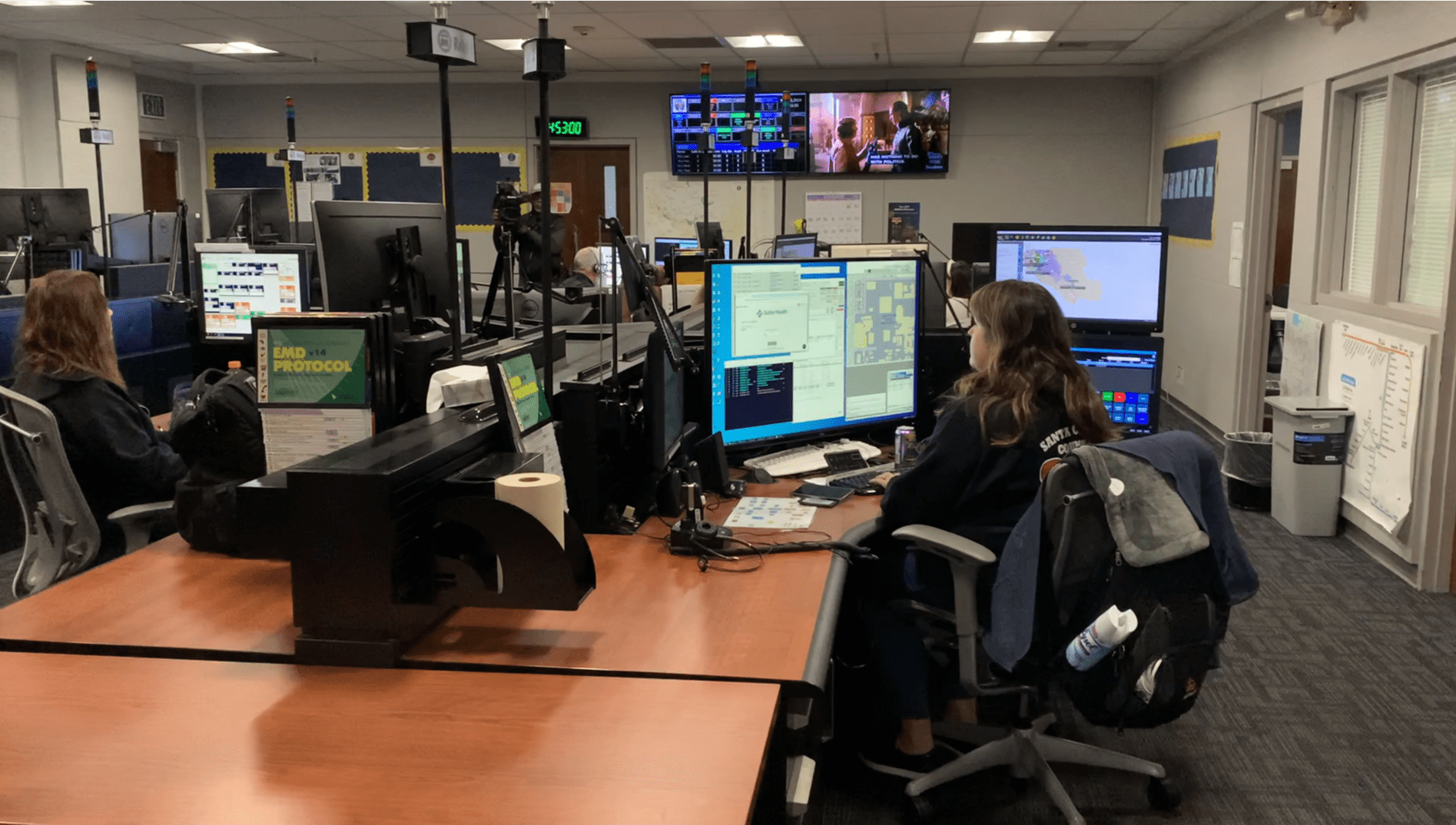
The county began a pilot program in 2024 to triage 911 calls in South County and the West Valley to a nurse call center for non-medical emergencies. Nurses help callers navigate the health care system and determine the appropriate level of care by providing advice on the phone, booking clinic appointments or arranging a ride to the hospital. The program has been expanded countywide since the start of the year.
The expanded program will incur no additional costs, and is a partnership with the Global Medical Response, which is contracted to provide 911 ambulance services in the county. The service is also free for callers to access.
“(The program) preserves those highly trained professionals and those pieces of equipment that are really specialized for cardiac arrest, chest pains — for the people who really, truly have an emergency,” Nick Clay, director of the Santa Clara County Emergency Medical Services Agency, told San José Spotlight. “(It) also offers an avenue for folks who don’t necessarily have a high level of emergency, but still need help.”
Dispatchers and first responders transferred nearly 200 calls to a nurse navigator from November 2024 to August 2025. Of those calls, nurse navigators handled 166, with only three requiring an emergency. Thirty-one people declined to talk to a nurse. County officials estimate the program saved more than $400,000 in patient health care costs in that time, according to information provided by the county.
Clay said the expanded program will help ease stress in emergency departments, as county hospitals face a greater burden with Medi-Cal funding slashed due to H.R.1, President Donald Trump’s “One Big Beautiful Bill.” Medi-Cal represented roughly $1.9 billion in county revenue last fiscal year, or nearly one third of the county’s hospital budget.
The county faces tough decisions as its hospital system is set to lose $1 billion a year in federal funding due to Trump’s bill.
Dozens of nurses have been furloughed across the county’s four hospitals over the past months, creating staffing shortages in the public health care system.
At St. Louise Regional Hospital in Gilroy, furloughs have caused ICU patients to wait in the emergency room for 12 to 24 hours, with many nurses not taking their breaks.
“If we have a system that can help to triage, to say this person is relatively stable and doesn’t need to be transported by (emergency medical services) — and saves the county money, especially in this crisis — that’s something that I think everybody should support,” Allan Kamara, president of the Registered Nurses Professional Association and a nurse at the Valley Medical Center emergency department, told San José Spotlight.
The nurse navigator program has freed up at least three more ambulances per day, and 44% of calls avoided unnecessary trips to the emergency room.
The program can also help people without health insurance avoid costly medical bills, Clay said.
Some people are choosing to forgo having health insurance, after subsidies that lowered the cost of health care through the Affordable Care Act expired Dec. 31. The U.S. Senate is debating whether to extend the lapsed subsidies.
“The nurse navigator (program) is really timely in this expansion,” Clay said. “Some folks are having to make some really challenging decisions about their health care. The net result is folks who would normally go to a doctor for low acuity issues either won’t have access or don’t go, and those issues may grow to be more severe.”
The program is part of a national effort launched in 2018 to address the growing calls to 911 for low-level medical emergencies.
“We’ve built a really good system, and people want to use it,” Clay said. “The challenge is, everyone has different definitions of an emergency. We’ve made it so easy (for people to call who) don’t know where else to go.”

Calls to 911 in cities served by the county communications center, including Morgan Hill, Gilroy and unincorporated areas, can be rerouted to the nurse navigator if the dispatcher deems the person has a non-life threatening condition. Cities that use their own system to take calls — San Jose, Milpitas, Santa Clara, Sunnyvale and Mountain View — aren’t connected to the nurse navigator center yet, but have the option to contact a nurse navigator via phone once first responders arrive.
Clay said it’s a decision made at each city level whether they want to connect 911 calls to the nurse navigator.
The county estimates the program could divert up to 30% of 911 calls to a nurse navigator and save $44 million to $131 million a year in health care costs once it’s fully implemented countywide.
Contact Joyce Chu at [email protected] or @joyce_speaks on X.
Leave a Reply
You must be logged in to post a comment.