


|
Getting your Trinity Audio player ready...
|
Santa Clara officials are shifting decision-making over certain public right-of-way areas from elected leaders to city staff, with some residents sharing concerns about transparency and accountability.
The City Council on Tuesday voted 4-3 to have the city manager approve minor public right-of-way changes, such as fences or structures near sidewalks, without needing to hold a public hearing first. Several officials and residents pushed back against the decision, citing ongoing code enforcement issues and a lack of public input. Councilmembers Albert Gonzalez, Karen Hardy, Kelly Cox and Mayor Lisa Gillmor voted in favor of the proposal, while Councilmembers Raj Chahal, Kevin Park and Suds Jain voted against it.
The plan is going back to staff for revisions after feedback from residents and councilmembers, including to explore an appeal process and additional notice requirements.
“This isn’t the city right-of-way. This is the public’s right-of-way,” Adam Thompson, a Santa Clara resident and chair of the Downtown Community Task Force who has tracked encroachment complaints for more than two years, told San José Spotlight. “Why can’t you just have the public have their day to be able to say yay or nay?”
The proposal emerged amid ongoing disputes over encroachments on Lexington Street in Santa Clara’s Old Quad neighborhood, where residents have spent more than two years raising concerns about fences and other structures built in public right-of-way areas. Thompson said the proposal appeared to residents as an attempt to move decisions involving public space out of public view.
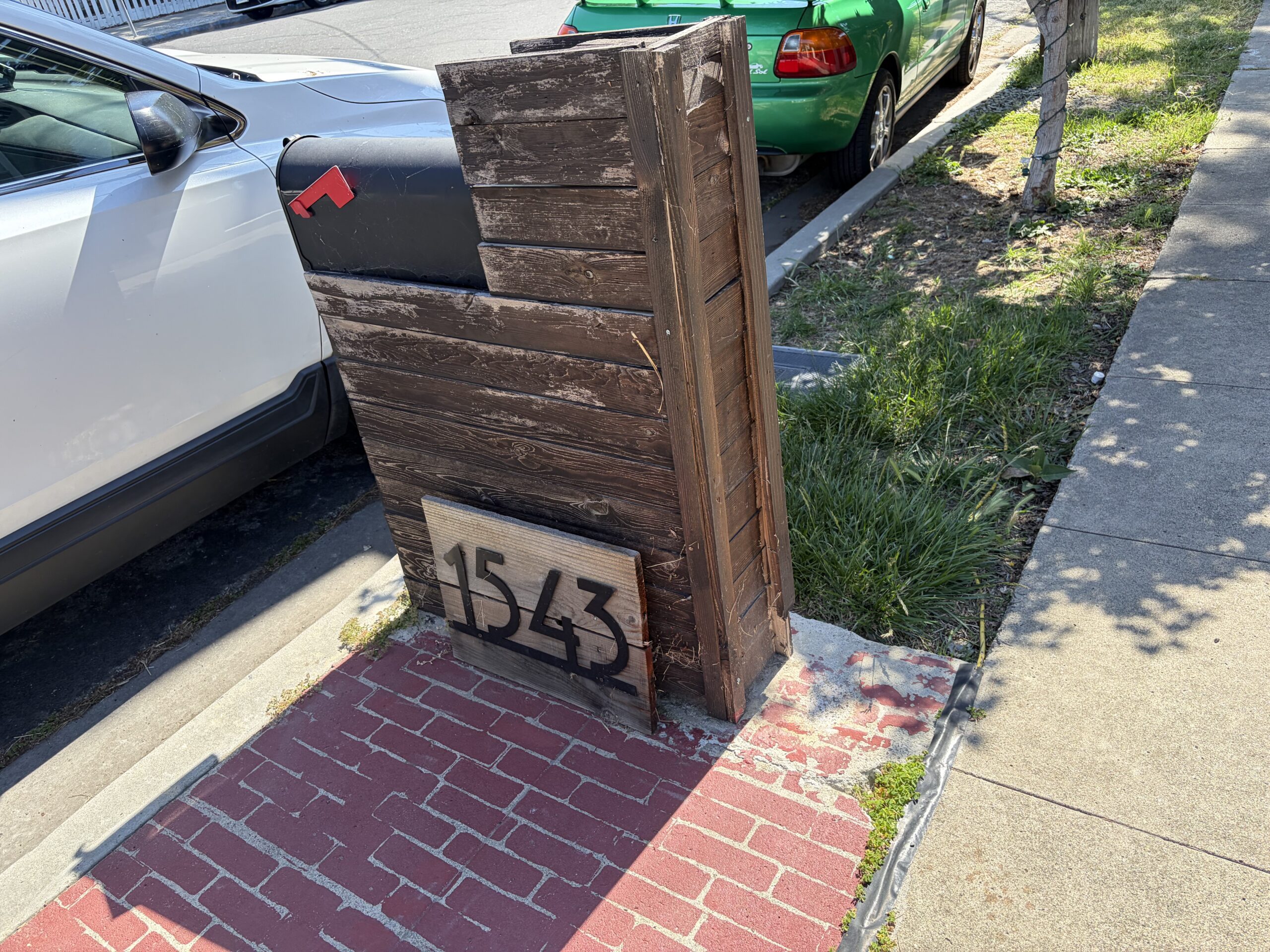
Neighbors first filed complaints in 2023, but Thompson said the issue remained unresolved as residents were redirected between multiple city departments. He said one property included a large mailbox near the curb, while another featured fencing placed close to the sidewalk, which neighbors argued reduced walkability and narrowed public space access.
Park, who voted against the proposal, criticized the plan for removing public oversight from the approval process and limiting opportunities for residents to weigh in.
“The way they streamlined this is not by making the process shorter,” Park, whose district is part of the Lexington Street complaint, told San José Spotlight. “They streamlined this by removing public input, by removing oversight from a public committee and removing discussion.”
During the meeting, Park questioned why the proposal was placed on an already packed council agenda despite staff describing it as non-urgent. He said he repeatedly raised concerns tied to the Lexington Street complaints with city management in recent months without receiving a response.
City staff at the meeting defended the proposal as an effort to modernize a process dating back to 1977. Mike Liw, assistant director of Public Works, said the proposal is intended to streamline approvals for minor encroachments such as fences, retaining walls and landscaping features.
“We’re really considering this a process improvement to streamline something that we thought the council would adopt,” Liw said during the meeting.
City Manager Jovan Grogan said the proposal was “distinctly disconnected” from the Lexington Street code enforcement cases, though he acknowledged the review was prompted after staff examined the existing rules.

Several councilmembers, including Chahal and Jain, also raised concerns about public notification and whether neighbors would have opportunities to weigh in before approvals are granted.
But supporters of the proposal said it is intended to streamline an outdated process that often requires multiple staff reports and public hearings for relatively minor requests.
“I would like to be more efficient and provide a faster approach than going through the variance process via the Planning Commission,” Councilmember Gonzalez told San José Spotlight.
Contact Maryanne Casas-Perez at [email protected] or @CasasPerezRed on X.

Leave a Reply
You must be logged in to post a comment.