


|
Getting your Trinity Audio player ready...
|
Eric Nelson’s concern for Willow Glen merchants is legitimate. Broken glass, repeated theft and fear deserve a serious response. But his proposed solution does not fit his opening example.
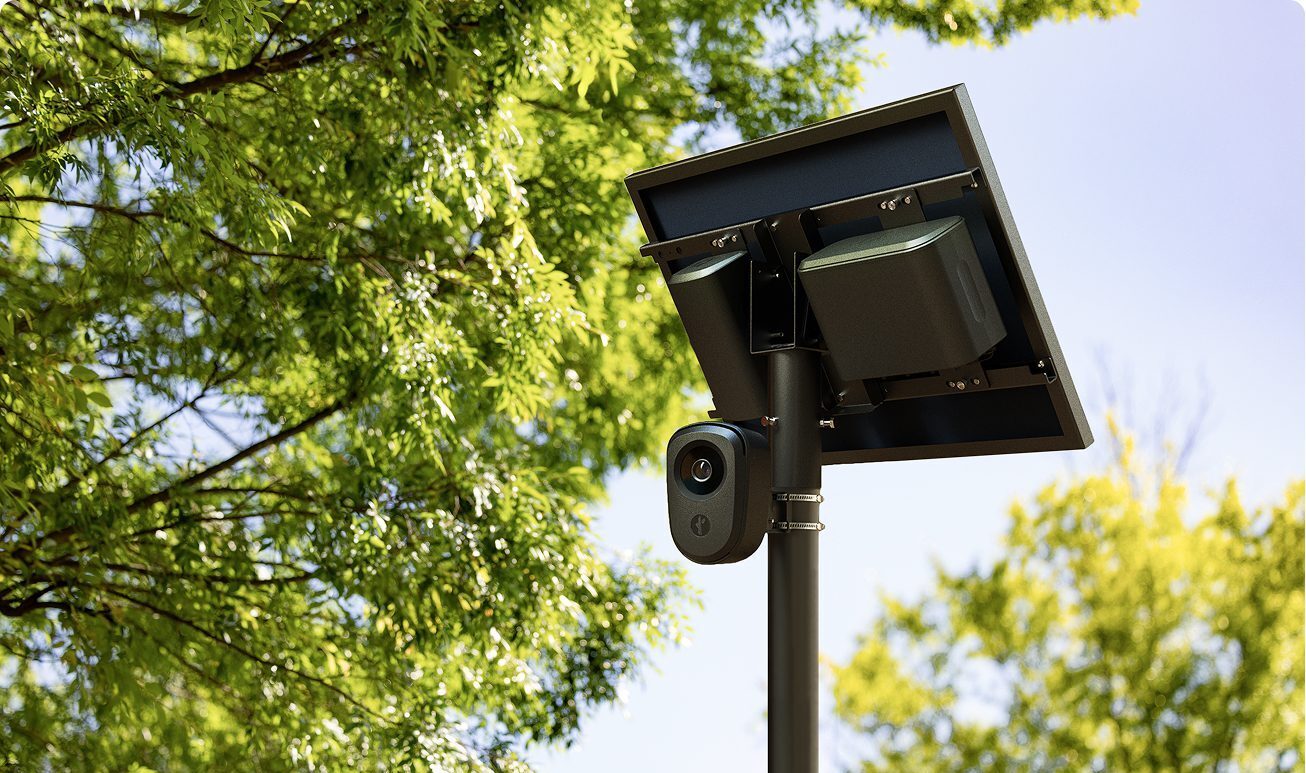
A person riding a bicycle and throwing rocks through storefronts would not ordinarily be identified by automated license plate readers. At least, that is what communities are told when Flock and police agencies describe these systems as tools for tracking vehicles rather than people. Yet 404 Media found that police have used Flock’s FreeForm search feature to find people based on tattoos, clothing, body type, race and other visible characteristics.
That disconnect illustrates what my colleagues and I call “surveillaganda,” part of our forthcoming framework on surveillance legitimacy narratives. These narratives frame surveillance as commonsense, necessary and accountability-enhancing while minimizing uncertain efficacy, data-governance risks and documented harms.
Nelson argues that automated license plate reader technology is proven because more than 5,000 communities use it and courts have upheld it. Neither fact demonstrates effectiveness. Adoption is not validation. Constitutionality is not evidence of crime reduction. Nor does a real-time alert, by itself, establish the difference between a cold case and a solved one.
As a sociologist, former police officer and longtime civilian-oversight practitioner, I pay particular attention to correlation, causation and the misuse of anecdotes as empirical evidence. A 2025 review by leading evidence-based-policing scholars found that rigorous automated license plate reader evaluations have produced equivocal or limited crime effects. The authors acknowledge possible utility in detecting stolen vehicles and assisting some investigations, but warn that isolated outputs cannot establish cost-effectiveness or broader public safety impact.
Flock’s newly disclosed communications guide makes the evidentiary problem harder to ignore. It advises agencies to prepare “carefully scripted” presentations, brief decision-makers before public comment, redirect mass surveillance objections toward governance and local need and “own the narrative.” Nelson may never have seen this guide. Still, his essay follows its structure: fear and quality of life, technology as one tool in a toolbox, local need and selected success stories in place of controlled evidence.
The omissions matter. Flock networks have been used by officers to stalk romantic interests, search tens of thousands of cameras in an abortion-related case, surveil protesters and facilitate access by federal or out-of-state agencies.
These capabilities are especially consequential in San Jose, whose Welcoming San Jose Plan commits the city to immigrants belonging and whose leaders have prohibited federal immigration activity on city property. A city cannot credibly promise immigrant residents inclusion and safety while adopting infrastructure whose data pathways have repeatedly exceeded local assurances and controls. Bay Area governments have suspended, restricted, terminated or reconsidered Flock programs after discovering unauthorized or potentially unlawful data sharing and related legal exposure.
One community member recently captured the central flaw — the underlying argument and proposed solution do not match. Willow Glen deserves strategies fitted to its actual problems, including problem-oriented policing, targeted patrol, environmental design, storefront hardening and focused investigations. Better evidence exists for those approaches, and none requires indiscriminate collection of residents’ movements.
This debate also arrives during an unsettled moment for civilian oversight in San Jose. Independent Police Auditor Eddie Aubrey has reportedly been placed on administrative leave. The office remains in capable hands with Assistant Independent Police Auditor Dwight A. White, a respected oversight professional.
Yet competent leadership during a transition cannot erase the institutional vulnerability created by abrupt disruption. As a former police accountability director and founder of the National Civilian Oversight Academy, I know surveillance expansion demands stable, empowered and durable independent review.
Flock asks agencies to own the narrative. San Jose should own the analysis.
Hansel Alejandro Aguilar, Ph.D., is a sociologist and Santa Clara County District 4 resident. His work focuses on migration, human rights, policing and public accountability. He is an adjunct professor at Evergreen Valley College and George Mason University and previously served as Berkeley’s first permanent director of police accountability. He is the founder of the National Civilian Oversight Academy. The views expressed are his own.

Leave a Reply
You must be logged in to post a comment.