


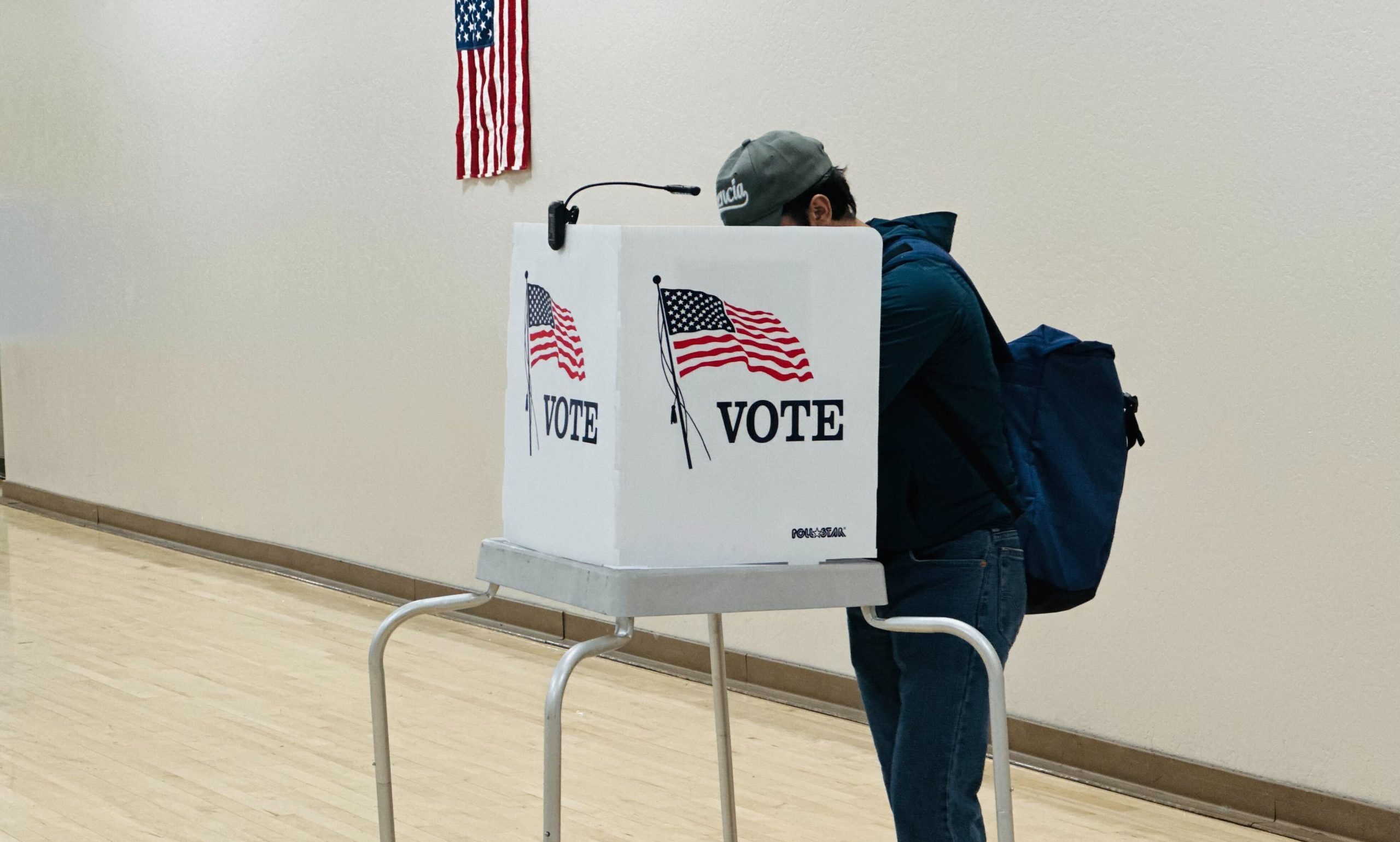
Look ahead to Dec. 30. Maybe you’re out of town visiting family, or enjoying holiday presents with your kids, or getting ready for New Year’s Eve. Does anyone have “voting in a special election runoff” on their bingo card?
Yet that’s what Santa Clara County expects voters to do. Amid a budget crisis, the county will have to spend $13 million to conduct a Dec. 30 runoff to choose a new assessor due to existing election rules. Those funds could instead support health care, public safety or housing.
Turnout in runoffs typically drops about 40% — and most of those aren’t held in the middle of the holidays. Does anyone really believe a Dec. 30 election will produce a representative result?
It doesn’t have to be this way. If Santa Clara County adopts ranked choice voting — also known as instant runoff voting — voters could rank candidates in order of preference and elect a majority winner in a single, higher turnout election. No need for two elections. No need to vote during the holidays. No wasted millions of dollars.
A smarter, fairer and less expensive way to vote
The Registrar of Voters has estimated what it would take to implement ranked choice voting: $2.7 million in one-time voter education and $1.3 million for ongoing costs. That’s about $4 million total for the first election cycle. Compare that to the $13 million cost of one runoff, and the math speaks for itself.
County voters actually approved the idea decades ago. In 1998, they passed Measure F, amending the county charter to permit an “instant run-off voting system… when such technology is available.” That technology now exists. Our voting equipment already supports ranked choice voting. It’s the same software used in San Francisco, Oakland, Berkeley, Albany and San Leandro, where voters have used ranked choice voting for years.
The state removed the final legal barrier in 2023, with Gov. Gavin Newsom signing a bill that authorizes Santa Clara County to adopt ranked choice voting for its elections. All that’s missing is an ordinance from the Board of Supervisors. It’s too late to use ranked choice voting for the assessor special election, but the county can be ready for future elections.
What ranked choice voting means for voters
With ranked choice voting, voters simply rank candidates first, second, third and so on. If no one wins a majority of voters’ first choices, the last-place candidate is eliminated and their supporters’ next choices are counted, repeating until a candidate earns more than 50%.
I voted this way when I lived in Oakland, and honestly, it felt liberating. I could support my actual favorite candidate without that nagging fear of wasting my vote on a “spoiler” candidate. Campaigns got less nasty too. It turns out candidates play nicer when they need second-choice support from their opponents’ supporters to win.
Santa Clara County can improve representation, save millions and give voters more voice with one proven reform. Ranked choice voting would end costly, low turnout runoffs and make sure that every election produces a majority winner in a single, high-participation contest.
If we can spend $13 million on an extra election, we can certainly invest a fraction of that to make our voting system fairer. Continuing down our current path is costing us millions we can’t afford. If you’re thinking “this sounds complicated,” I get it. Except it’s already working elsewhere in California, with more than 90% of Bay Area voters saying they understand ranked choice voting well.
Tell your county supervisor: It’s time to save money and enjoy our holidays without more politics. Let Santa Clara County adopt ranked choice voting.
Tom Charron is a Santa Clara County resident and co-founder of California Ranked Choice Voting Coalition.
Leave a Reply
You must be logged in to post a comment.