

|
Getting your Trinity Audio player ready...
|
Advocates say Google is hiding a data center inside a planned research and development lab in North San Jose.
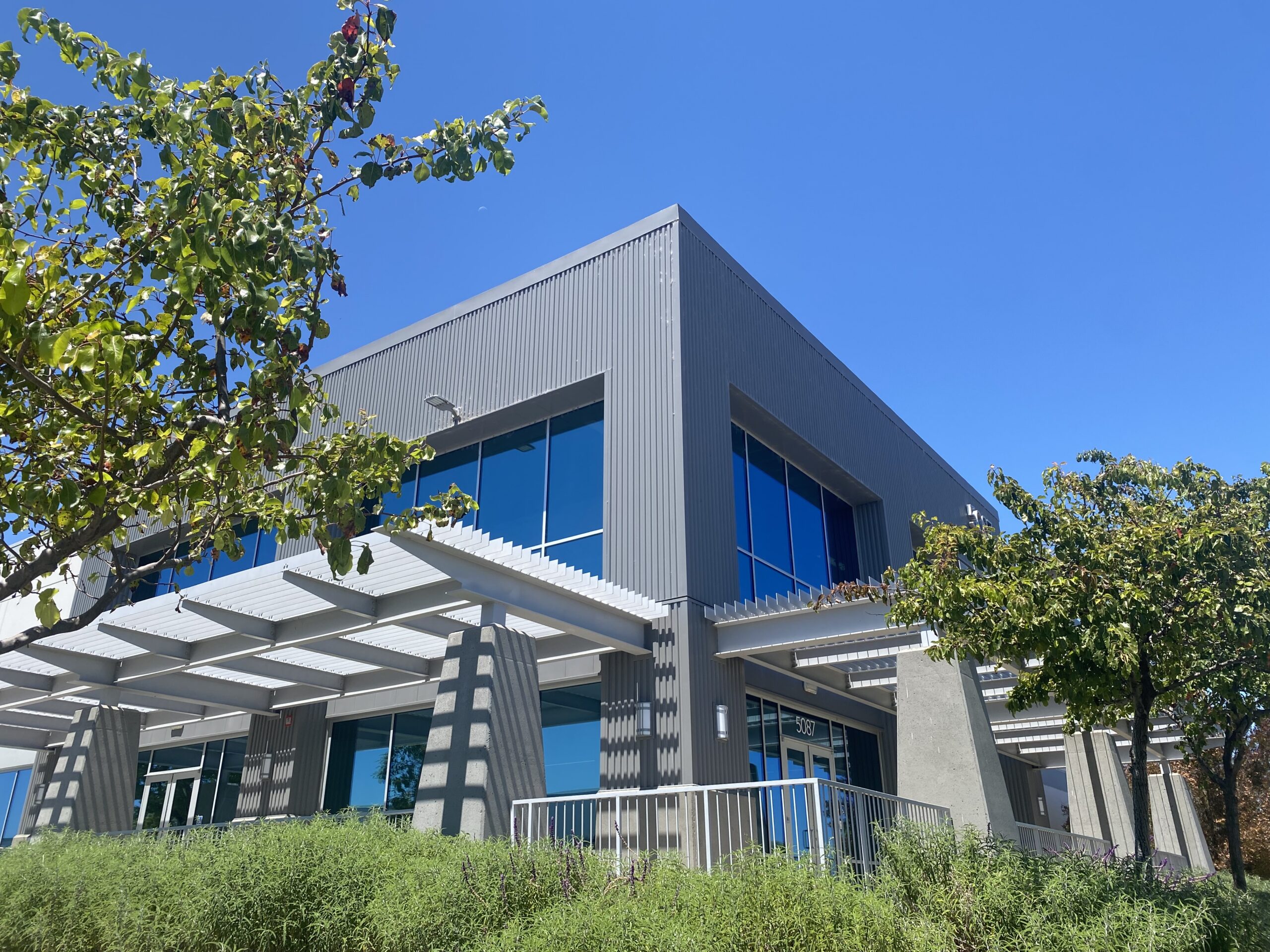
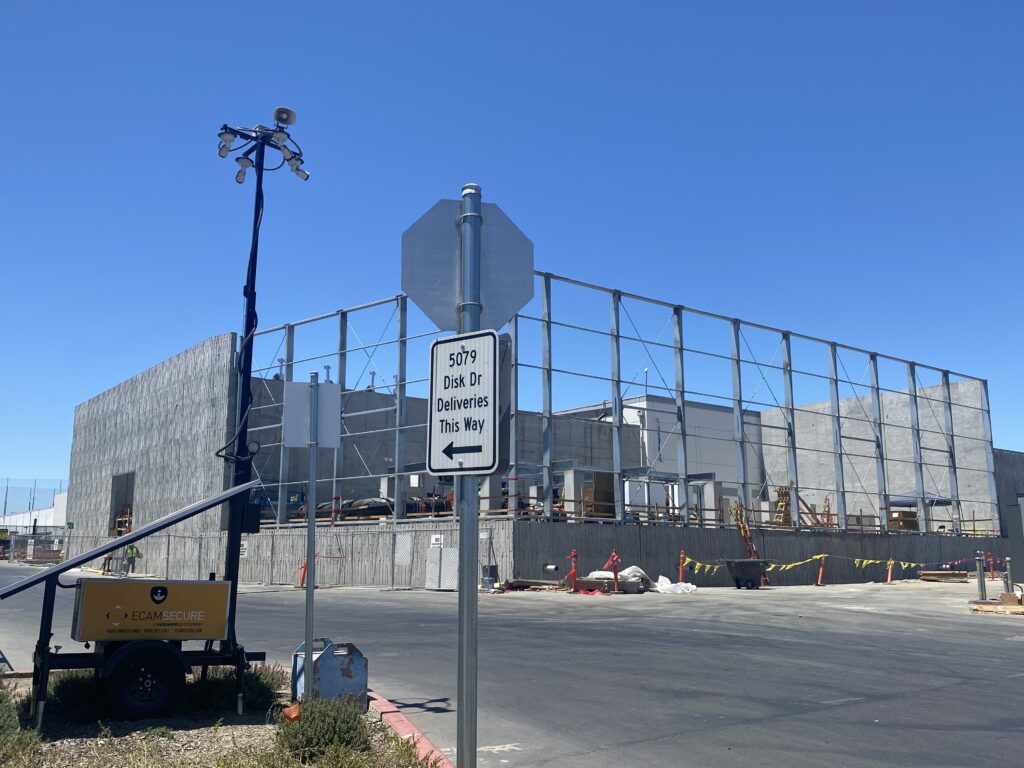
The tech giant’s plans at 5079 and 5087 Disk Drive call for demolishing an existing warehouse and parking lot to construct up to three research and development (R&D) facilities across nearly 483,000 square feet. Architectural blueprints for the facilities show an onsite substation and switching station with three transformers, multiple generator yards and more. The facilities would have a 250-megawatt capacity — enough to power 250,000 homes at any given time. The project is still in the early stages of review.
@sanjosespotlight Google’s planned research and development facilities in North San Jose have all the trappings of a data center despite not being labeled as such, experts say. Homelessness and Equity Reporter Joyce Chu takes a look.
Kelly Abreu, an engineer and co-founder of nonprofit Mission Peak Conservancy, said the project has all the trappings of a data center.
“What I’m concerned about is the mislabeling. They are hiding it,” Abreu told San José Spotlight. “By using this R&D terminology, it could reduce the stigma associated with data centers and reduce resistance.”
A Google spokesperson repeatedly said this project is not going to be a data center, and that the facilities would be for the company’s internal use only. The company is planning to use the 250 megawatts of power for computing lab space to support the engineering of its chip technology.
“The facility does not include the standard backup power generation required for data centers because it is dedicated solely to internal Google lab work, meaning external customers do not rely on its uptime,” the spokesperson told San José Spotlight. “We are pursuing a site development permit for R&D use with the city, rather than a special use permit which would be required for a data center.”
R&D facilities are used for experimentation and can include labs, rooms for equipment testing, ventilated enclosures to protect people from inhaling harmful chemicals and cleanrooms to keep contaminants out. These types of facilities use 10 times less energy than a data center, Abreu said.
Data centers, on the other hand, warehouse computer servers and data storage drives. They require cooling systems to prevent the thousands of continuously running computers from overheating. The project’s blueprints show multiple proposed cooling towers.
“When you look at this building, you don’t see an R&D lab, you see row after row after row of stacks of hardware,” Abreu said. “So this building has all the characteristics (of a data center).”
Shaolei Ren, an electrical engineering professor at University of California, Riverside whose work centers on artificial intelligence, said a typical R&D facility wouldn’t need cooling towers, substations, generator yards or server rack configurations — unless the “research and development” activity itself needs a data center, such as AI training.
“A 250-megawatt substation is enough to power a mid-sized city, so the blueprint almost surely points to a data center,” Ren told San José Spotlight. “If 250-megawatts is exclusively for the project, it will be one of the largest data centers in California.”
Building data centers
Developers have faced pushback from communities across the country against AI-focused data centers due to the exorbitant consumption of local energy and water, as well as harm to the environment and public health. At a May 14 community meeting, Bhavesh Parikh, district director of real estate for Google, said the proposed R&D facility would use recycled water from nearby wetlands and run on mostly carbon-free energy.
Data centers produce a discharge of dissolved metals and chemicals that can affect local drinking water and rivers if not properly treated. In places like Morgan and Newton counties in Georgia, residents’ water became discolored after the construction of Meta’s data centers.
In the Southern California city of Monterey Park, residents overwhelmingly passed the nation’s first permanent ban on new data centers. Other California cities such as Montebello, Baldwin Park and El Monte have passed temporary bans.
San Jose is positioning itself to become the world’s AI hub even as residents have expressed concerns over the impacts of data centers. Last July, San Jose announced a partnership with PG&E that aims to make it easier to develop data centers and other large-scale energy use projects in the city.
The city has roughly 20 data centers in operation, with more to come. Six more data centers are under construction, and five are in the entitlement review process to obtain city approvals before beginning construction, according to Erica Garaffo, assistant to the city manager.
Residents opposed to project
Marcos Espinoza, president of Alviso in Action, said Google’s lack of transparency is a “smack in the face” to the majority Latino North San Jose community that has been historically disadvantaged. The area is already affected by a disproportionate amount of environmental and health impacts from industrial pollution.
“I’m shocked that they would try to not be straightforward,” Espinoza told San José Spotlight. “Data centers are a big buzzword nowadays, so they try to keep that away from any development plans.”
District 4 Councilmember David Cohen, who represents North San Jose, said he’s not concerned about how the facility is labeled, but instead is focused on the facility using recycled water and having a grid designed to handle excess capacity.
“How one defines that is not important to me necessarily,” Cohen told San José Spotlight. “What’s important is how are they going to power and cool the facility. And my job is to make sure that the resources are there for them to do it, and that if they do it, it doesn’t have an impact on the community.”
The city does not plan to do a full environmental review of the proposed project, and instead will use prior California Environmental Quality Act (CEQA) reports from 2000 and 2013 to analyze the current project.
“A subsequent or supplemental environmental impact report is not required for the project because based on the project description and information provided to the city, none of the conditions described in CEQA Guidelines Section 15162 (call) for the preparation of a subsequent (environmental impact review),” Cort Hitchens, a city planner overseeing the project, told San José Spotlight.
The city’s planning website lists Google’s project as a “large-energy use project” distinct from a data center.
“It’s just disingenuous. It’s like putting down the community,” Espinoza said. “Be honest, just be clear with the community.”
Contact Joyce Chu at [email protected] or @joyce_speaks on X.

Leave a Reply
You must be logged in to post a comment.