


|
Getting your Trinity Audio player ready...
|
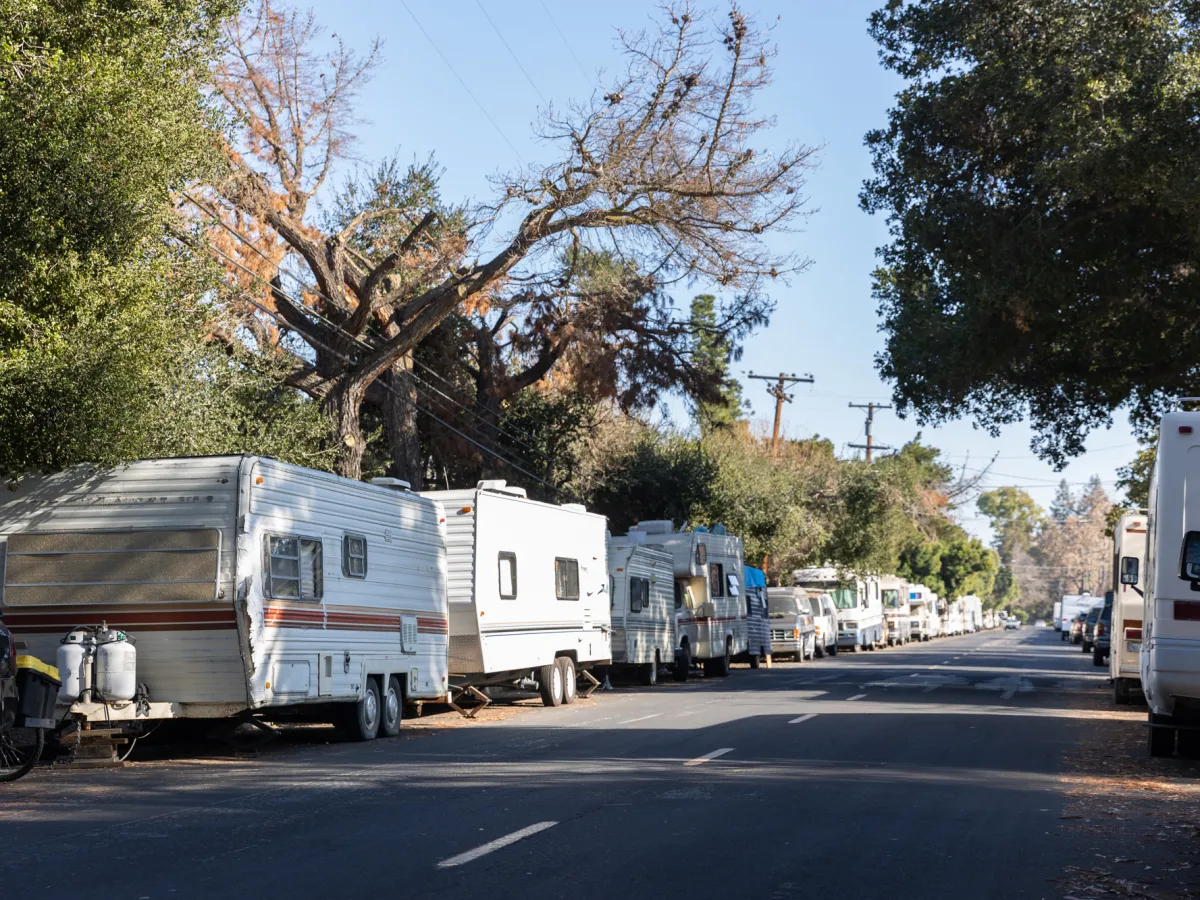
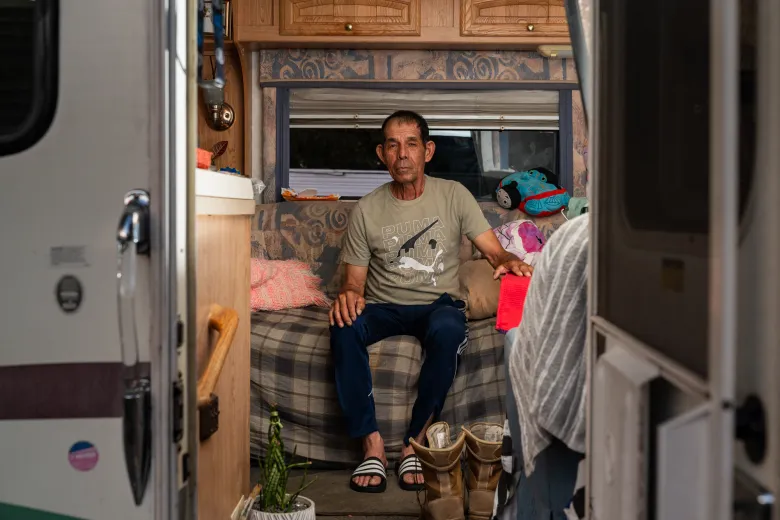
For years, Sylvia Garcia Cruz and her family have lived in a recreational vehicle on Terra Bella Avenue, one of roughly three dozen streets in Mountain View that does not prohibit the parking of RVs and trailers. Twice a week, Garcia Cruz pays someone to move her RV to a different spot on the street in order to comply with the city’s 72-hour parking rule.
While moving is cumbersome — it takes about four hours and requires coordination with other vehicles — Garcia Cruz does not have much choice if she doesn’t want to get slapped with a ticket or towed by the city. It also can be difficult finding available space, especially if there are a lot of people seeking parking spots.
“Sometimes we talk it out,” she said in Spanish. “Sometimes we just park somewhere else.”
In the past year, there has been an increase in the number of oversized vehicles on Mountain View’s streets, according to a June city staff report posted on Mountain View’s public records portal. The uptick has occurred amid a persistent regional housing shortage and homelessness crisis, despite the city’s efforts to invest in affordable housing projects and safe parking lots for residents living in vehicles.
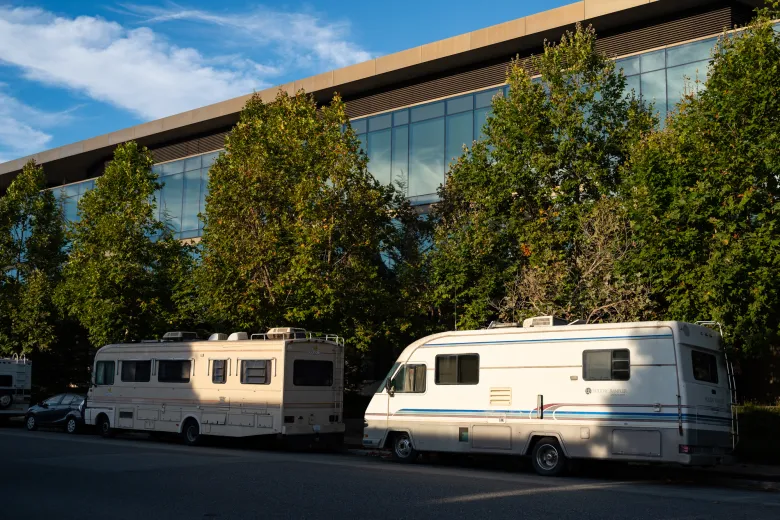
In August 2025, the city counted 306 inhabited vehicles on its streets. Seven months later, that figure rose to 438, the report said. Of those, the vast majority — 402 — were RVs and trailers, with most parked in commercial and industrial areas.
The report attributed the increase to a handful of factors, including the removal of street parking on El Camino Real to make way for bicycle lanes and the implementation of more restrictive policies in neighboring cities. According to city staff, efforts to curb RV and trailer parking in Palo Alto are a “contributing factor” to the increase in Mountain View.
“From anecdotal information, we cannot say that the people currently using oversized vehicles as housing in Mountain View are primarily displaced Mountain View residents,” the report said. “Rather, we are increasingly hearing that people are relocating to Mountain View from other areas.”
Oversized vehicle ban
In 2020, Mountain View voters approved a measure banning RVs and trailers from parking on “narrow streets,” a definition that covers most of the city’s roadways. The previous year, the City Council passed a separate policy prohibiting large vehicles from parking on streets with bike lanes.
In 2021, a group of Mountain View residents filed a class action lawsuit challenging the ban, arguing it violated the constitutional rights of people living in vehicles. A year later, the city settled the lawsuit, agreeing to restrictions on how it implemented the narrow streets and bike lane policies.
The settlement, which took full effect at the end of February 2023, requires Mountain View to maintain at least 3 miles of streets with parking capacity on both sides for oversized vehicles. Currently, Mountain View exceeds the 3-mile requirement. A city map shows that the parking adds up to 8.7 miles, although not all of it is “necessarily viewed as conducive to oversized vehicles,” according to the June report.
While the settlement ensured some street parking for oversized vehicles, it only lasts four years — and the expiration date is quickly approaching. As of Feb. 28, 2027, Mountain View will no longer be subject to the settlement’s requirements, including maintaining 3 miles of available parking and providing a map showing parking restrictions throughout the city.
That means Mountain View could crack down on oversized vehicles by adopting additional regulations beyond the narrow streets and bike lane policies — if the city council chooses to pursue that path. Between now and February, there will be a significant turnover on the council with three new members elected in November.
While it isn’t known what direction the council will take, city staff are already thinking about how to inform people living in their vehicles about possible changes that could apply early next year.
“We just have to be prepared for the messaging, the noticing, some sort of transition plan so no one is caught off guard,” City Manager Kimbra McCarthy said at a June 23 council meeting. “Especially for those that are the most vulnerable.”
Community complaints about RVs

Leave a Reply
You must be logged in to post a comment.