

|
Getting your Trinity Audio player ready...
|
RVs that used to be ubiquitous on San Jose’s streets have dropped by more than half since the city began upping the pressure on people living in vehicles. While officials say this has created cleaner and safer neighborhoods, those vulnerable say these policies are pushing them over the edge.
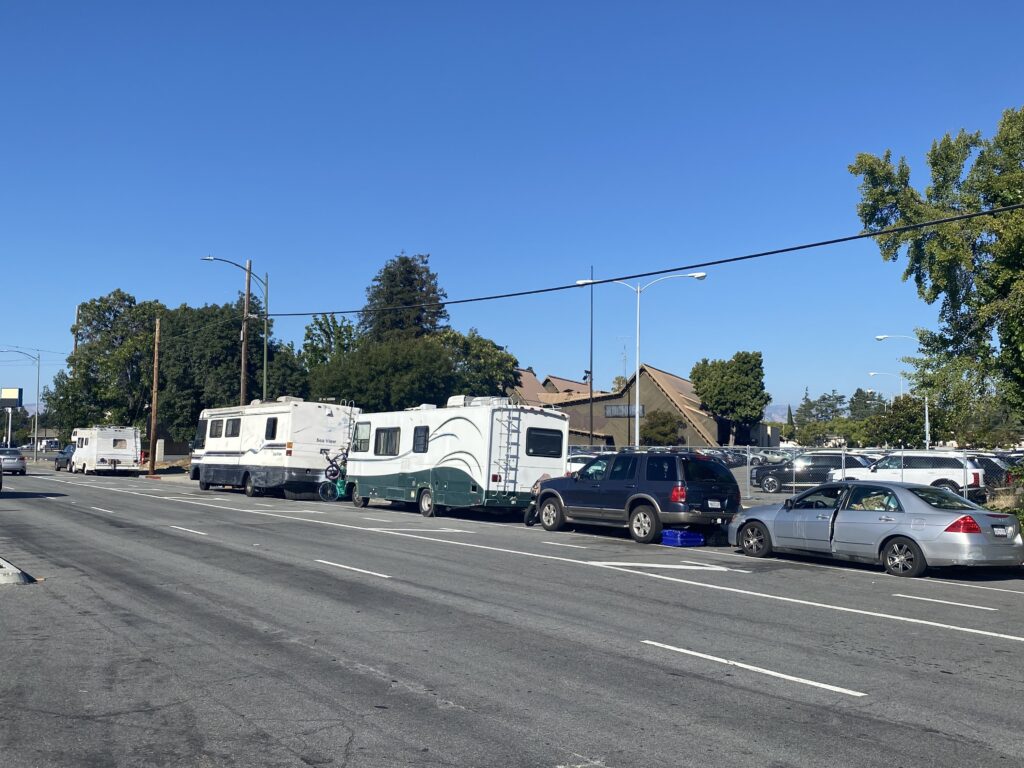
Since last January when San Jose began a multipronged approach to clear live-in vehicles, the number has dropped from 960 to 385. The city accomplished this by temporarily banning RVs from dozens of streets, cracking down on vehicles with expired registration and assembling a team to ticket RVs parked in smaller pockets of the city. Over the past fiscal year, San Jose has towed more than 5,467 vehicles, compared to less than 4,000 in the previous fiscal year, according to city data.
“San Jose neighborhoods are seeing progress,” Seamus Gann, spokesman for Mayor Matt Mahan, told San José Spotlight. “The (Oversized and Lived-In Vehicle Enforcement program also known as OLIVE) helped reduce our major hotspots, and (the Supplemental Enforcement Program) builds on that work with faster citywide enforcement. We’ll continue to pair accountability with meaningful offers of help so people have a path off the streets.”
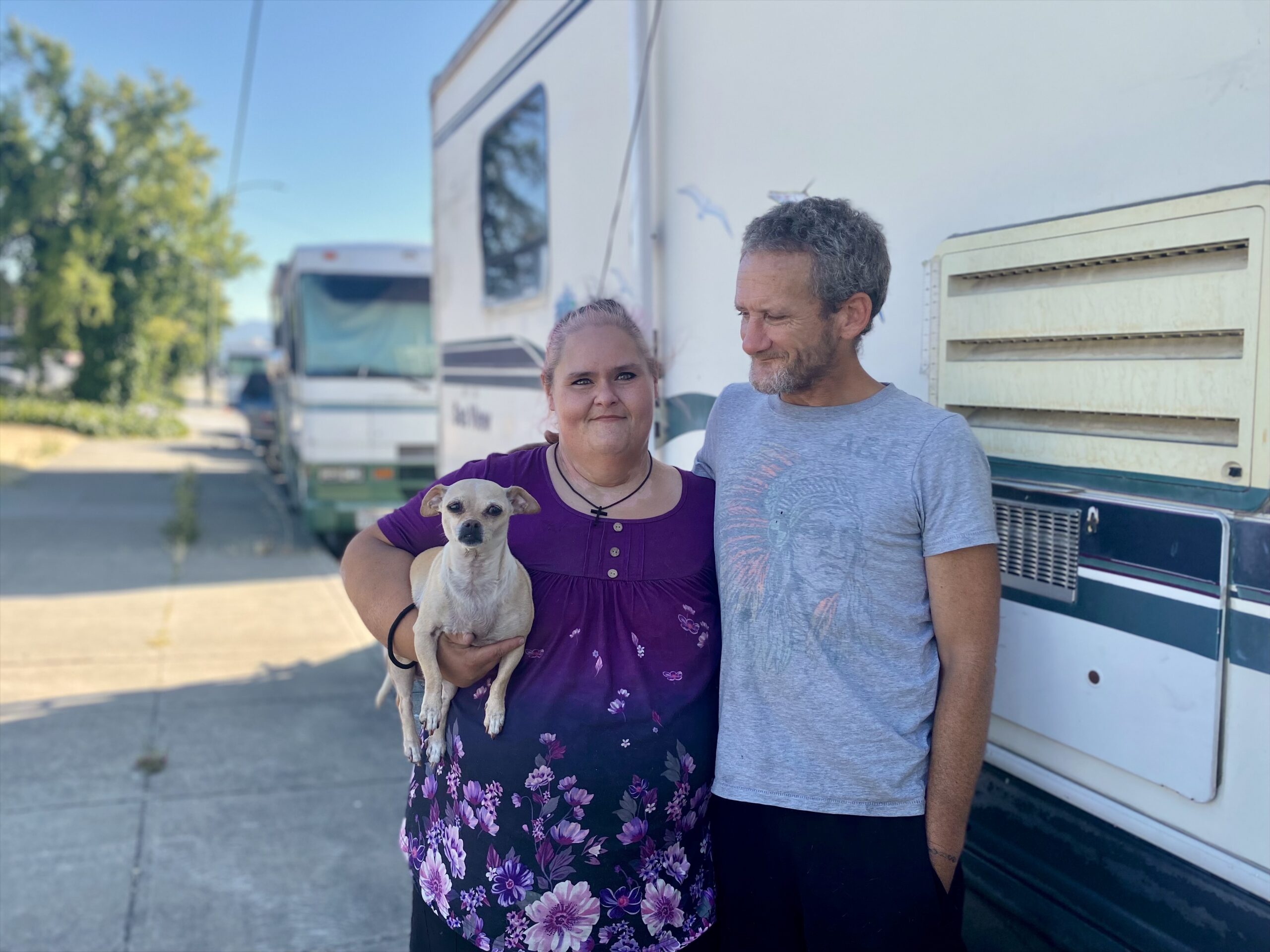
But many RV residents like Tania Silverman have not received help, and are pushed out of an area. Silverman has lost count of how many times she’s had to move. The 39-year-old has lived in her RV for the past decade and is battling an autoimmune disease and diabetes. Not having a kitchen to cook her meals complicates her ability to keep her blood sugar in check.
“Staying in the car is not healthy for someone like me,” she told San José Spotlight. “I get so overwhelmed with all of it, and I’m just tired. I deserve a home just like everyone else.”
She and her husband Eric are running out of places to park. Sometimes they can stay in a spot for a few months. Sometimes, a few days. They just relocated to another street in West San Jose after being kicked out of their previous location.
@sanjosespotlight Since San Jose began ticketing and towing lived-in vehicles more aggressively, the number of RVs and cars parked on streets have dropped from 960 to 385 in the past 18 months. While officials say this has created cleaner and safer neighborhoods, those vulnerable say these policies are pushing them over the edge. Homelessness and Equity Reporter Joyce Chu reports.
For the Silvermans and 22-year-old Jason, who is parked nearby, they are now experiencing encounters with cops almost daily.
“When I started living in my car, I instantly started getting messed with by cops when I never really had before,” Jason, who didn’t want to use his last name for privacy reasons, told San José Spotlight. “(I get) looked at differently by anybody and everybody.”
San Jose wrestles with RVs
One of the catalysts for temporary RV bans began when the City Council in April 2024 set tougher RV restrictions near schools. It approved three different policies to limit where large vehicles can park, where people living in their RVs can sleep overnight and how far encampments can be from schools.
Before widespread parking enforcement programs took effect last year, lines of vehicles were concentrated in downtown and East San Jose, along busy streets like Tully Road and residential areas like Las Plumas Avenue. One of the most impacted areas was in District 7, which encompasses parts of central and East San Jose, including the Little Saigon Business District.
“In District 7, residents have dealt with unmanaged lived-in vehicles, abandoned vehicles, illegal dumping, fires, blocked streets and unsafe conditions,” Councilmember Bien Doan told San José Spotlight. “The most common feedback we receive is that residents want these efforts to continue longer and reach more impacted areas. The (Oversized and Lived-in Vehicle Enforcement program) is not the final solution to homelessness, but it has given us an important tool to address the serious impacts our neighborhoods and small businesses face every day.”
While the city keeps an ongoing dashboard of what streets it’s cleared and where lived-in vehicles exist, it doesn’t track where these people move to. Some residents have simply traded RVs for tents, including one of Tania’s friends whose vehicle was towed, leaving him on the streets. Others have scattered to neighborhoods across the city.
Homeless advocate Gail Osmer said dispersing people from one place to another has been a waste of taxpayer money.
“A lot of people are still outside,” she told San José Spotlight. “The whole program to me was done only because of the Super Bowl and FIFA. The mayor wanted to push all the unhoused out of San Jose.”
A fraction were lucky enough to get housing, including those who lived at Columbus Park which the city dismantled last year. It was the city’s largest homeless encampment, where about 370 vehicles had congregated. Officials created an RV-buyback program, where those who gave up their RVs for shelter would receive a stipend. The city worked for weeks to place some Columbus Park residents into motels it recently converted for shelter.

The clearing of Columbus Park was part of the first iteration of the OLIVE parking enforcement program. The city posted tow-away signs on designated streets at least a week prior to the sweep in coordination with the Housing Department. Streets marked as temporary tow away zones were published online so outreach teams had the ability to make contact with people ahead of sweeps.
“The OLIVE program is unique in that it was developed and funded with additional staffing and a specific process/timeline that exceeds the warning/notification and enforcement requirements,” a Department of Transportation spokesperson told San José Spotlight.
However, the city plans to lean on a strategy that cites vehicles without prior notification or engagement with other departments, according to a city memo. Once a vehicle is hit with a citation, it must be moved within 72 hours before being towed.
The strategy targets RVs across the city, not just in the areas where vehicles are concentrated.
“Every time we get kicked out of a spot, we can’t get help,” Eric told San José Spotlight. “We shouldn’t have to seek these services, they should’ve already been there.”
Contact Joyce Chu at [email protected] and @joyce_speaks on X.

Leave a Reply
You must be logged in to post a comment.