


|
Getting your Trinity Audio player ready...
|
AI data center backlash is growing, fueled by community concerns about local grids, electricity prices, water use and the environment.
Meanwhile, AI technology is being integrated into every industry imaginable, which drives more AI data center demand. According to one recent real estate investment report, “nearly 100 gigawatts of new data centers will be added between 2026 and 2030, doubling global capacity.”
There is no putting the AI genie back in the bottle. That doesn’t mean we can’t be smarter about how we make the magic.
Proactive preparedness
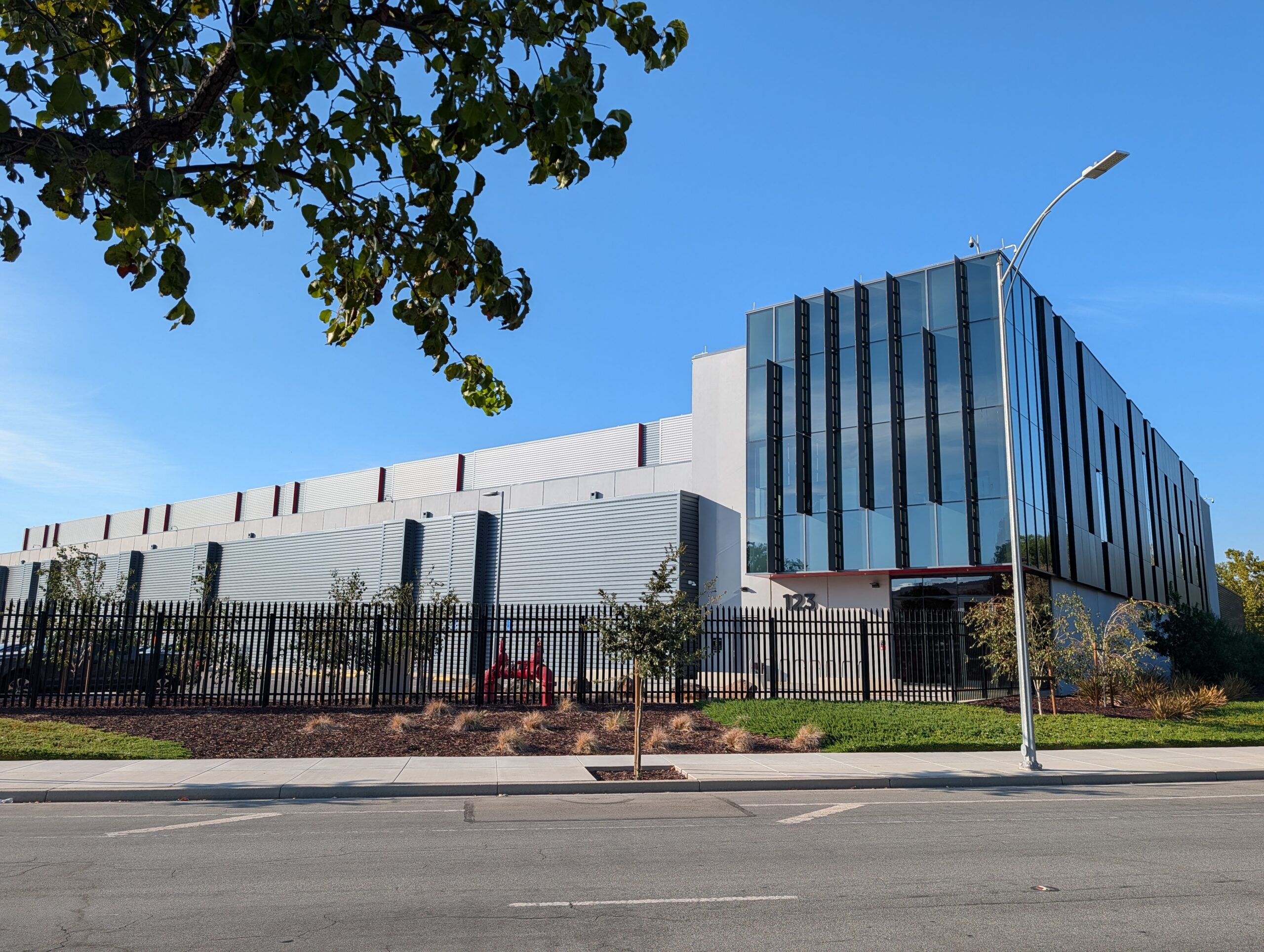
Big tech is projected “to spend about $750 billion this year on data centers, chips and other AI infrastructure, up from roughly $400 billion last year,” accelerating the build-out boom. Silicon Valley is ground zero for tech development, so it is no surprise that there are a dozen-plus new data center projects taking shape in Santa Clara County.
Leaders here are also well-aware that AI data center growth creates a power-delivery bottleneck impacting local grid function, so many are being proactive. PG&E and San Jose have already struck a deal for major grid improvements, with San Jose Mayor Matt Mahan noting the economic imperative: “The demand for data centers is significant because cutting-edge, low-latency computing capacity could help draw R&D labs that want to be as close to those data centers as possible,” adding they could help maintain our competitive edge in the AI race.
Where new AI data centers are being developed, local grids can be further protected with the installation of more resilient and elastic energy supply for load balancing, as opposed to simply tapping into and overburdening the local utility’s existing infrastructure.
A significant share of power for highly dynamic AI load profiles needs to be routed through batteries and supercapacitors to reduce impact on the grid, and the installation of that energy storage as close to the servers as possible avoids costly copper wiring and transfer losses.
Valid NIMBY concerns
But simply ramping up traditional battery and supercapacitor production and installing more battery energy storage systems for AI data centers does not address all of the negatives for communities, such as sustainability issues surrounding cooling requirements and water use, or the risk of thermal runaway events in battery packs resulting in rare but devastating fires like last year’s Moss Landing disaster.
Each of these issues should be addressed thoughtfully for data center buildout efforts to turn a rising tide of resistance, gain community support and succeed at the necessary scale in San Jose and everywhere else. Many of them can be directly mitigated by simply changing the way energy storage is manufactured. For example, with dry processes that produce inherently safe batteries and supercapacitors tailored for rack integration close to the server, with higher pack energy density, lower resistance and lower heat generation — which means less need for cooling and water use.
It may surprise some to learn all of this is possible without inventing new chemistries or solid-state breakthroughs. We just have to demand it.
Build fast vs. build to last
AI technology may be a revolutionary innovation, but growth requires constructing data centers and energy systems that are different from what we already have. That rightfully raises plenty of questions.
Nobody wants you to “build fast and break things” in their backyard.
It is perfectly reasonable for communities to require transparency, due diligence and even some revolutionary innovation in local data center development and its energy architecture, ensuring that what’s built in their neighborhoods is safe, sustainable and cost-effective, right now and far into the future.
Arwed Niestroj is president and COO of San Jose-based Sakuu.
Leave a Reply
You must be logged in to post a comment.