


|
Getting your Trinity Audio player ready...
|
Who earns a living pretending that smart phones don’t exist? Well, consider Orange Barrel Media, whose quintessential smartphone denial takes the form of so-called wayfinding signs — more accurately identified as commercial billboards — designed to be placed on public sidewalks.
These up to eight-foot-tall kiosks ostensibly provide directions to restaurants, theaters, museums and other attractions, but they duplicate information easily available from pedestrians’ ubiquitous smartphones. Reports from Atlanta, Detroit and Miami show a typical single kiosk was used only about 10 times a day for directional information. The rest of the time, the digital screens are devoted to commercial advertising.
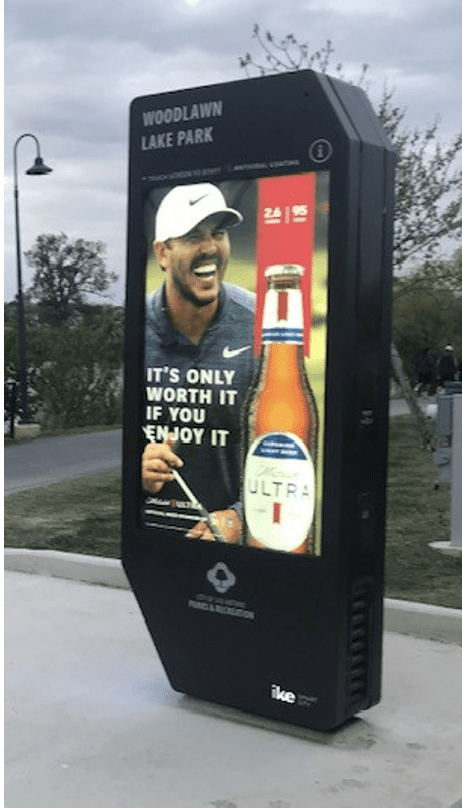
The reality is that wayfinding signs are not a pedestrian favorite, and consequently cannot command high rates to advertisers nor generate significant revenue to cities.
However, that doesn’t dissuade San Jose’s Office of Economic Development (OED) from wholeheartedly advocating wayfinding signs be erected downtown. In fact, OED has spent up to $800,000 in development of the wayfinding project. According to OED, the list of good outcomes from allowing these digital kiosks on public property is almost infinite, despite little data and social science to back up such exaggerated claims.
It was OED that led the charge to revoke San Jose’s ban on new billboards on public property, even though 80% of residents opposed billboards on public property downtown, according to a 2021 Planning Department survey.
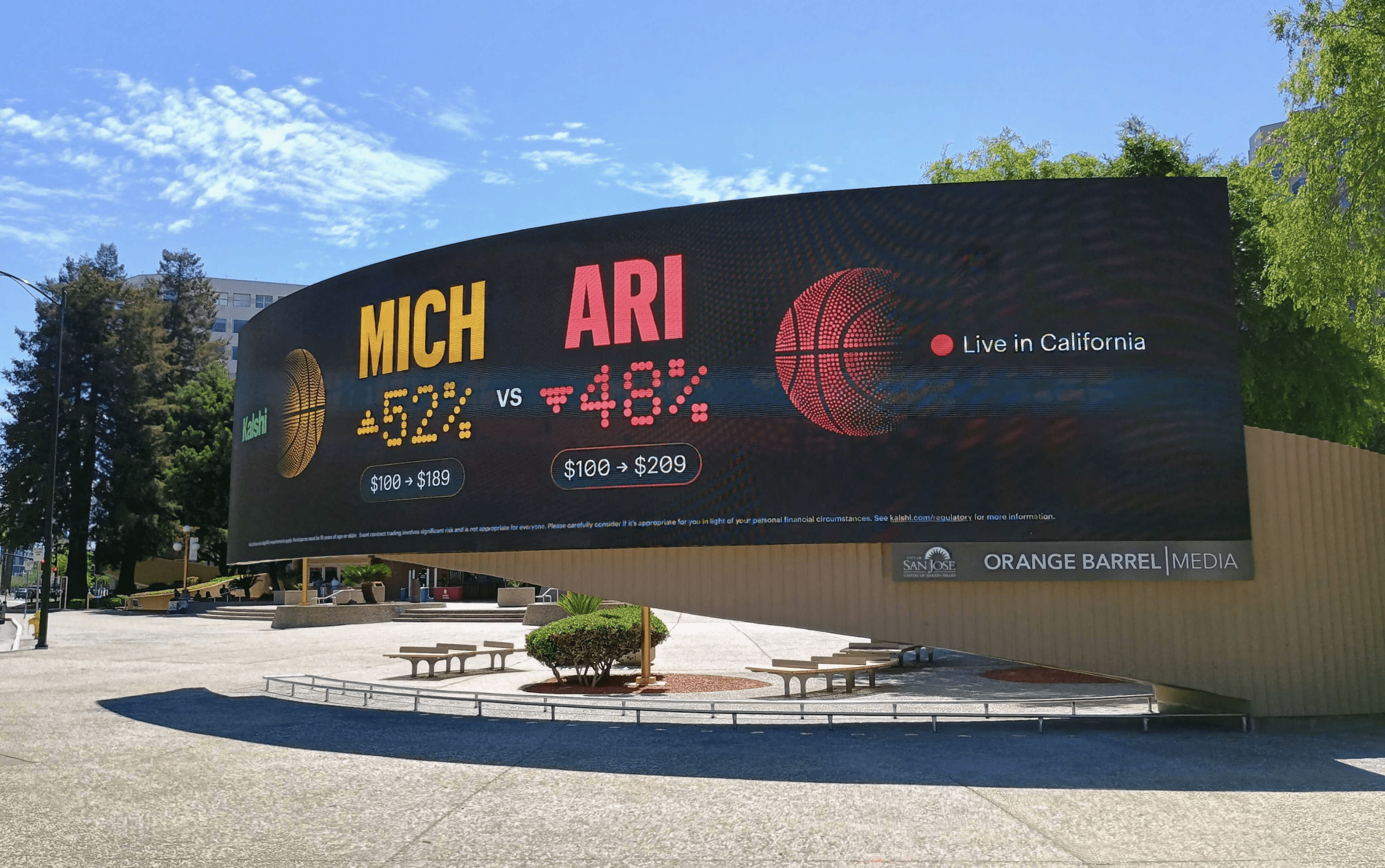
Despite such opposition, full size digital billboards are in operation at San Jose’s Center for the Performing Arts, and coming soon to the McEnery Convention Center as well as along the Guadalupe River Trail near San Jose Mineta International Airport and Highway 101.
Whether they’re talking about full size digital billboards or the pedestrian sidewalk version, city decision-makers lead their enthusiasm for selling out our public spaces with a vision of the money that could be made. In the case of the proposed wayfinding signs, Orange Barrel has convinced OED the amount could possibly be as much as $30,000 per kiosk per year. But in Berkeley, each Orange Barrel kiosk has generated only $5,000 or less annually.
In 2025, Berkeley Councilmember Shoshana O’Keefe was quoted in Berkeleyside saying, “The bottom line is that we are not getting what we expected.” She went on to say, “The last thing I want is to look at another glowing rectangle when I’m going about my business. I am interested in getting rid of them as soon as contractually possible.”
Some San Jose officials, however, believe the city’s ability to generate revenue, no matter how small the amount or how that revenue is generated, does not matter.
And that’s the rub. The arguments against wayfinding signs are many: they impede walkability, violate the Americans with Disabilities Act, create vehicular distractions, foster a negative aesthetic and are at risk for vandalism. Nonetheless, the notion that if a city can make any amount of money — no matter how little —doing something that even a majority of residents oppose, decision-makers often believe making money is the preferred choice.
Making money becomes a form of power disconnected from community values and the public interest those values make possible. The point being that once having gone down that road, city decision-makers will need more than a wayfinding kiosk to find their way.
Jason Hemp, Les Levitt and John Miller are co-founders of No Digital Billboards in San Jose.
Leave a Reply
You must be logged in to post a comment.