


|
Getting your Trinity Audio player ready...
|
In April, San Jose broke ground on a new downtown housing project with something many Americans consider essential missing entirely: parking. The historic Bank of Italy building is being converted into much-needed housing — with no on-site spaces for cars.
Impractical? Maybe not.
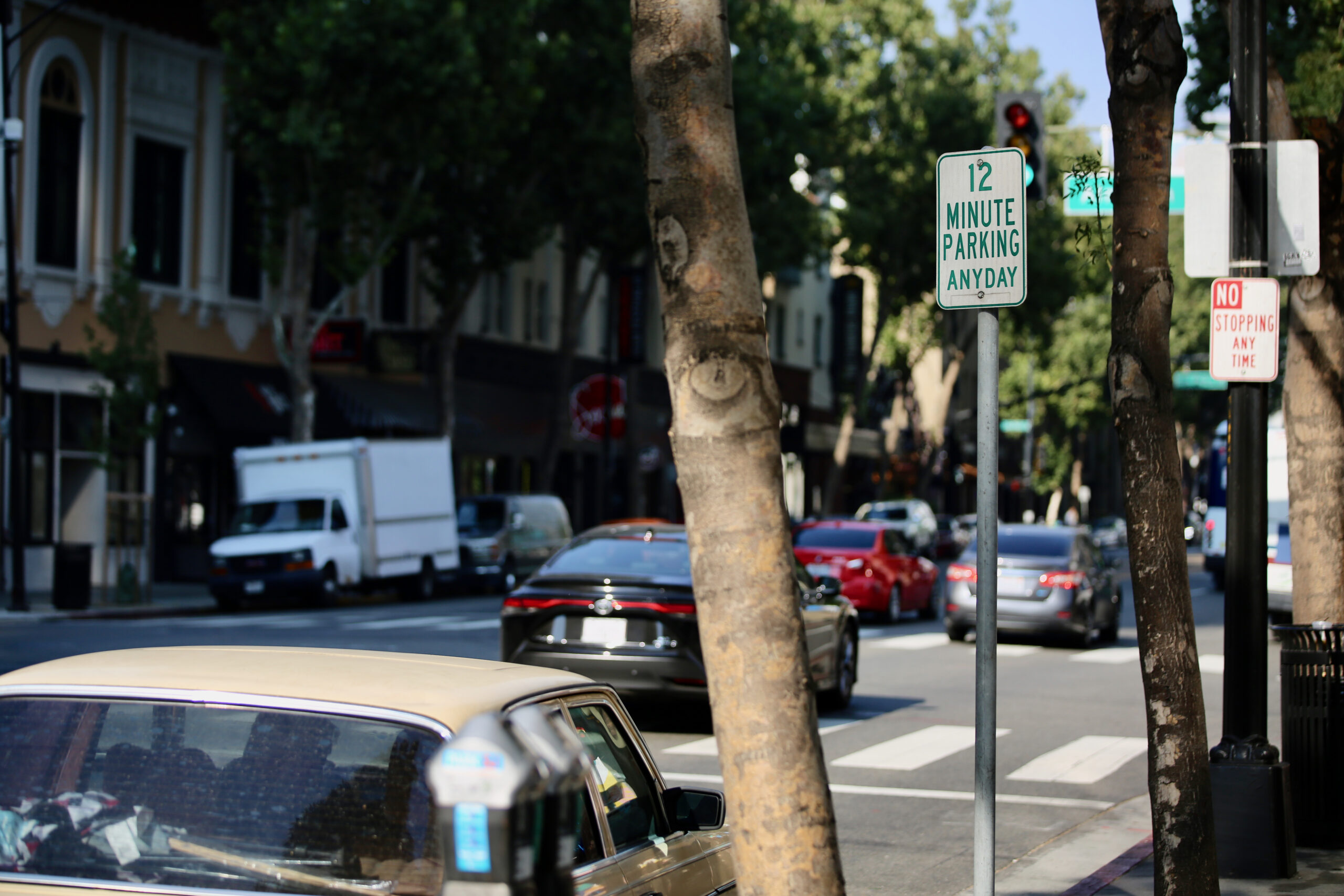
Instead, the project reflects a question cities across the country are increasingly asking: How much space should we continue dedicating to cars — and what could happen if we invested more in people instead?
In 1927, the 14-story Bank of Italy building at the corner of South First Street and Santa Clara Street opened (to much hype and controversy) as San Jose’s first skyscraper. Since then, it has stood the test of time as a recognizable landmark and defining feature of the city skyline.
Now, after sitting empty since 2017, its conversion will bring 109 market-rate apartments to an area desperate for more housing. The revamp does not include any on-site parking, a decision that has sparked debate about the relationship between housing, transit and the true cost of parking in urban development.
Parking is expensive. Recent UCLA research found that aboveground parking structures average roughly $52,000 per space nationally, while underground parking can exceed $70,000 per space. In San Francisco, those numbers are closer to $55,000 and $99,000, respectively. That money doesn’t come out of thin air, and ultimately these costs are passed on to renters and homebuyers.
Parking also carries opportunity costs. Cement lots and parking structures consume valuable urban blocks that could otherwise support housing, parks and businesses. Saving space and money through less parking means more possibilities — and more funding — for housing, transit, walkability and vibrant public spaces. As housing affordability continues to challenge communities across California, we might need to rethink the idea of more parking as the default.
By 2030, the U.S. is projected to have 22 million more millennials than baby boomers, and recent trends show that younger generations prioritize convenience, walkability and broader mobility options, making the shift from car culture to multimodal mobility the logical choice in new developments. Older generations and people with disabilities also greatly benefit from multimodal mobility options that offer accessible opportunities for connection.
Indeed, transit-oriented developments — compact, often mixed-use developments constructed close to a transit station — are increasingly viewed as an attractive option. Transit-oriented developments aim to provide travel mode choice, increase transit ridership, reduce vehicle miles traveled and meet other objectives such as greenhouse gas emissions reduction. A recent study on transit-oriented developments demonstrated that easy access to transit can help attract residents, support local businesses and reduce traffic congestion.
Removing parking as part of the default for new developments means the new default can focus on funding what people need for a safer, more sustainable and affordable future. When the Bank of Italy building first rose above downtown in the 1920s, few could have imagined how profoundly it would shape the city skyline a century later. But the decisions our city made then — like the decisions we make now — resonate through our communities for generations.
What kind of communities do we want to build for the future? What kind of city does San Jose want to be?
San José Spotlight columnist Karen E. Philbrick is the executive director of the Mineta Transportation Institute, a research institute focusing on multimodal surface transportation policy and management issues. Her columns appear on the first Thursday of every other month.
Leave a Reply
You must be logged in to post a comment.