


|
Getting your Trinity Audio player ready...
|
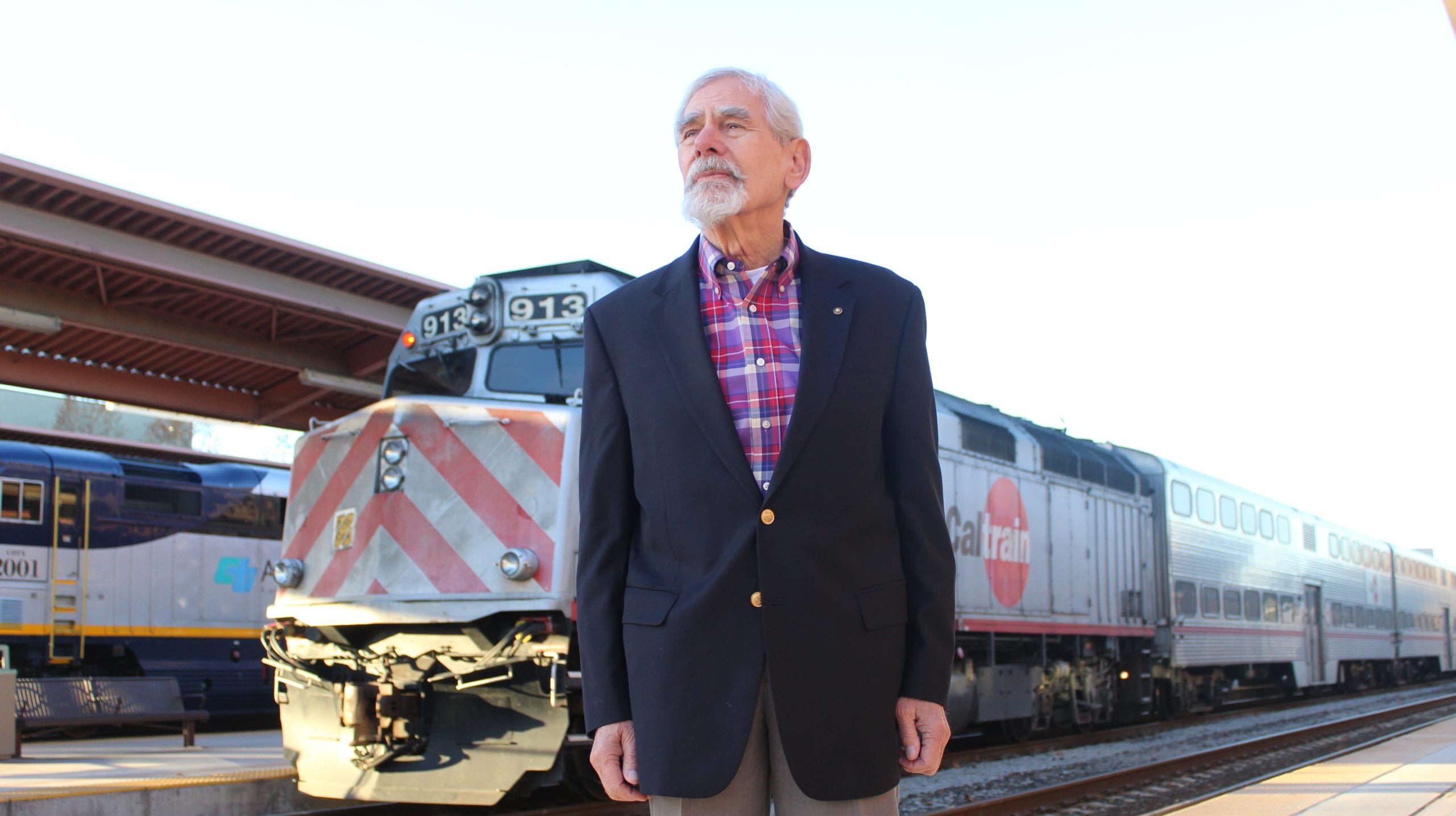
If the state of California was a person, its name would be Rod Diridon Sr., who will be remembered as the “father” of Santa Clara County’s modern transit system. He died Friday at age 87.
Diridon succumbed to sepsis and an underlying cancer of the thorax. He had been hospitalized for more than two weeks, according to his wife, Gloria Duffy.
“All his values about uplifting all groups in society had some deep roots in his own background,” Duffy told San José Spotlight. “He believed average people should be able to get to work without a car. He believed people should have access to health care. He believed in regreening the valley. He was a nurturer.”
The former county supervisor, light-rail pioneer, chair of multiple government agencies and namesake of San Jose’s flagship train station was born to Italian American immigrants in 1939, who changed their name from Diridoni after facing discrimination.
Diridon lived a life that spanned the Golden State in unique and fabled ways. He grew up in the shadow of Mt. Shasta and learned to fish near the headwaters of the Sacramento River, where he’d catch the daily trout limit and provide for neighbors in his poor mountain town.
He found his way to San Jose in stages. Like his father, Diridon worked on the railroad to pay his way through Shasta College, then Chico State, then San Jose State for his final years of study, returning home on weekends for shifts as a brake man.
His upbringing foreshadowed his massive influence on the movement of people in Northern California.
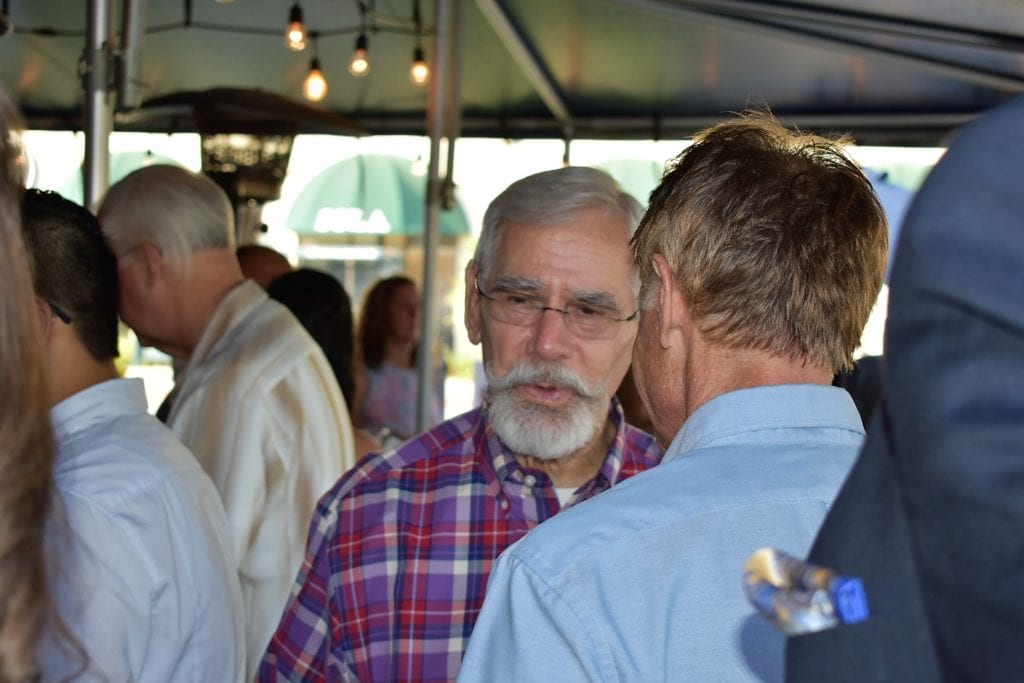
After two combat tours in Vietnam and an analyst stint at Lockheed Missiles and Space Company in Sunnyvale, Diridon got his political start as Saratoga’s youngest ever councilmember in 1973. He then campaigned for county supervisor shortly after, a time in which buses and trolleys fell to the wayside after the car paved over the “Valley of Heart’s Delight.”
Upon Diridon’s election to the Santa Clara County Board of Supervisors in 1974, the conservative political establishment singled out the fresh-faced lawmaker for their most difficult and thankless job: fixing a struggling public transit system and a spate of bankrupt, disconnected networks.
Diridon eventually put the region’s transit network on solid financial ground through his championing of California’s first sales tax earmarked for public transit, which led to the creation of the Santa Clara Valley Transportation Authority.
“Anytime we pass by Diridon Station in San Jose or enjoy California’s light-rail system, we should remember the man who dedicated his life to improving our area’s infrastructure and serving the common good,” Congresswoman Zoe Lofgren, who served alongside Diridon on the board of supervisors, said in a statement. “I’m thankful for the time I got to spend with Rod, and my thoughts are with the Diridon family.”
Diridon championed the area’s light rail system — and chaired meetings on the construction of new lines — and helped pave statewide support for a bond funding California’s high-speed rail project. But his advocacy went beyond transit to general welfare for the region’s vulnerable.
“Rod was a mentor to me for many years, having represented District 4 as a Santa Clara County Supervisor from 1975 to 1995,” District 4 Supervisor Susan Ellenberg, an outspoken champion of progressive causes, said in a statement. “We always called one another ‘my supervisor.'”
Local politicos recall Diridon regularly putting his beliefs over his own political prospects.
“The Mercury News made him out to be controversial at times because he supported what we now consider normal types of programs for the disadvantaged,” Rich Robinson, a political consultant who’s worked on presidential campaigns for Bill Clinton and Barack Obama, told San José Spotlight.
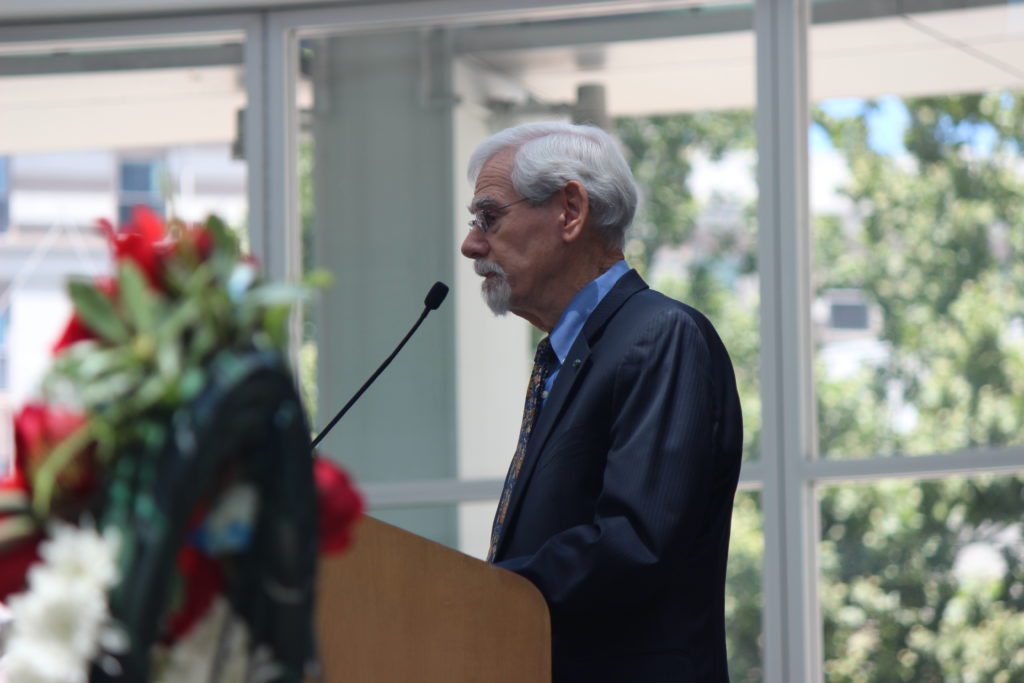
In one instance, Diridon voted in support of a county pro-gay rights measure in the 1980s, amid a statewide anti-LGBTQ political movement. Observers have looked back on the move as killing his ambitions for state office.
“He was a rebel,” Terry Christensen, a San Jose State University political science professor emeritus who knew Diridon for years, told San José Spotlight. “Nothing was ever just about Rod.”
Diridon left the board of supervisors in 1995 after terming out. From there he took on other roles. He ran the Mineta Transportation Institute at SJSU. He became president of the San Jose Rotary Club, one of the city’s largest community service groups whose members credit Diridon for singlehandedly recruiting 150 people, including San Jose Mayor Matt Mahan.
He also chaired the Transit Cooperative Research Program, a branch of the National Academies of Science, Engineering, and Medicine. He served on multiple government agencies, such as the California High Speed Rail Authority Board and the Metropolitan Transportation Commission.
“He was on the MTC for so long — which takes all the money from Washington, D.C. and disburses it among different agencies — that I remember, at one meeting, former San Francisco Mayor Willie Brown complained all the money was going to Santa Clara County,” Robinson said.
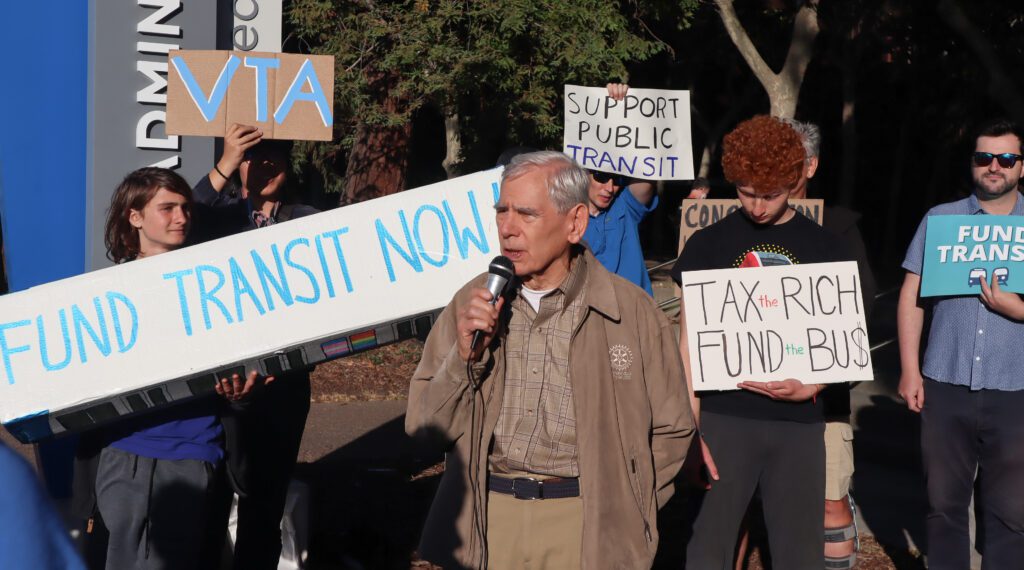
Diridon was also passionate about the environment, championing sustainability and climate-friendly causes. In the 1970s, Diridon helped the county acquire a swath of parkland in Saratoga now known as Sanborn Park. He married Duffy there in 2001.
Reactions to his death have poured in from leaders at all levels of local government.
“I admired Rod most for his passion; never stopped fighting for our Valley’s — and our planet’s — future,” Congressman and former San Jose Mayor Sam Liccardo said in a statement. “I won’t forget his firm handshake and kind guidance, and we must never forget his legacy.”
Board of Supervisors President Otto Lee said Diridon always took his calls, never hesitating to help when Lee turned to him for guidance.
“As recently as three weeks ago, he called me to apologize for not being able to attend the State of the County in person due to his health, and I truly wished that I could have visited him one last time,” Lee told San José Spotlight.

Diridon is woven into the fabric of the entire region, Karen Philbrick, who succeeded Diridon as executive director of the Mineta Transportation Institute, said.
“Any time anyone gets on a train, rides a bike, visits open space parks, goes to Diridon Station — he is there with us,” Philbrick told San José Spotlight. “He’s not in the background. He is living through the people of this region.”
Contact Brandon Pho at [email protected] or @brandonphooo on X.
Leave a Reply
You must be logged in to post a comment.