


San José Spotlight is highlighting community members who make a difference for AAPI Heritage Month.
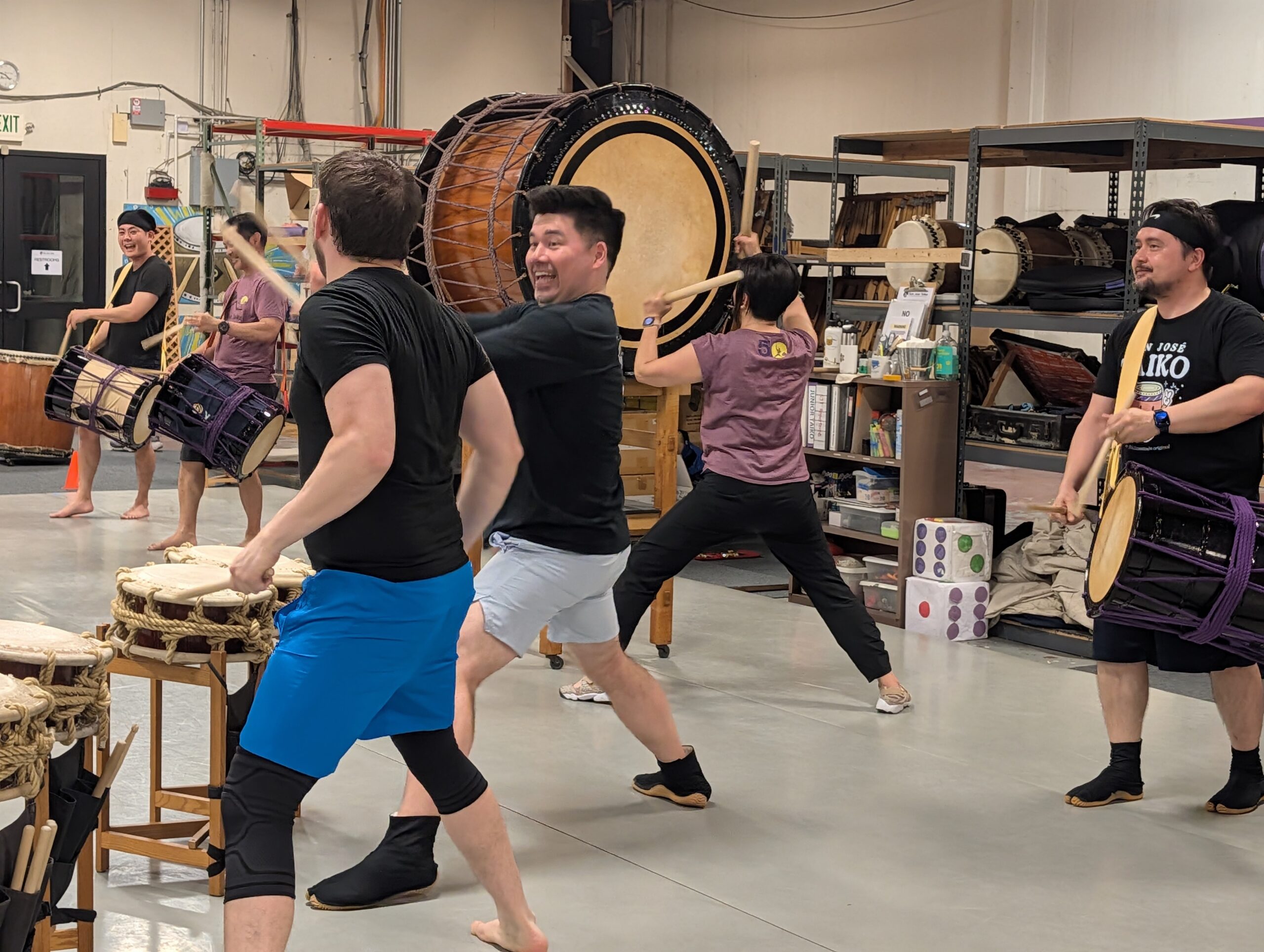
In a warehouse on The Alameda, San Jose Taiko members beat drums, play a bamboo flute, shake a beaded gourd, ring bells, switch positions and instruments and dance in practiced choreographed movements for hours. The group was practicing for performances at a San Francisco Giants’ game and a festival in Japantown.
Taiko — which means drum in Japanese — happened out of a need for third generation Japanese Americans to find their place in society. The musical art form created a renewed sense of pride after their families had been put into internment camps during World War II.
“A lot of their cultural legacy was sort of hidden away from them,” Executive Director Wisa Uemura told San José Spotlight. “Especially coming off the Civil Rights Movement, they were like, ‘Who are we? We should stand proud.’ They selected the taiko because it was so loud, so powerful, so anti-stereotype of what Japanese had been seen as: docile, quiet, reserved.”
San Jose Taiko plans to break ground on a permanent facility in Japantown in late 2027.
“Having a permanent facility in Japantown would mean the world to us,” Uemura said.
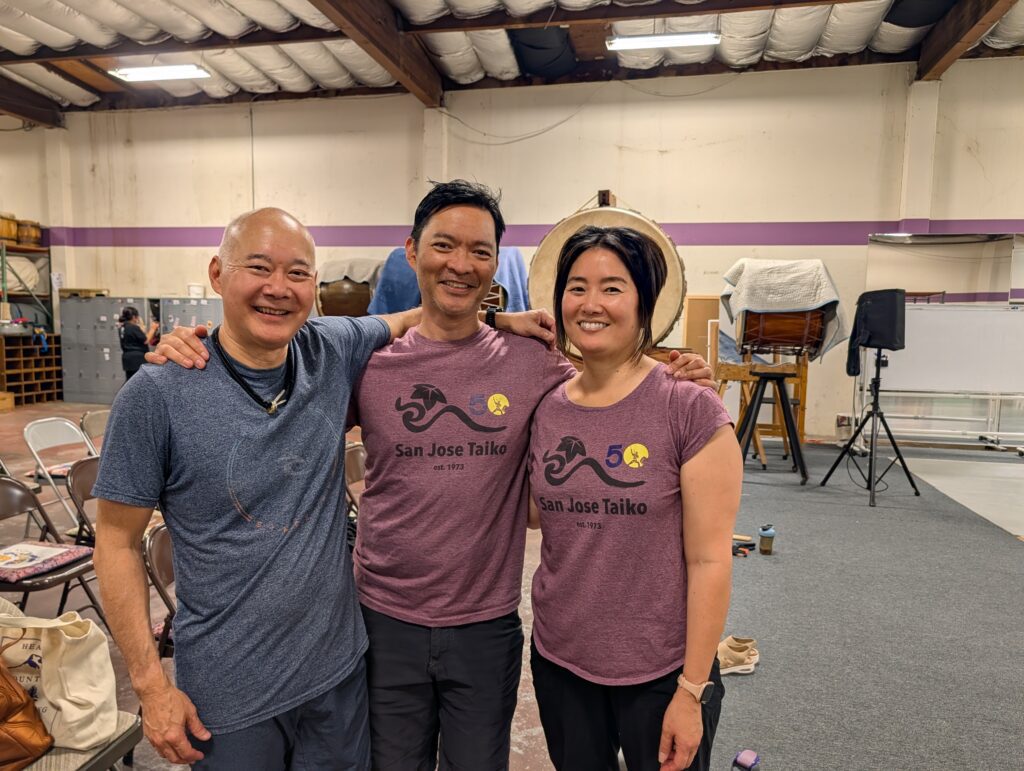
San Jose Taiko began as a San Jose Buddhist Church youth group activity. The Rev. Hiroshi Abiko recruited Roy Hirabayashi and Dean Miyakusu to launch the group, and in October 1973 they held their first performance.
Hirabayashi and his wife PJ — a charter member and artistic director of the nonprofit — led San Jose Taiko for 38 years before they retired. The couple received the National Heritage Fellowship from the National Endowment for the Arts in September 2011.
“They quickly found there was a lot of interest in the outer community, particularly by the young adults who were attending San Jose State,” Uemura said. “That group seeded a lot of the organizations in Japantown today.”
Like Uemura, her husband and Artistic Director Franco Imperial joined San Jose Taiko in 1998.
“I came initially for the music, and I stayed for the community,” Imperial told San José Spotlight. “There’s joy in what we do. San Jose Taiko was one of the first taiko groups to be more openly joyful with their emotions and connect with an audience in a way that made it very accessible. We hope people feel filled with good energy when they leave.”
Uemura is committed to carrying forward the legacy of San Jose Taiko’s founders.
The group’s philosophy is based on the principles of attitude, emotion, energy and musical technique. The vibrations and reverberations of the drums, including one with a five-foot diameter, create powerful energy which moves people — sometimes to tears, Uemura said.
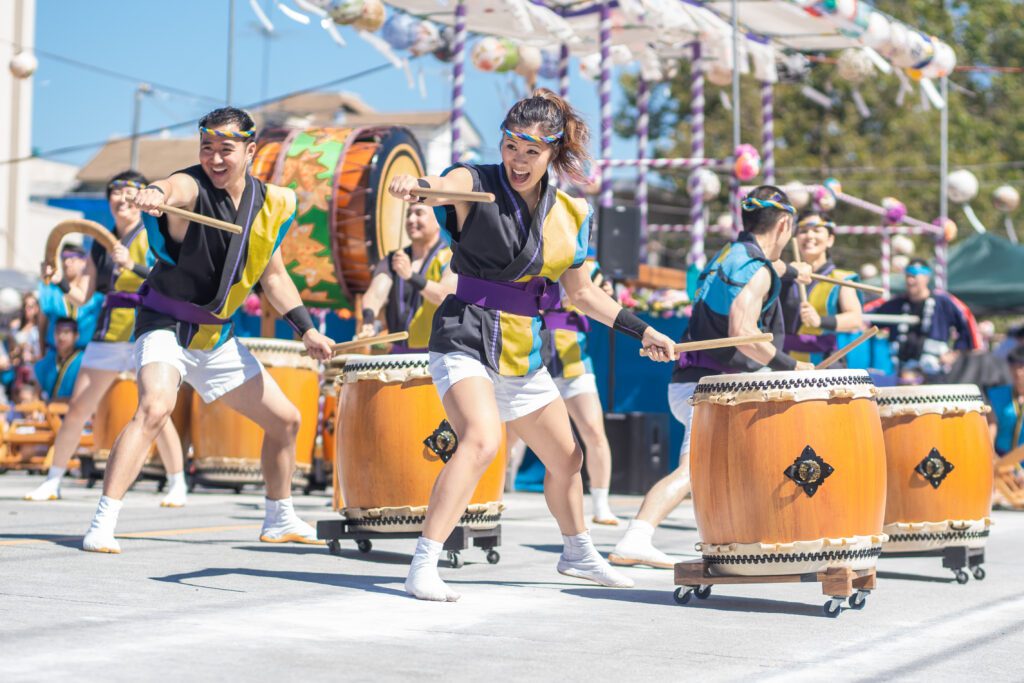
San Jose Taiko has played at Carnegie Hall and at games for the Golden State Warriors, San Jose Earthquakes, San Francisco Giants, San Jose Giants and San Jose Sharks. But for Uemura, the group’s most meaningful performance portrays how swing dance and music kept hope alive for the young people in the World War II internment camps. She said within the spoken story, taiko is used as an emblem of hope.
“In the audition process for San Jose Taiko, you learn about the connection to Japantown and how important this art form is to people of Japanese and Asian heritage — how much it can speak for and be a symbol of them,” she said. “That has connected me even more strongly to my heritage.”
San Jose Taiko blends movement, teamwork, focus, physicality and music, Uemura said, and fosters a greater understanding of Japanese American culture. By adding world rhythms and instruments, it also transcends cultural barriers.
“Taiko is a different type of creative expression,” she said. “It has to do with the full body movement, as well as working together as a team.”

Stewart Kume also joined San Jose Taiko in 1998. He enjoys performing and sharing the energy, love of drumming, music and culture with the audience. He said over the years he’s gained a deep appreciation for the art form, the community and other values around the drum group.
“It’s exciting … it’s a blast to play,” Kume told San José Spotlight. “To be able to share that fun and that energy with people and have them be uplifted … that’s very special.”
Contact Lorraine Gabbert at [email protected].
Leave a Reply
You must be logged in to post a comment.