

|
Getting your Trinity Audio player ready...
|
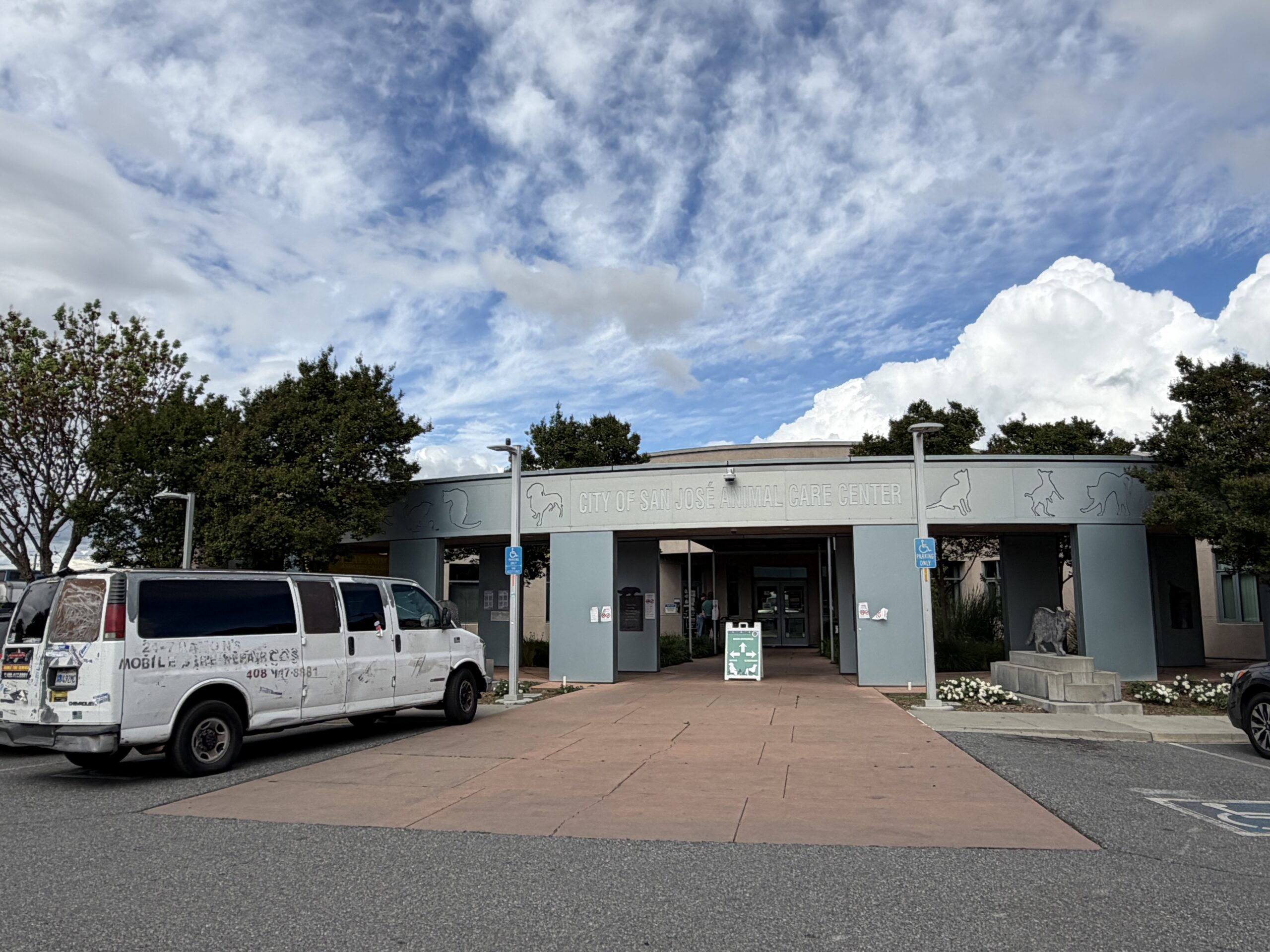
More than a year after San Jose officials pledged sweeping reforms at the city’s troubled animal shelter, a Santa Clara County Civil Grand Jury said the work of rebuilding public trust is far from over.
The civil grand jury’s May 27 report found the San Jose Animal Care Center has reduced overcrowding and increased adoptions, but continues to face challenges around transparency, rescue partnerships and community confidence. Jurors also identified concerns with shelter data reporting and recommended the city improve public access to information about capacity and animal intake.
San Jose is required to formally respond to the civil grand jury’s findings and recommendations, but no deadline was given.
“We appreciate the civil grand jury’s review and its recognition of the progress made at the shelter,” Animal Care and Services Deputy Director Monica Wylie told San José Spotlight. “We remain committed to continuous improvement and providing the highest level of service for animals and the community.”
The 31-page report follows years of criticism from animal advocates, volunteers and rescue organizations, as well as a 2024 city audit that identified capacity constraints, data management issues and strained relationships with rescue partners.
“There is a gap between how (shelter) leaders characterize progress at the shelter and how some rescue organizations, volunteers, and animal advocates perceive current conditions,” the report states.
Kit O’Doherty, an animal advocate with Partners in Animal Care and Compassion, said the report validates concerns advocates have raised for years, mirroring many of the findings from the city’s 2024 audit.
“It’s very validating for the animal advocates that multiple independent voices are validating what we’ve been saying for three and a half, coming up on four years,” she told San José Spotlight.
Jurors found adoptions have increased and overcrowding has declined in recent years. But the report also found transfers to rescue organizations have dropped significantly, animals are staying in the shelter longer and animal deaths have increased.
The civil grand jury found changes in data categories and reporting methodologies were not consistently explained to residents. They recommended stronger public reporting standards, including publishing shelter capacity and the number of animals turned away because of capacity limitations.
Rebekah Davis-Matthews, a former shelter volunteer, said she was pleased to see the civil grand jury address concerns about shelter data.
“I think it really reiterates a lot of stuff that we already knew,” Davis-Matthews told San José Spotlight. “Particularly that they’ve been changing the data from past years, and I was glad to see that the grand jury called them out on that.”
One of the report’s most urgent findings involves the shelter’s quarantine area. During a March tour, jurors observed what appeared to be air flowing from a quarantine ward into a hallway rather than being contained within the isolation area. The report recommends the city inspect and adjust ventilation systems by Oct. 31.
Wylie said the shelter has already taken steps to improve transparency and community engagement, including expanding access to shelter data through its online reporting dashboard, increasing trap-neuter-return services and holding community forums.
Davis-Matthews said the civil grand jury’s focus on spay and neuter services was another critical point to reducing shelter intake. Advocates argued for this to be addressed.
“If the shelter had been doing what they’re supposed to be doing as far as spay and neuter services for the public, we wouldn’t be having so many kittens and puppies coming in,” Davis-Matthews told San José Spotlight.
According to the civil grand jury, transfers to rescue organizations dropped from 4,776 in fiscal year 2020-21 to 1,159 in fiscal year 2024-25. Wylie said the shelter’s number of rescue partnerships is now matching a five-year high and noted canine transfers have increased year over year since 2021.
“We continue to actively network our pets with our rescue partners, maintain regular communication and work to identify new partnership opportunities to help increase placement options whenever possible,” Wylie said.
The city also pointed to growing participation in foster care programs. Since Jan. 1, the shelter has placed 1,415 animals into foster homes, including 1,021 kittens, nearly double the number during the same period last year, according to city officials.
The report repeatedly emphasizes that rebuilding trust will require more than operational changes. Jurors said the shelter must improve communication with rescue groups, volunteers, foster organizations and even its most vocal critics.
“The shelter must treat all community members, including its most vocal critics, as essential partners in improving care for animals and the shelter’s key outcomes,” the report states.
Contact Maryanne Casas-Perez at [email protected] or @CasasPerezRed on X.

Leave a Reply
You must be logged in to post a comment.