


|
Getting your Trinity Audio player ready...
|
San Jose wants to make it easier to convert its underused office buildings into housing with new financial incentives.
The City Council voted unanimously Tuesday to expand an existing housing incentive program covering downtown residential high-rise projects to include conversion projects with at least 20 new homes. The city will cut certain fees and taxes for qualifying downtown office conversions in an effort to help those developments move forward.
Such conversions became an appealing option for addressing San Jose’s housing crisis ever since the city’s office buildings cleared out during the pandemic. The city’s downtown office vacancy rate remains above 20%, still significantly higher than prior to the pandemic, officials said.
“Expanding this program to include office to residential conversions is a common sense way to address the ongoing challenges that have been cited about high vacancy rates throughout downtown, while encouraging the conversion of empty buildings into desperately needed housing,” District 3 Councilmember Anthony Tordillos said during Tuesday’s meeting.
However, to date, not a single office-to-housing conversion project has been completed in San Jose, according to local real estate experts. In part, that’s due to the complexity of retrofitting office buildings into habitable structures, work that requires modifications to a building’s plumbing, electrical and sewer systems.
The expanded program introduces phased incentives that city leaders hope will help tip at least some conversion projects into financial viability.
In the first phase — which lasts up to two years or until it reaches projects totaling 500 homes — qualifying developments will be allowed to avoid 100% of the city’s construction tax and 50% of its park fees. A second phase covering another 1,000 homes will apply somewhat less generous waivers.
In addition, projects that meet certain labor standards, such as offering workers prevailing market wages, will qualify for even more reductions.
City officials reviewed the existing stock of underused office buildings in downtown and determined there are enough potentially viable conversion projects for roughly 1,500 new homes. A staff memo noted the owners of four properties have already expressed interest in the incentive program. If all of these projects moved forward, they would produce 611 new homes, and the city would waive roughly $16 million in fees and taxes, according to the memo.
Given the complexity of such projects, some real estate watchers remain skeptical that even the new financial boost will be enough to get more than a handful of projects past the finish line.
“You need to redo your whole structural system,” developer Erik Hayden, co-founder of Urban Catalyst, told San José Spotlight. “It’s literally cheaper to tear the building down and build it brand new than to retrofit. So that’s why you don’t see it a lot.”
Some buildings are easier to convert than others. In particular, older buildings generally cost less, in part, because they typically have smaller structures, making it easier to design floor plans that can accommodate outside windows in every new home, Hayden said.
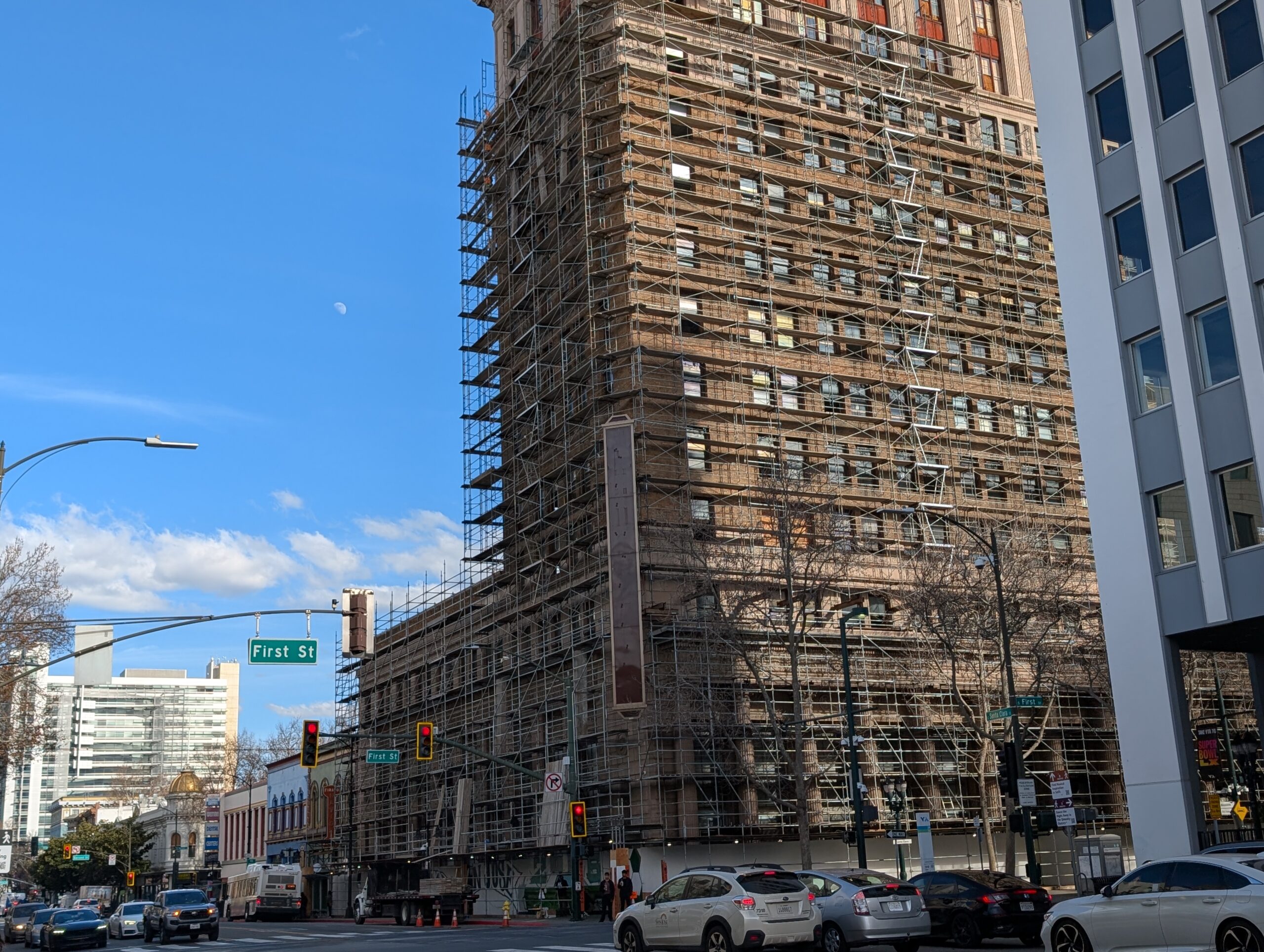
 One such conversion project appears to already be taking shape at a historic downtown building. Work has been underway for months to convert the Bank of Italy building, a 14-story office mid-rise built in 1926, into an apartment tower with 115 homes, the Mercury News reported. Plans to renovate the Renaissance Revival building go back at least five years.
Projects like this one could offer a proof of concept for other developers considering their own office conversions.
“I understand the healthy skepticism, but like everything else, once you see a couple get done, I think you’ll see an avalanche come after that,” Bob Staedler, a principal with real estate firm Silicon Valley Synergy, told San José Spotlight. “I think the city just provided enough flexibility for them to be able to make the projects pencil.”
Ali Sapirman, a manager at the Housing Action Coalition advocacy group, said the new incentives represent a promising tool in the city’s housing toolbox.
“I don’t think this is going to be the solution that solves everything,” she told San José Spotlight. “But it will be an important part.”
Contact Keith Menconi at [email protected] or @KeithMenconi on X.
Leave a Reply
You must be logged in to post a comment.