

|
Getting your Trinity Audio player ready...
|
For some Mexican Americans, identifying as Chicano means carrying the history of a civil rights movement that challenged war, discrimination and police brutality. For others, it is a way to reconnect with Indigenous roots, honor family histories and build solidarity with their communities.
Multiple generations of San Jose residents reflected on what the identity means to them today — and how it has evolved since the movement emerged more than five decades ago — at the 56th commemoration of the Chicano Moratorium in Backesto Park last Saturday. Community Service Organization San Jose organized the gathering.
Some attendees described being Chicano as a political identity rooted in resistance, while others emphasized culture, ancestry, community and the responsibility to pass those connections on to younger generations.
The Chicano movement emerged in the 1960s and 70s as Mexican Americans organized around civil rights, racial equality, labor rights and opposition to the Vietnam War. The 1970 Chicano Moratorium in East Los Angeles became one of the movement’s defining demonstrations, drawing tens of thousands of people.
San Jose was a center of Chicano activism, where local organizers pushed for greater political representation, employment opportunities and social justice, particularly in East San Jose where Mexican Americans made up a significant portion of the community. Today, Latinos make up about 31% of San Jose’s population and 24.7% of Santa Clara County’s population, according to U.S. Census data.
For younger people who attended Saturday’s commemoration, that history is not separate from how they understand themselves.
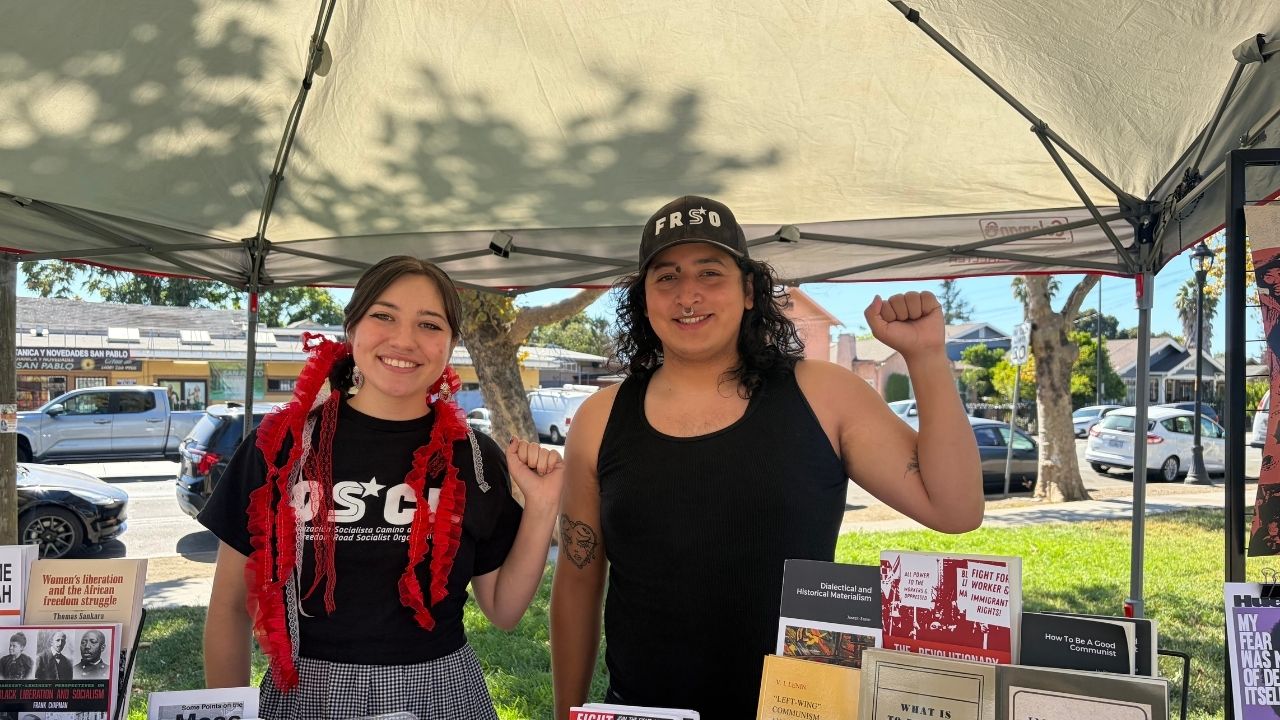
Freedom Road Socialist Organization member Lyla Salinas, 22, said he began identifying as Chicano after learning more about Chicanismo, a cultural and political identity rooted in rejecting white assimilation and embracing Mexican heritage and identity. He said the term better reflected his experience than “Mexican American.” Salinas said Chicano identity gives him a way to understand the connection between people across the Southwest who share cultural, historical and political ties.
“For all my life, I always felt like a foreigner in this country,” Salinas told San José Spotlight. “When I would go to Mexico, I would feel like a foreigner there.”
Salinas sees the identity as connected to immigrant rights and other liberation movements, and said Chicano liberation cannot be separated from the struggles of other communities.
That intersectionality is also important to Eva Medina, 21, who identifies as Afro Chicana and Afro Indígena. She said she began thinking about her identity at a young age and grew up participating in community service and organizing. She said younger people should be given more credit for thinking about questions of identity and community.
“Being Chicana is also just remembering who we are, remembering the resistance and remembering what our ancestors had to fight through,” Medina told San José Spotlight.
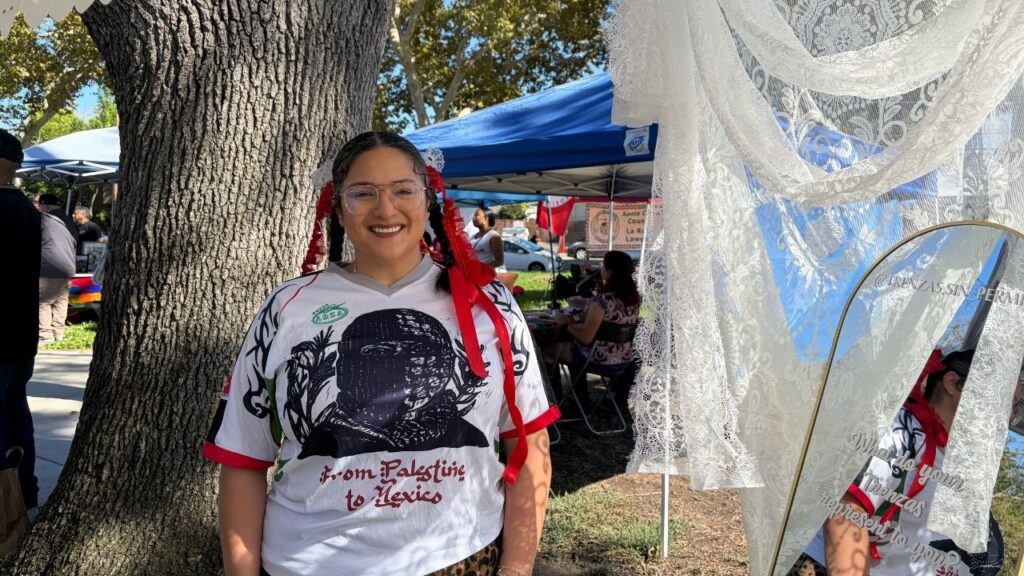
Angelina Aguilar, 37, is the founder of Trenzas Sin Permiso, a grassroots collective that uses traditional braiding as a way to celebrate culture, community and resistance. She said being Chicana means being proud of her culture, her ancestors and the community that came before her.
Her grandfather, Abel Cota, was involved in the Chicano movement. Carrying on his legacy is part of how Aguilar understands her own identity. She said Chicana and Latina women are often expected to be strong, outspoken and resilient, but they also need spaces where they can let their guard down.
“For me, trenzas (braids) represent power. They represent resistance. They represent culture,” Aguilar told San José Spotlight.
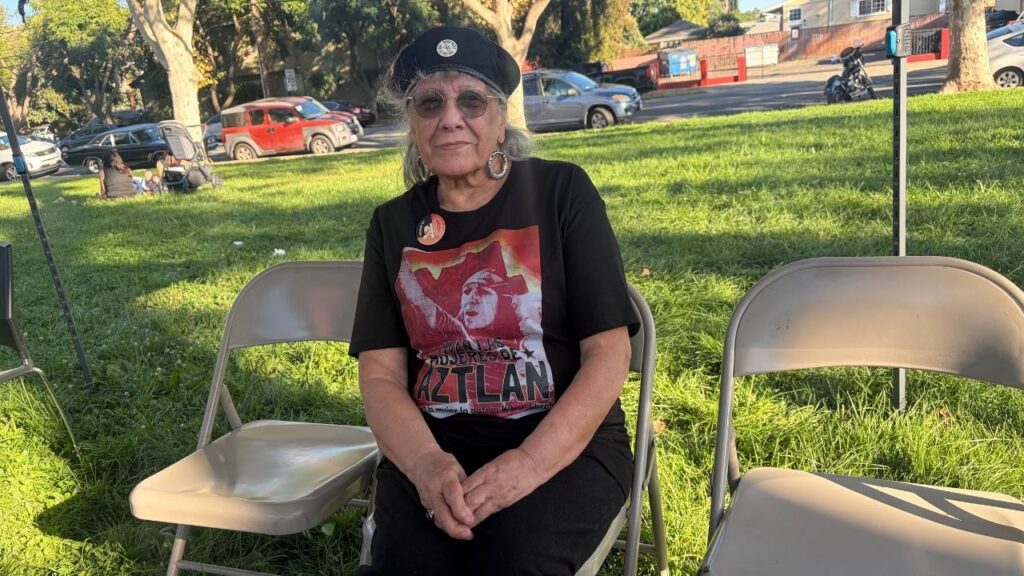
The tension between strength, identity and expectations for women is familiar to Doreen Garcia Nevel, a 75-year-old member of the San Jose Black Berets por la Justicia who traveled from Modesto to attend the gathering. The community organization, founded in 1959, is focused on cultural education, community advocacy and opposing violence.
Garcia Nevel said women in the movement were sometimes told they couldn’t be leaders. Her mother, Ernestina Garcia, challenged those expectations through her own community organizing.
“We say that we’re the backbone of the struggle,” Garcia Nevel told San José Spotlight.

For 43-year-old Elena Villalobos, a lifelong San Jose resident, that legacy of pride and resilience makes her proud of her Mexican American heritage despite not knowing much about her grandparents’ roots in Mexico.
She said gatherings like the commemoration of the Chicano Moratorium are important for younger generations, particularly as immigration enforcement and plans for a U.S. Immigration and Customs Enforcement facility just outside Gilroy create fear in Latino communities.
“I think it is important to let them feel the support and let them see the community that we come together and unify,” Villalobos told San José Spotlight. “My parents always taught me, ‘Just be proud of who you are, never be ashamed of it.'”
Contact Maryanne Casas-Perez at [email protected] or @CasasPerezRed on X.
Leave a Reply
You must be logged in to post a comment.