

|
Getting your Trinity Audio player ready...
|
When San Jose dismantled its largest homeless encampment last summer, Mayor Matt Mahan praised moving hundreds of people out of Columbus Park into housing. However, residents said their experience in temporary housing has pulled them backward, not forward.
One year after the city swept the 370 RVs that had congregated in Columbus Park, many people are still languishing in temporary housing with little prospects for a permanent place to live. About 200 people accepted placements in one of the five motels the city had just converted into temporary shelters. Yet former park residents said the stringent rules and treatment at the motels — and subsequent placement into tiny homes — have stripped them of their freedoms, causing them to spiral into depression.
While temporary housing may provide a place to shower, sleep and eat, many former Columbus Park residents feel stuck in limbo, unsure of where they’ll go next — or when they might get kicked out, throwing them back on the streets.
“One year later, not much has unfortunately changed. People are still displaced,” homeless advocate Jennette Holzworth told San José Spotlight. “There’s not an opportunity for people to get any kind of real stability so they can get their lives together. I’m not going to necessarily say that the conditions in Columbus Park were humanitarian and humane, but people had autonomy there.”

A spokesperson for Mahan said the city has been clearing encampments while undertaking the largest shelter expansion in the state last year.
“The city will continue providing pathways to housing, but participants must meet us halfway by accepting appropriate placements when they become available and engaging with supportive services so we can help the next person come off the streets,” spokesperson Seamus Gann told San José Spotlight.
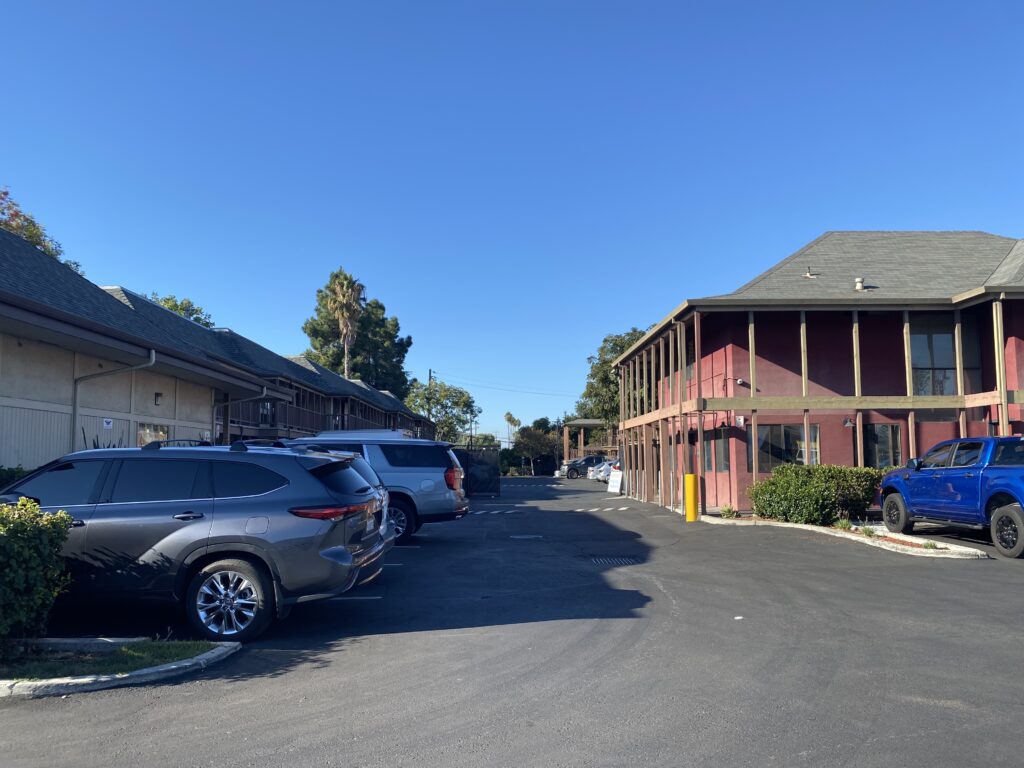
Holzworth works closely with Columbus Park residents who the city placed in Motel 6, one of the five motels the city converted into shelter last summer. The motel is run by nonprofit WeHope.
Multiple cameras onsite make residents feel they are constantly being watched. Strict rules such as no visitors and only being allowed two trash bags of belongings have caused residents to feel under pressure to not be written up, which could lead to termination from the housing program, Holzworth and a Motel 6 resident told San José Spotlight.
In addition, residents said they have gotten written up for violating the rules without being informed.
“There’s this deep sense of constantly being watched at Motel 6,” Holzworth said. “Folks live in a lot of fear. They’re afraid because they’re going to get kicked out.”
WeHope Chief Operating Officer Alicia Garcia said there may be things a worker has talked to a resident about and keeps note of in their file, but it’s not necessarily a formal write up. She said terminating someone from the program is a last resort and that a resident gets multiple opportunities to change their behavior if it’s a minor issue. Serious offenses such as having weapons can lead to an immediate termination for the safety of other participants.
“We don’t ever like to have to exit a person because that means that that person returns to homelessness. That is the last thing we want to do, because for us, when they succeed, we succeed,” Garcia told San José Spotlight. “But unfortunately, some people make really poor decisions, and we do our best.”
A flawed policy
To encourage circulation out of the motels, residents are told the next step in their journey to permanent housing is a tiny home.
Motel residents are given up to three offers for housing, often to tiny homes. If they decline all three offers, they are given a 30-day notice before they are terminated from the program. Residents said this has forced them to take less desirable options. They said tiny homes have less space, stricter rules and less privacy than the motels.
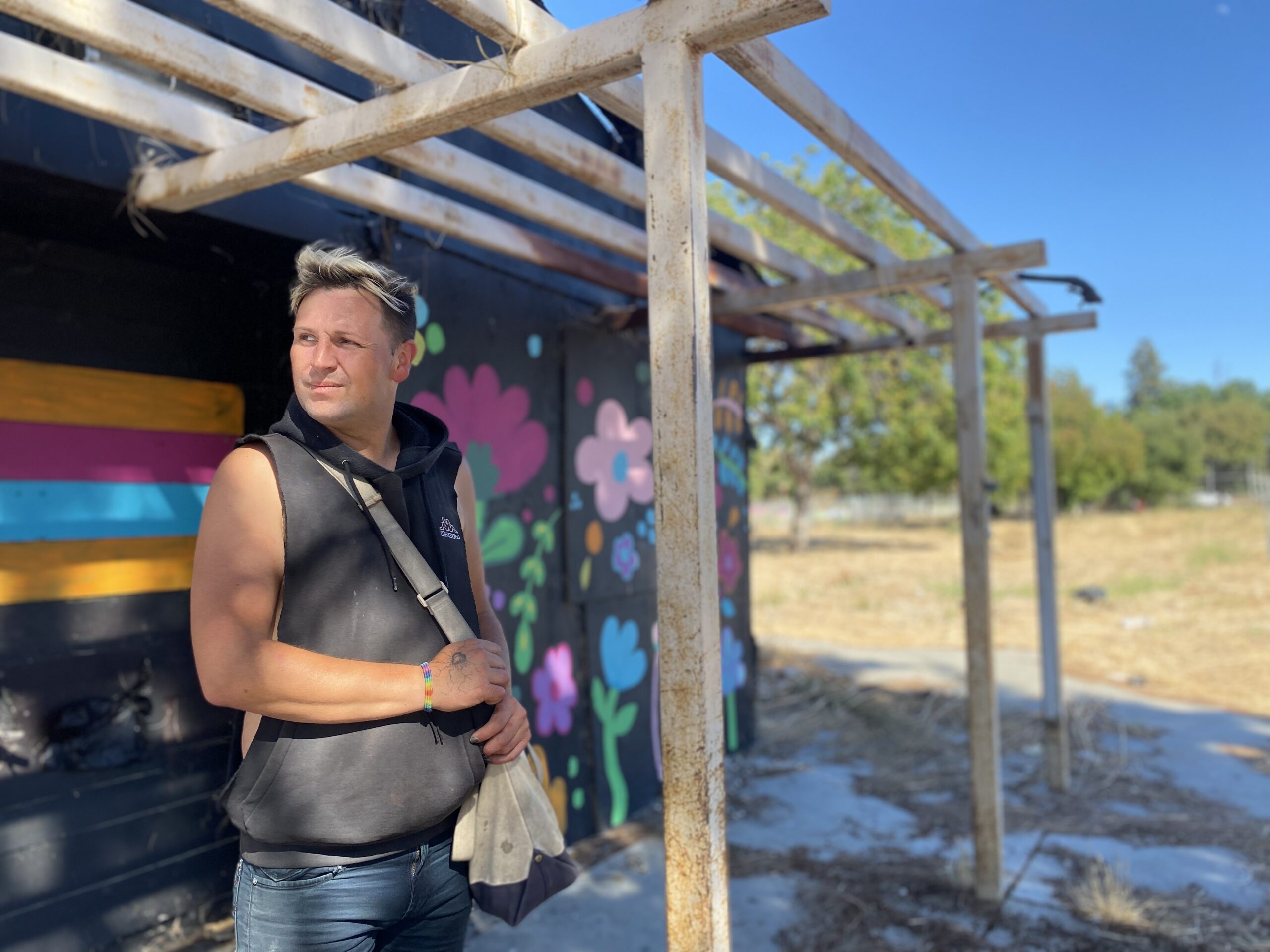
James and his wife Arielle reluctantly gave up their RV in Columbus Park in exchange for $2,000 as part of the city’s buyback program. They moved first to Alura Inn, where they said it felt like living in a mini-studio. They asked not to use their last name for privacy reasons.
However, case managers continued to push the tiny home option on them. On the third offer, they saw no choice but to move into the Cerone Yard tiny home site in North San Jose.
“I feel like I was forced to do it under duress,” Arielle told San José Spotlight.
Residents don’t have their own bathrooms at Cerone, making it difficult for Arielle, who has fibromyalgia, to travel to the restroom. She said workers at Cerone, managed by nonprofit HomeFirst, haven’t accommodated her ADA needs.
Staff has been slow to respond to other issues. She said her broken bed frame had to collapse before they replaced it. The AC hasn’t worked since she moved in, and it hasn’t been fixed.
“I am completely disregarded here,” Arielle said. “I would rather be back in Columbus, or back in Alura. I’m saving money to buy an RV, that’s how bad it is.”
A HomeFirst representative told San José Spotlight they couldn’t immediately respond to Arielle’s claims.
Sarah Fields, spokesperson for the San Jose Housing Department, said the three offers of housing policy is meant to encourage movement through the city’s temporary housing portfolio.
But it’s unclear how the city gets residents to the final placement — permanent housing — and Fields could not say how many former Columbus Park residents have been placed in permanent housing since last year’s sweep.
“The throughput model emphasizes addressing needs and providing support throughout the journey out of homelessness and into stability,” Fields told San José Spotlight. “To encourage movement across the city’s shelter portfolio, participants are required to accept placement at an interim housing site that offers more services and on-site staffing.”
Multiple residents who spoke with San José Spotlight said a majority of people living in the motels have either moved to tiny homes or have been involuntarily exited from the motels. A handful have found permanent housing on their own.
Declining mental health
Homeless residents called Columbus Park home for years before the city set up fences and barricaded the area. The park drew hundreds of people like magnets — those who had lost jobs, experienced traumatic events and deaths of family members or were evicted because they could no longer afford to pay rent.
RVs packed the fields and basketball courts. Cars lined several blocks of streets around the park. Trash and debris accumulated in piles. Amid the chaos, residents formed deep bonds with each other and found family.
The city’s sweep of the park also dismantled people’s sense of community, and as a result their mental health has taken a toll, former Columbus resident Robert Gilman said.
“My depression has gotten worse. When we were in the park, a majority of us were happier out there,” Gilman, who was moved into the Casa Linda motel, told San José Spotlight. “The depression rate has skyrocketed amongst everybody because they’ve done such a good job of isolating us.”
 Gilman said he’s worse off than when he lived out of his van in Columbus Park. He’s without a van now, and doesn’t feel any closer to getting housing.
“We were forced into housing. I do want help and I do want housing, but not like this,” he told San José Spotlight. “I’m just kind of in a waiting room, I’m just waiting for them to kick me out. I’ve already picked a spot out in the world where I’m going to set up again, only this time it’s got to be more concealed.”
Contact Joyce Chu at [email protected] or @joyce_speaks on X.

Leave a Reply
You must be logged in to post a comment.