

|
Getting your Trinity Audio player ready...
|
Walking trail use is up. Wildlife is returning. Large homeless camps have been dismantled. San Jose officials said the city has reached the end of the “era of encampments,” and is steaming ahead into its next era of slashing down street homelessness.
San Jose has reduced unsheltered homelessness by 32% over the past 18 months, using a new model of counting that pulls together data from multiple sources. The city worked with UrbanLogiq, an artificial intelligence-based data platform, and combined data from police and fire encounters with homeless residents, lived-in vehicle counts, the countywide Homeless Management Information System database of homeless people contacts by outreach workers and more.
Using the new model, the city found approximately 3,700 people living on the streets, down from 5,477 unsheltered homeless people in February 2025. This was made possible through building temporary shelter in the form of tiny homes, San Jose Mayor Matt Mahan said.
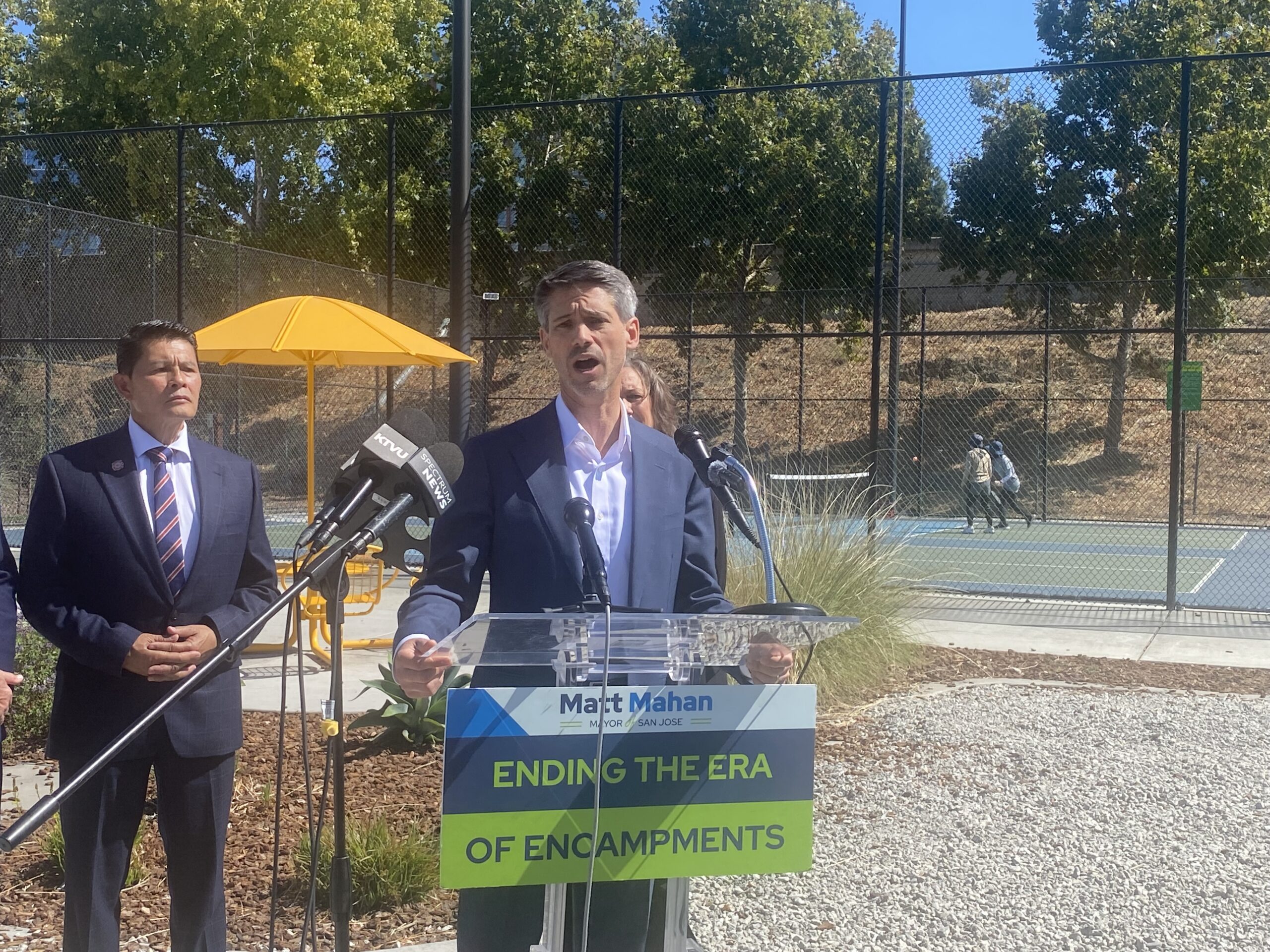
“This is a faster drop than we have seen in any other city in the state of California,” Mahan said at a Wednesday news conference. “You will not find large, persistent, semi-permanent encampments and open air drug markets in San Jose today, which is a huge accomplishment.”
@sanjosespotlight San Jose has reduced unsheltered homelessness by 32% over the past 18 months, using a new model of counting that pulls together data from multiple sources. The city worked with UrbanLogiq, an artificial intelligence-based data platform, and combined data from police and fire encounters with homeless residents, lived-in vehicle counts, the county-wide database of homeless people and more. Homelessness & Equity Reporter Joyce Chu takes a look.
The city’s model offers different numbers than those found in the biennial homeless count required by the federal government. When San Jose conducted its point-in-time count in January 2025, the city counted 6,503 homeless residents — 3,959 unsheltered people and 2,544 who resided in temporary housing.
Point-in-time counts are considered to underestimate the number of homeless people, because they only track homeless people over a two-day period.
There are about 3,000 people staying in temporary housing across San Jose, according to city and county data — though it’s unclear how many have returned to living on the street, as the city doesn’t track that. When combining the city’s estimates of unsheltered homeless people with the number residing in shelters, San Jose has a total of approximately 6,700 homeless residents.
The city plans to deploy this new method of counting every quarter to track outcomes.
“As we go forward, we look to make sure we are in a position to best understand what that constant demand is for our unsheltered population,” Housing Director Erik Soliván said at the news conference.
As San Jose enters its next phase to reach “functional zero” — when more people are being housed than are entering homelessness — it will prioritize upkeeping its 2,200 shelter beds across about 20 shelter sites. That’s an uphill battle, as for every one homeless person housed in the region, nearly two become homeless.
Homeless advocate Bea Nasser said the city’s determination to reach functional zero is a numbers game, fixated on keeping visible homelessness down. While the city has moved people out of large encampments at Columbus Park and “the Jungle” into temporary shelter, she said the lived reality of those in the program is not as rosy as the mayor paints it.
“As long as these folks are out of sight to Matt Mahan, they are out of mind,” she told San José Spotlight.
Nasser works closely with homeless residents who moved into Motel 6 from the large Columbus Park camp swept by the city last year. Out of the 16 residents she assisted, 12 ended up back on the streets, she said. Many of them have been kicked out for hoarding issues, with temporary housing sites often imposing limits on individuals and allowing only two trash bags of belongings. She said many have told her that moving into the motels has caused them to go backward due to incurring trauma of living in a system that feels like a prison.
The city will begin considering instituting time-limited stays at its temporary shelter sites, which officials said will help move homeless people faster along the housing “pipeline.” But advocates said it will cause further instability, as people often languish in shelters because there are no affordable, permanent housing placements available.
There are about 6,000 households in Santa Clara County waiting for permanent housing, according to county data.
“The city ultimately is driving a very numbers-first approach with people who have lives, and they drove literally hundreds and hundreds of people into a program that they are realizing they have no idea how to operate and have no idea how to make it successfully work,” Nasser told San José Spotlight. “This was our primary complaint at Columbus Park — (the city doesn’t) know what’s ahead.”
Contact Joyce Chu at [email protected] or @joyce_speaks on X.

Leave a Reply
You must be logged in to post a comment.