


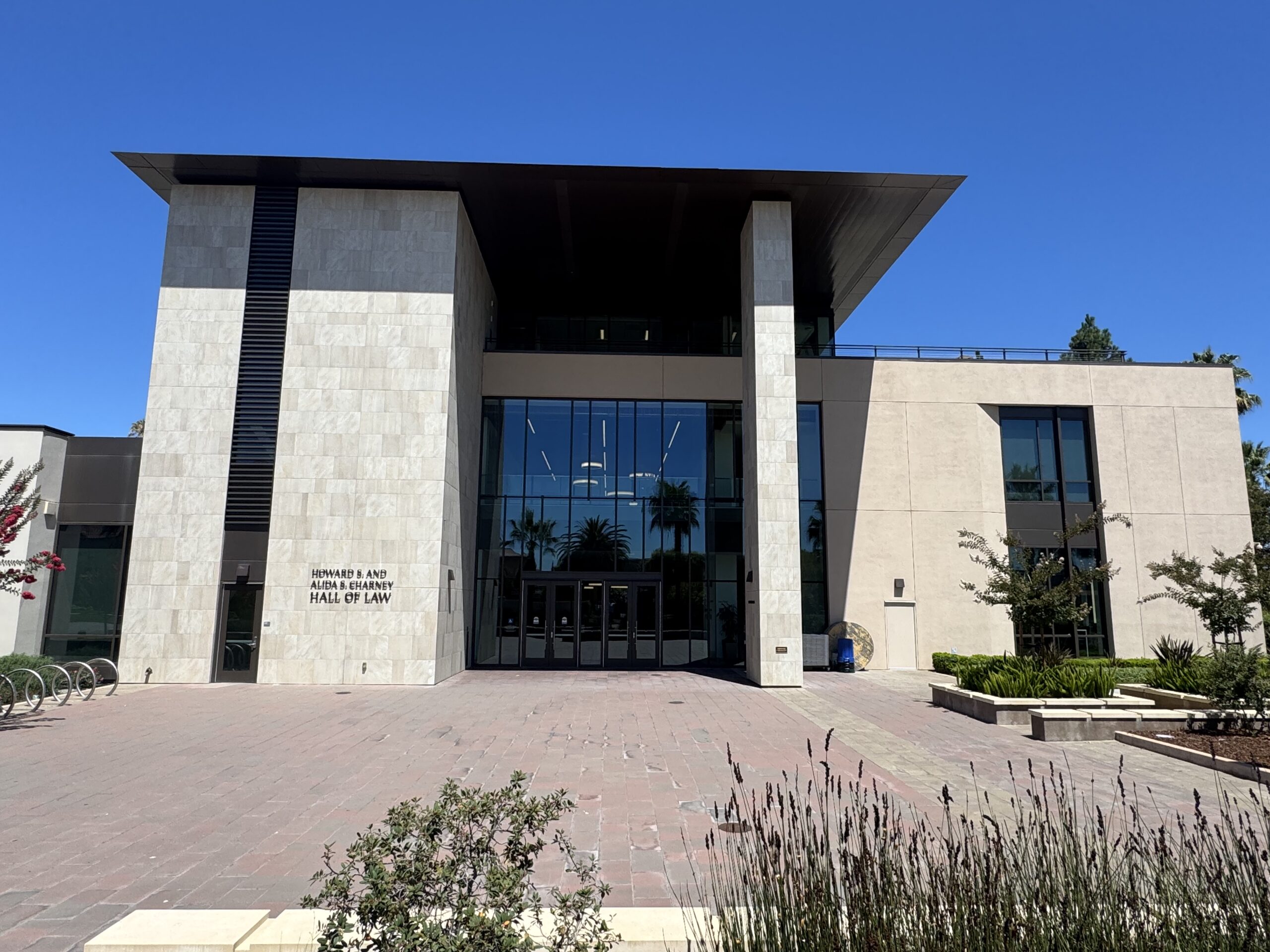
San Jose tops the nation in lawyer salaries, but the high pay masks a tradeoff with steep living costs and student loan debt pushing more graduates toward private practice — making public service work harder to sustain in one of the country’s most expensive markets.
The San Jose metro area ranks No. 1 among 70 major metropolitan areas with an average annual salary of $314,430, according to a June 2026 report conducted by Paragon Legal. California took the top three spots with San Francisco in second at $275,000 and Los Angeles rounding it out third at $271,000.
The demand for more lawyers to handle mergers, acquisitions, licensing and contracts specifically in high-tech and artificial intelligence is fueling the high salary, William David Ball, a criminal law professor at Santa Clara University School of Law, said.
“As long as the tech industry is concentrated here, that’s really the reason why,” he told San José Spotlight. “As any industry grows, the legal side needs to grow with them.”
This is evidenced by California having the most projected job openings with 5,960 among all states, according to the report.
Paragon Legal ranked 70 major U.S. metro areas across five key factors — average annual salary, lawyer employment density, projected job openings, rent affordability and local search demand for legal services.
Although San Jose also came out on top for salaries, the city ranked at the bottom when it came to affordable rent, averaging $3,364 a month. Wichita, Kansas had the most affordable monthly rent at $1,132.
For law students weighing that math, the calculation shows up in where they end up practicing. At Santa Clara University School of Law, administrators said student debt is pushing graduates into private practice.
“Yes, there is a clear trend of (Santa Clara University) law students not being as involved with public work,” Deborah Snyder, assistant dean of career management at the Santa Clara University School of Law, told San José Spotlight. “They have loans for school, and jobs in that sector aren’t paying high enough, so they turn toward private work instead.”
According to Indeed.com, an average salary for attorneys in public service can range from $93,195 to $185,000 at the Law Foundation of Silicon Valley to about $80,000 to $132,000 at Bay Area Legal Aid.
According to recent American Bar Association data from Santa Clara University School of Law, the share of employed graduates taking law firm jobs climbed from approximately 55% for the class of 2022 to just above 68% for the class of 2025. The share of graduates entering public work has sat consistently at about 8%.
Tad Mendes, an incoming first year Santa Clara University law student, said while the university has some graduates entering public service, he is pursuing a Juris Doctor degree with a focus on taxes and tech law and anticipates going to a private law firm.
“(Cost of living) definitely had an impact on my decision to pursue this path,” Mendes told San José Spotlight. “I had an accounting job lined up after graduation and ended up turning it down because of the increased earning potential a law degree would offer three years down the line.”
The picture looks different at Lincoln Law School of San Jose, a smaller and less expensive program down the road from the university.
Mary Fuller, dean of Lincoln Law School, said the school was founded during World War I to serve working people and nontraditional students. At the time that meant mostly women, she said, though the definition has broadened considerably since.
“Our students serve a little bit of a different market or a different sector of the market,” Fuller told San José Spotlight. “I would say our students are more likely to start their own law firms when they graduate. They’re more likely to go into public service.”

Ball said the pressure falls hardest on the work that addresses the region’s affordability crisis itself.
“It’s very difficult to make it work in the Bay Area if you want to do public interest work,” he said. “Those jobs are not well paid, and ironically, a lot of those jobs are actually about things like economic precarity and unaffordable housing.”
He added a majority of the students who make it work have outside help.
“Unless you have inherited housing from one of your parents, or you’re married to somebody who has a tech job, it’s really difficult to make that work,” Ball said. “I’ve certainly seen that affect students’ decisions about where they want to live, and also what kind of law they want to do.”
Contact Gabriel Symkowick at [email protected] or @SymkowickGabe on X.

Leave a Reply
You must be logged in to post a comment.