


Transportation officials overseeing the multibillion-dollar Silicon Valley BART extension are celebrating an early construction milestone in bringing the rapid transit service to downtown San Jose and Santa Clara.
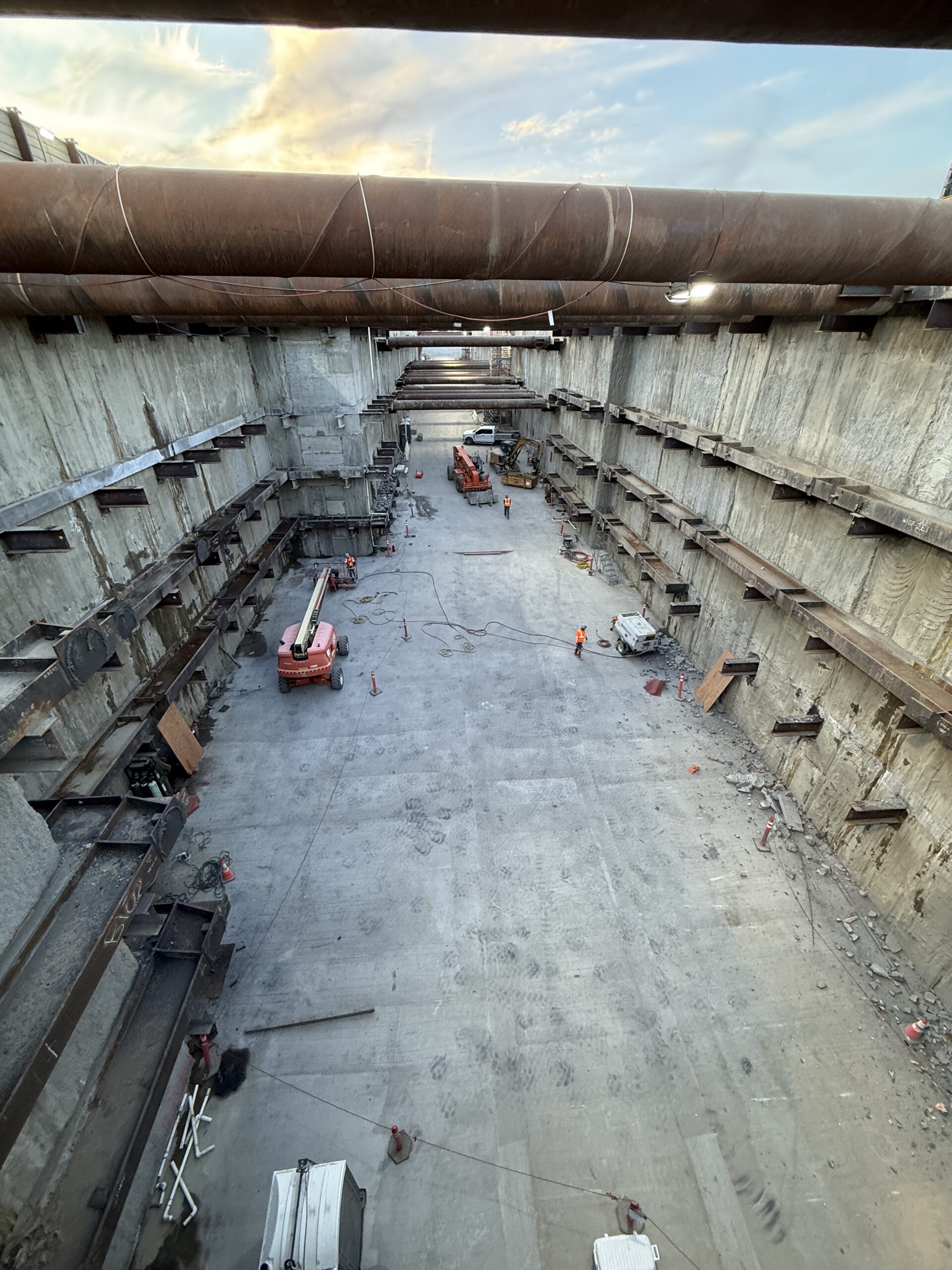
Workers in recent weeks completed excavating and reinforcing an 83-foot-deep hole on a former rail yard property nearby PayPal Park. The shaft will serve as the launch point for the massive boring machine that will drill out the 5-mile tunnel made to house the new BART tracks.
The $12.7 billion public works project overseen by VTA will eventually add four new BART stations: three in San Jose and one in Santa Clara. In the works for more than a decade, the effort has faced delays, ballooning costs and a series of controversies, including pushback against its single tunnel design.
But now that one of the project’s first major structures is beginning to take shape, backers said the milestone — which comes just more than two years since it officially broke ground — should help bolster confidence that the effort is finally on course.
“What’s so exciting now is you can go out there and you can stand at the top of that ramp, or you can stand at the bottom of that shaft, and you can really imagine what it’s going to be like,” Tom Maguire, chief megaprojects officer for VTA, told San José Spotlight. “You can really feel where the trains will go and imagine that someday a subway is going to run here. And you really haven’t been able to do that until recently.”
Workers in September completed excavation at the site — which straddles the borders of San Jose and Santa Clara — then finished pouring concrete for the underground structure in late October. The shaft is connected to an 1,100-foot ramp leading back up to the surface that will one day serve as the pathway for trains traveling into or out of the planned Santa Clara BART station.
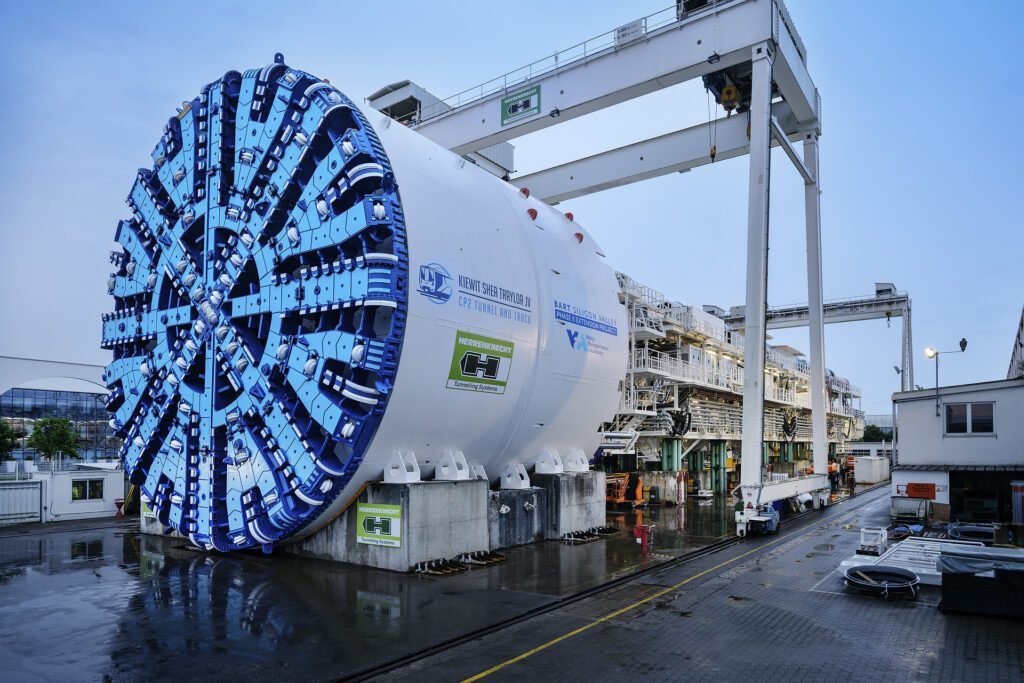
The launch shaft will allow workers to position the boring machine at the appropriate depth so that it can begin tunneling work, a process that is expected to begin in early 2028. Once it does, the massive 53-foot diameter drill will excavate at a rate of between 30 and 40 feet per day, leaving behind concrete reinforcement rings as it goes.
“Digging a hole may sound simple, but considering the soil conditions we’re working in, considering the amount of concrete reinforcements that’s been necessary, and considering just the complexity of the structure itself, it’s been no small undertaking,” Maguire said.
Crews at the work site have already put in 3.7 million person hours, and have suffered no serious injuries, according to VTA officials.
The public transit agency projects the 5-mile tunnel will take 40 months to fully excavate, setting the stage for future phases of work, including laying down tracks, building stations and adding support infrastructure, such as electric utilities and emergency systems.
When officials first announced plans for the BART extension in 2014, they projected it would cost $4.7 billion and the new stations would begin service in 2026. Since then, a number of factors, including a spike in material costs triggered by the COVID-19 pandemic, have more than doubled the project’s price tag and pushed back the expected opening date to 2037.
Despite the setbacks, San Jose District 3 Councilmember Anthony Tordillos, who represents downtown San Jose and serves on VTA’s board, applauded the project’s recent progress.
“This is an exciting milestone for the BART Silicon Valley Phase 2 project, setting the stage for the start of tunnel boring and paving the way toward a more connected San Jose that will provide District 3 residents, workers and visitors with even more options for getting around our region,” Tordillos told San José Spotlight.
But even as the work continues, several major questions still linger.
“I would encourage residents to view these milestones as important steps in a much longer delivery process,” Adam Cohen, a senior researcher at San Jose State University’s Mineta Transportation Institute, told San José Spotlight. “The project still faces notable engineering, construction, financial and other challenges.”

Over the summer, a Santa Clara County Civil Grand Jury report criticized VTA’s management and oversight of the BART extension, accusing the agency of betting the project’s future on uncertain funding sources and of failing to fully account for long-term operations and maintenance costs.
VTA officials are still working to fill a roughly $700 million funding gap left behind after a grant from the Federal Transportation Agency came in lower than expected. While Bay Area voters just passed the Regional Transit Measure, a sales tax hike expected to bring in an additional $1 billion annually to fund public transportation, the extra funds will not go to the BART extension.
But Monica Mallon, a transit advocate and San José Spotlight columnist, said despite the lingering challenges, the latest construction advance is still a moment worth celebrating.
“I think that what’s really important to remember is that when this is actually finished, nobody is going to be too worried about how long it took or the different setbacks,” Mallon told San José Spotlight. “They’re just going to be able to actually use it and get where they need to go.”
Contact Keith Menconi at [email protected] or @KeithMenconi on X.
Leave a Reply
You must be logged in to post a comment.