

A group of San Jose Filipino residents want to ensure their contributions to the labor movement won’t be forgotten.
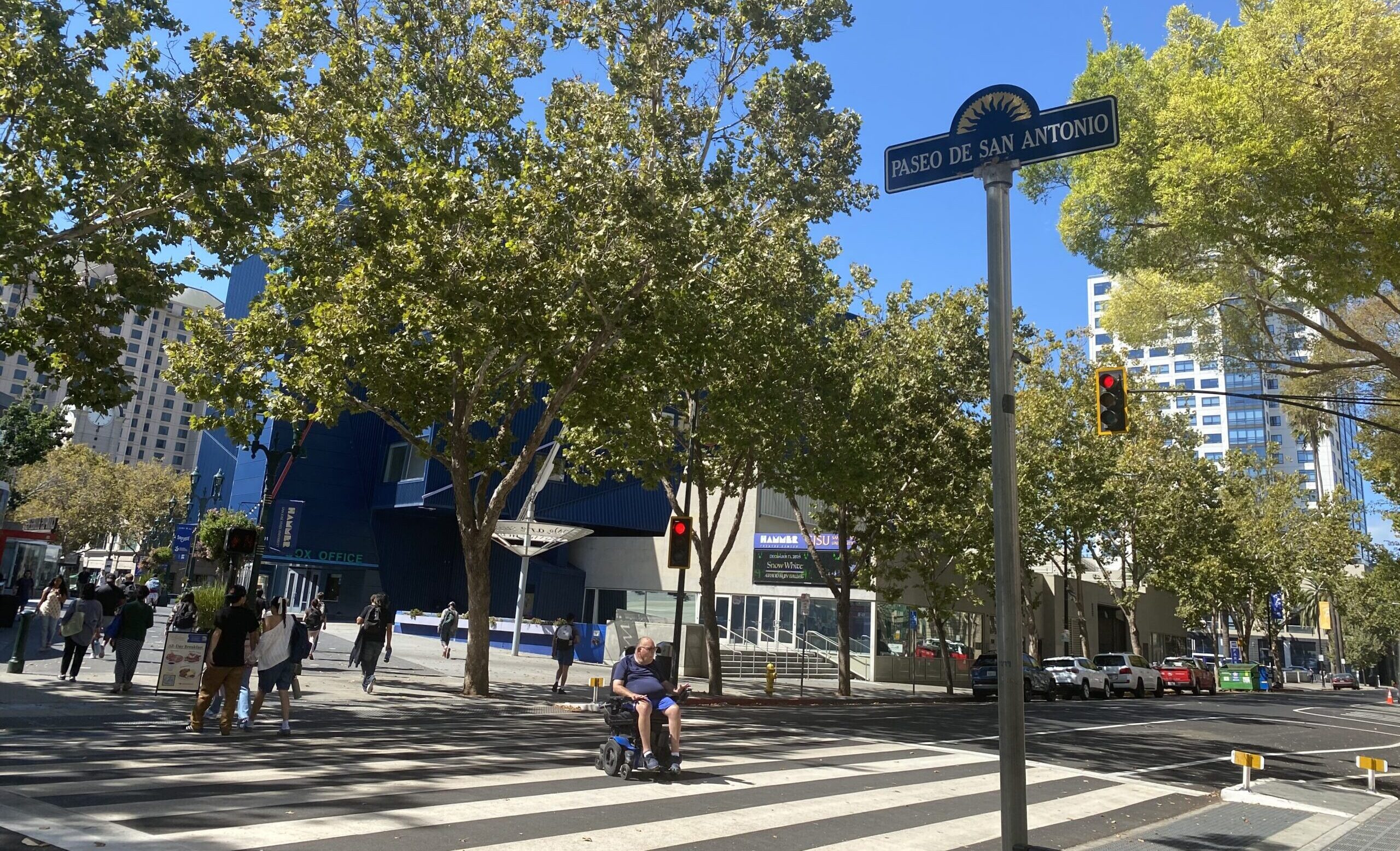
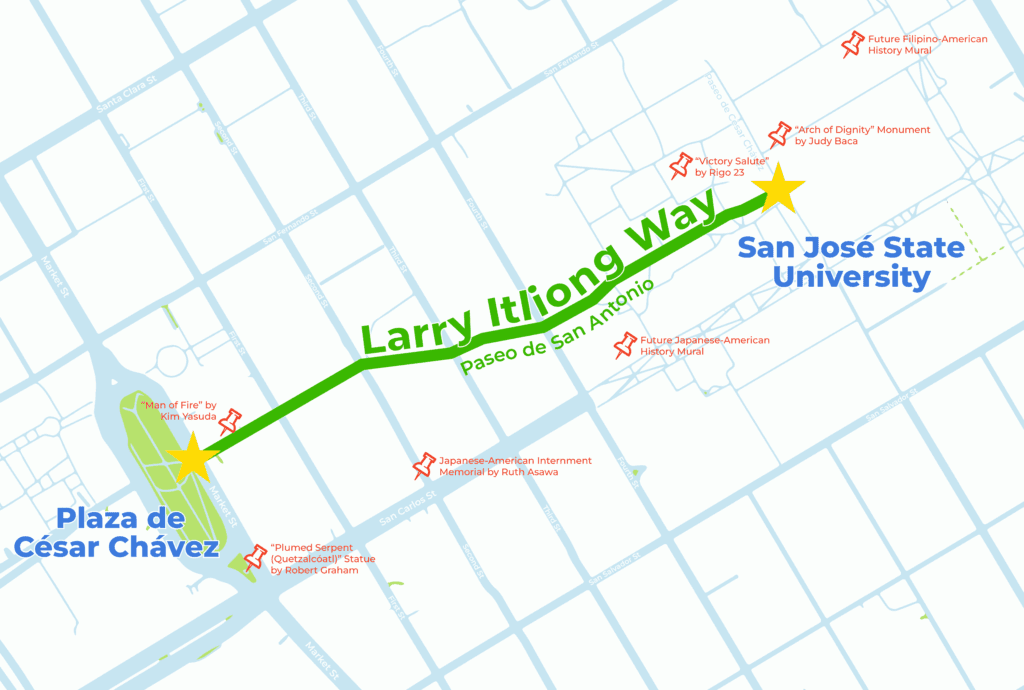
The group is pushing to rename Paseo de San Antonio, a downtown pedestrian walkway, after labor leader Larry Itliong. Itliong was instrumental in fighting for better farmworker rights alongside Cesar Chavez and Dolores Huerta, but isn’t as well known. The group wants to raise $50,000 for the effort and has collected $7,000 so far.
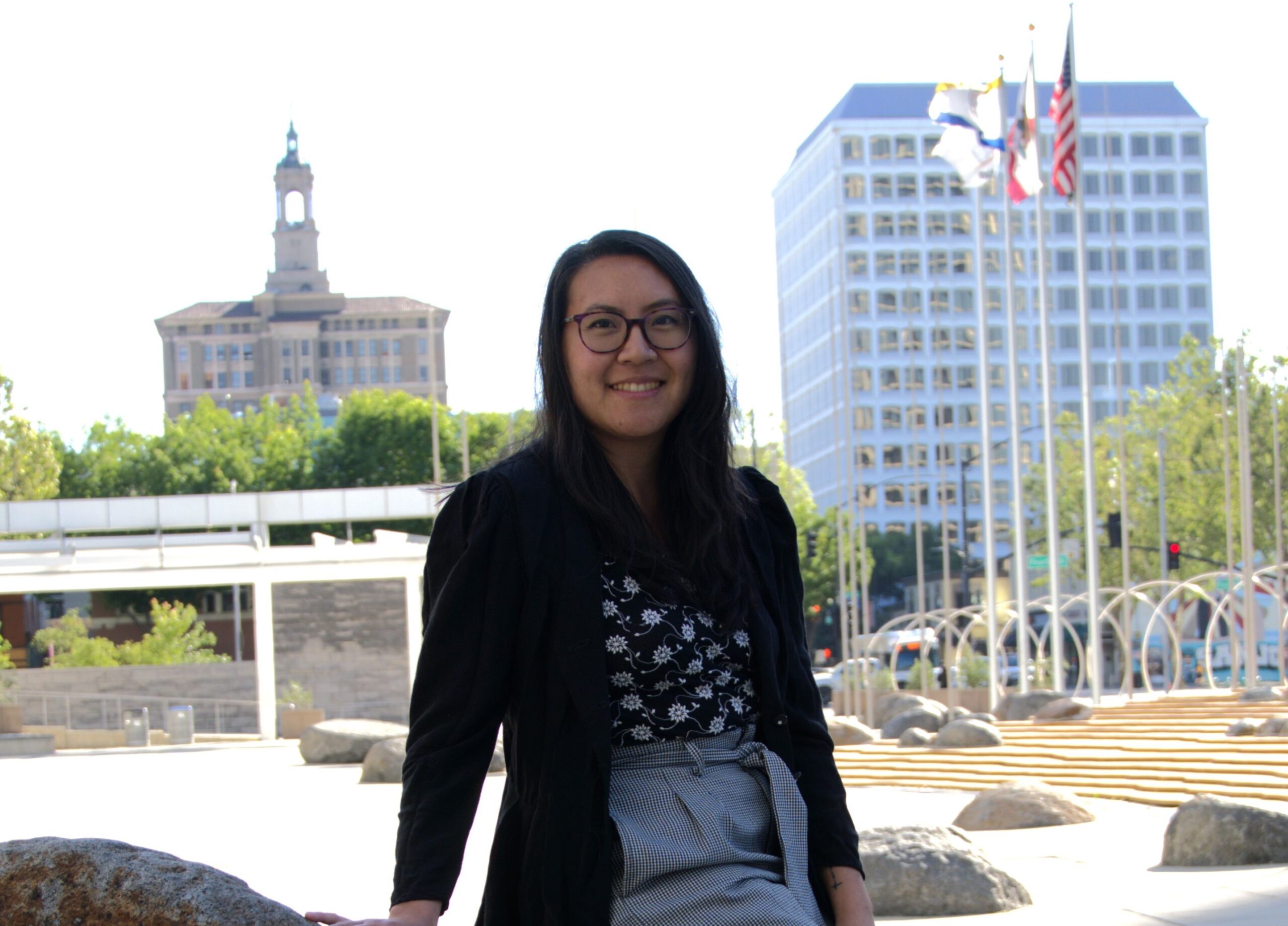
Tiffany Unarce Barry, founder of The Larry Itliong Way Project, is leading the effort. She got the idea when San Jose renamed a portion of Bird Avenue after former President Barack Obama in 2021.
“That’s when I thought, ‘Wow, that would be really cool if we have a street named after Larry Itliong too,'” Barry told San José Spotlight.
Itliong was born in the Philippines and came to the U.S. in 1929 at the age of 15. He started working as a farm laborer and began participating in and organizing strikes. The firebrand was later tapped to lead the Agricultural Workers Organizing Committee, a union made of primarily Filipino members formed by the American Federation of Labor and Congress of Industrial Organizations, or the AFL-CIO.
His most pivotal organizing efforts came in 1965 when he led more than 1,500 Filipino farmworkers to strike against grape growers in what was known as the Delano Grape Strike in Delano, a city 30 miles north of Bakersfield. The strike lasted five years and resulted in workers receiving collective bargaining contracts that protected them from getting sprayed by pesticides, provided health benefits and increased pay.
Itliong knew he needed solidarity with Mexican farmworkers in order for the strike to succeed. He reached out to Chavez and Huerta, co-founders of the National Farm Workers Association, and their workers agreed to join the strike. In 1967, the Agricultural Workers Organizing Committee and National Farm Workers Association merged to form the United Farm Workers (UFW), with Itliong as assistant director and Chavez as director. Itliong split from UFW, the nation’s longest running farmworker union, in 1971 due to internal conflicts.
“Everybody says Cesar Chavez did all this. Well, Filipinos started it,” Erwin Mina, board president of the Filipino American National Historical Society Museum, told San José Spotlight.
Mina said he grew up in a farm labor camp near Delano and played with Chavez’s kids. While he was at Chavez’s house, he remembers Itliong visiting and chasing them with a hand that only had two fingers — he lost three fingers in an accident.
Itliong inspired Mina to pursue an education and a life outside of the labor camp.
“He was a really big proponent of, ‘Yes, we work in the fields right now, but educate yourself,'” Mina said. “That was the mantra of every Manong (elder brother) in the camp. You know these laws are built against you. But if you go and get an education, they could never take that away from you, and you could become a productive citizen and maybe change these attitudes.”
The erasure of Filipino history and Itliong from the labor movement is something retired aerospace engineer Robert Ragsac Sr. takes personally. In 2008, San Jose State University unveiled an art installation called “Arch of Dignity, Equality and Justice” in celebration of Chavez. Pictured in the arch are Huerta and Mahatma Gandhi — but Itliong is absent.
“This arch is a damn insult,” Ragsac Sr. told San José Spotlight, adding the reason why Filipino history has been ignored is because there weren’t many Filipinos in academia at that time.
Paseo de San Antonio stretches from Plaza de Cesar Chavez to San Jose State University and bypasses markers such as the “Man of Fire” artwork commemorating labor activist and writer Ernesto Galarza. The Japanese American Internment Memorial is also nearby.
The effort to rename Paseo de San Antonio has garnered support from local officials, including District 3 San Jose Councilmember Anthony Tordillos who represents the area.
“Recognizing Larry Itliong in the heart of San Jose is a meaningful step toward ensuring that the contributions of Filipino Americans to the labor movement are remembered and celebrated for generations to come,” Tordillos told San José Spotlight.
 Noelle Rábago, chair of The Larry Itliong Way Project, said the renaming would correct the record and create a space to foster a sense of belonging.
“It’s establishing landmarks in San Jose,” Rábago told San José Spotlight. “Downtown San Jose is going through a transformation, where they have the historic district, they have the sports and entertainment zone. And then this would be like a social justice zone for for the area.”
Contact Joyce Chu at [email protected] or @joyce_speaks on X.

Leave a Reply
You must be logged in to post a comment.