

|
Getting your Trinity Audio player ready...
|
For Sandy Del Rio, making an alebrije has felt a little like returning to her family’s kitchen table.
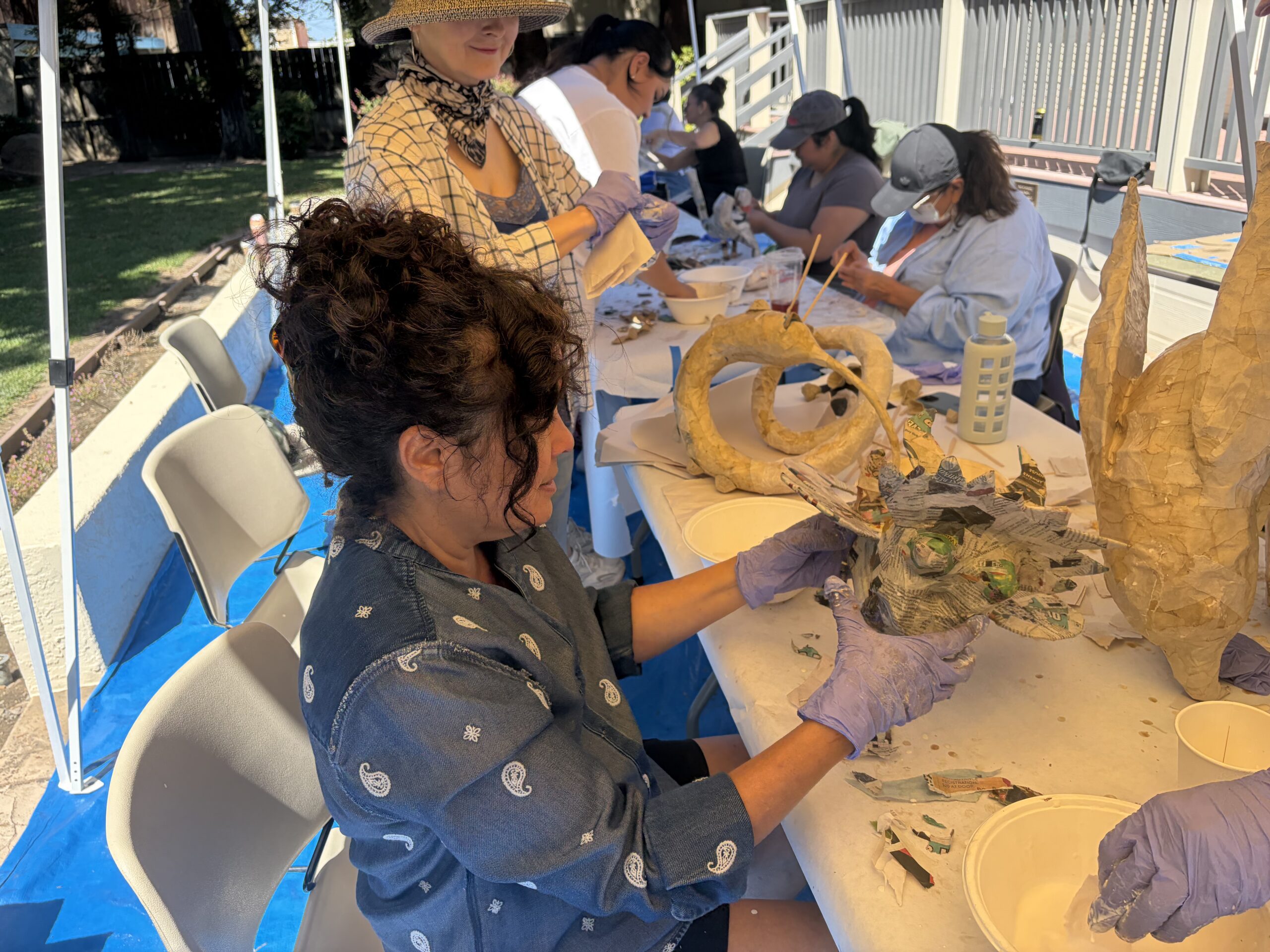
Del Rio, who was born and raised in San Jose, is one of about 20 residents who participated in a free four-part workshop by Teatro Vision, where participants learned about alebrijes and created their own papier-mâché creatures.
“It makes me feel at home,” Del Rio told San José Spotlight. “Reminds me a little bit of making tamales around the table with my family when I was little. They’re all gone now, so I don’t get that experience of sitting around creating and sharing this.”
Teatro Vision hosted the workshop ahead of its October production, “Alebrijes: A Día de Muertos Tale.” The finished creatures will become part of the production.
Alebrijes are a Mexican folk art with fantastical creatures often resembling figures from ancient mythology. The tradition began in Mexico City in the 1930s with Pedro Linares, a cartonero who made piñatas, carnival masks and other figures from paper.
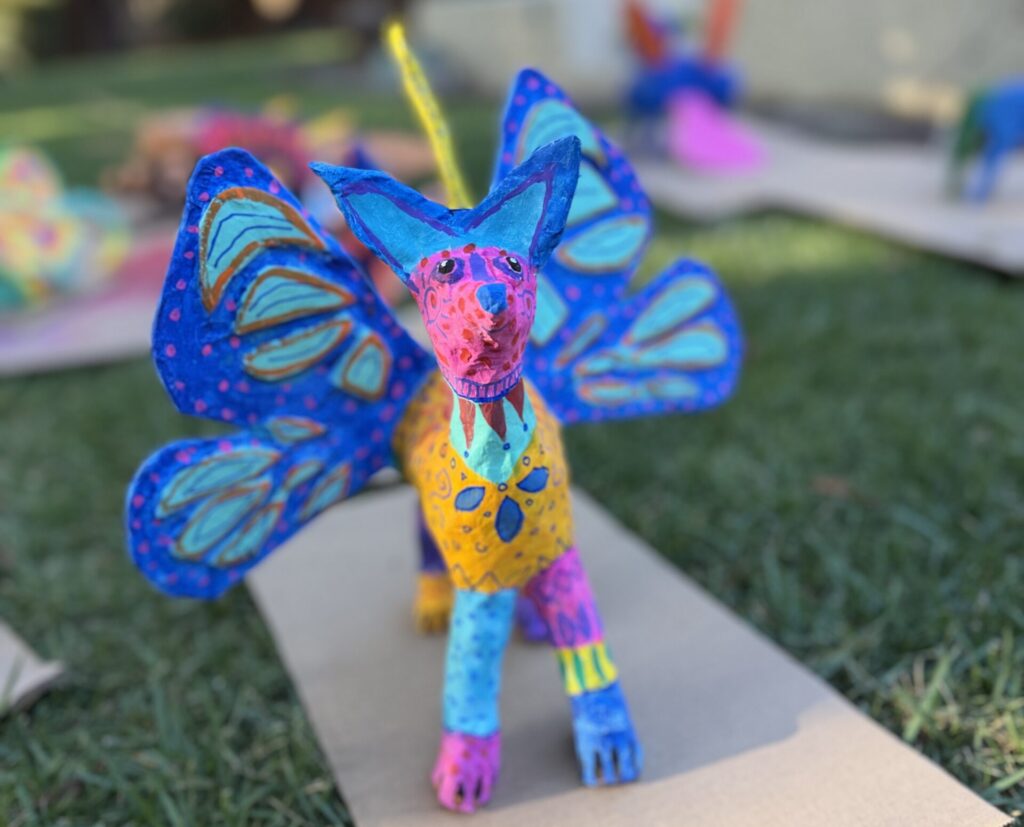
According to the story passed down through the Linares family, Linares became seriously ill and, while unconscious with a high fever, dreamed of a strange forest filled with fantastical animals. The creatures — some combining parts of different animals — called out the word “alebrije.” After recovering, Linares began recreating what he had seen using the cartonería techniques he already knew.
Linares’ creations eventually caught the attention of Mexican artists including Diego Rivera, who helped bring wider recognition to the art form. His original alebrijes were made from paper and paste, much like the creatures San Jose workshop participants have created.
The history of alebrijes is also central to Georgina Escobar’s play, which reimagines the story of Linares and his fantastical creatures. The playwright said she wanted to incorporate Linares’ art form into a story about loss, love and remembrance. The play is set in a fantastical version of Mexico and incorporates elements of Día de los Muertos.
“I wanted to bring forward his art form,” Escobar told San José Spotlight. “Every element you see in the play is meant to be created with community and made in the same way Pedro would have made his art.”
Escobar said having residents create alebrijes is not simply a Teatro Vision addition to the production — it is part of the script itself.
“It was important for people to take part in the communal creation in order to truly understand the message of the play,” she said.
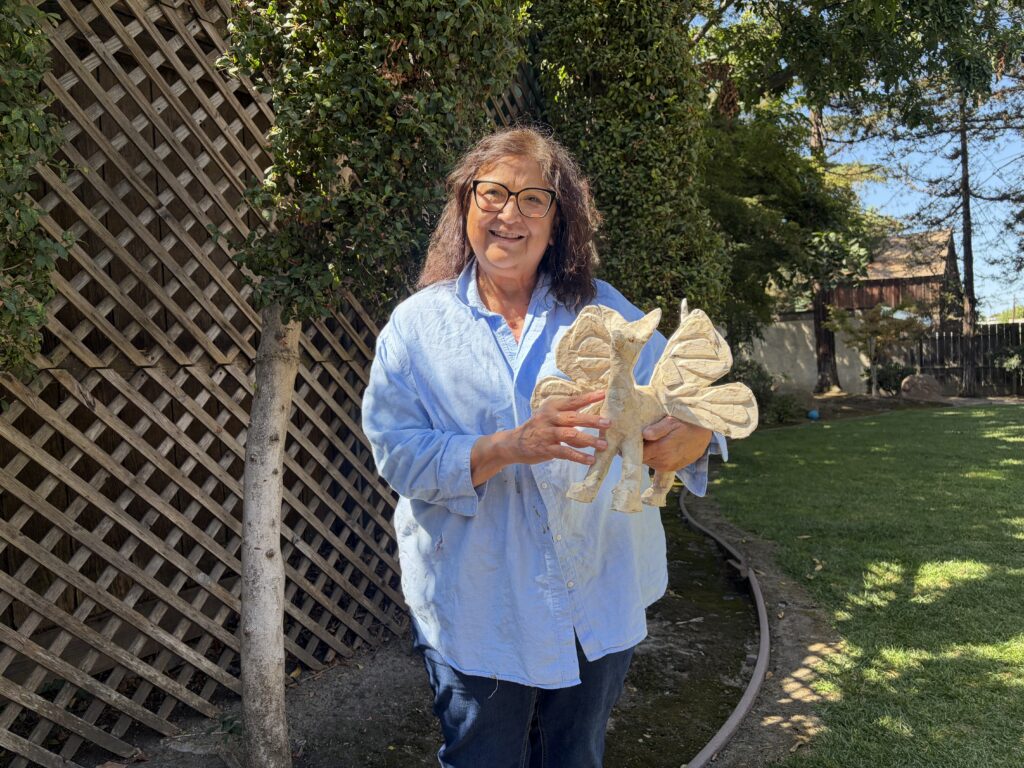
For the workshop participants, however, the creatures are not simply replicas of traditional designs. They were asked to use a series of prompts to think about their own identities and translate those ideas into animals, colors and other elements of their creations.
Del Rio, a freelance costume designer and longtime Teatro Vision community member, combined several animals in her alebrije. A lion represents finding her voice, while wings symbolize freedom and the ability to escape danger. A fish came from a prompt about the elements and a bull represents acting more decisively.
The process has been new for Del Rio, who had never made an alebrije or worked with papier-mâché before. She said seeing everyone’s sculptures take shape has been one of the most inspiring parts of the workshop.
“We all just came here and there was nothing, and then all these beautiful creatures were born,” she said.
@sanjosespotlight Teatro Vision hosted a free workshop where participants learned about alebrijes and created their own papier-mâché creatures. The finished creatures will become part of its upcoming production, “Alebrijes: A Día de Muertos Tale.” Regional Reporter Maryanne Casas-Perez takes a look. Story 🔗 in our bio.
San Jose resident Geri Hernandez, who has been making art since she was a child, said she sees her own experiences reflected in the creature she is creating. Her alebrije includes butterfly wings and a corgi.
“To me, the butterfly always represented my breathing, that I’m breathing again,” Hernandez told San José Spotlight.
Hernandez, who received a lung transplant 10 years ago, said alebrijes are “spirit animals” and connects them with Mexican traditions surrounding death and the afterlife.
Jessica Torres, another longtime Teatro Vision community member, first learned more about the history of alebrijes during a program in Oaxaca about two decades ago from a group called Ecoalebrije Artisan Association. She said the tradition represents both cultural history and a livelihood for artists who make and sell the sculptures.
“It’s a great feeling to come together and think about those traditions, the artists and all of the beauty that they represent,” Torres told San José Spotlight. “This is from conception … to now about to give life to it.”
Contact Maryanne Casas-Perez at [email protected] or @CasasPerezRed on X.
Leave a Reply
You must be logged in to post a comment.