

|
Getting your Trinity Audio player ready...
|
San Jose is drawing up the rules of the road for automated food delivery robots, as the industry eyes local expansion.
New draft regulations, unveiled this week, could pave the way for a larger rollout of the delivery bots, which first hit San Jose’s sidewalks in April. That may include the introduction of larger and faster robots designed to operate in the city’s bike lanes.
During a Tuesday online community meeting, San Jose Department of Transportation officials laid out their plan, which could ultimately include a set of rules covering things like how fast the devices may travel and what parts of the city they may operate within. Under the proposal, the city would issue operating permits to the tech companies behind the robots on a year-long basis.
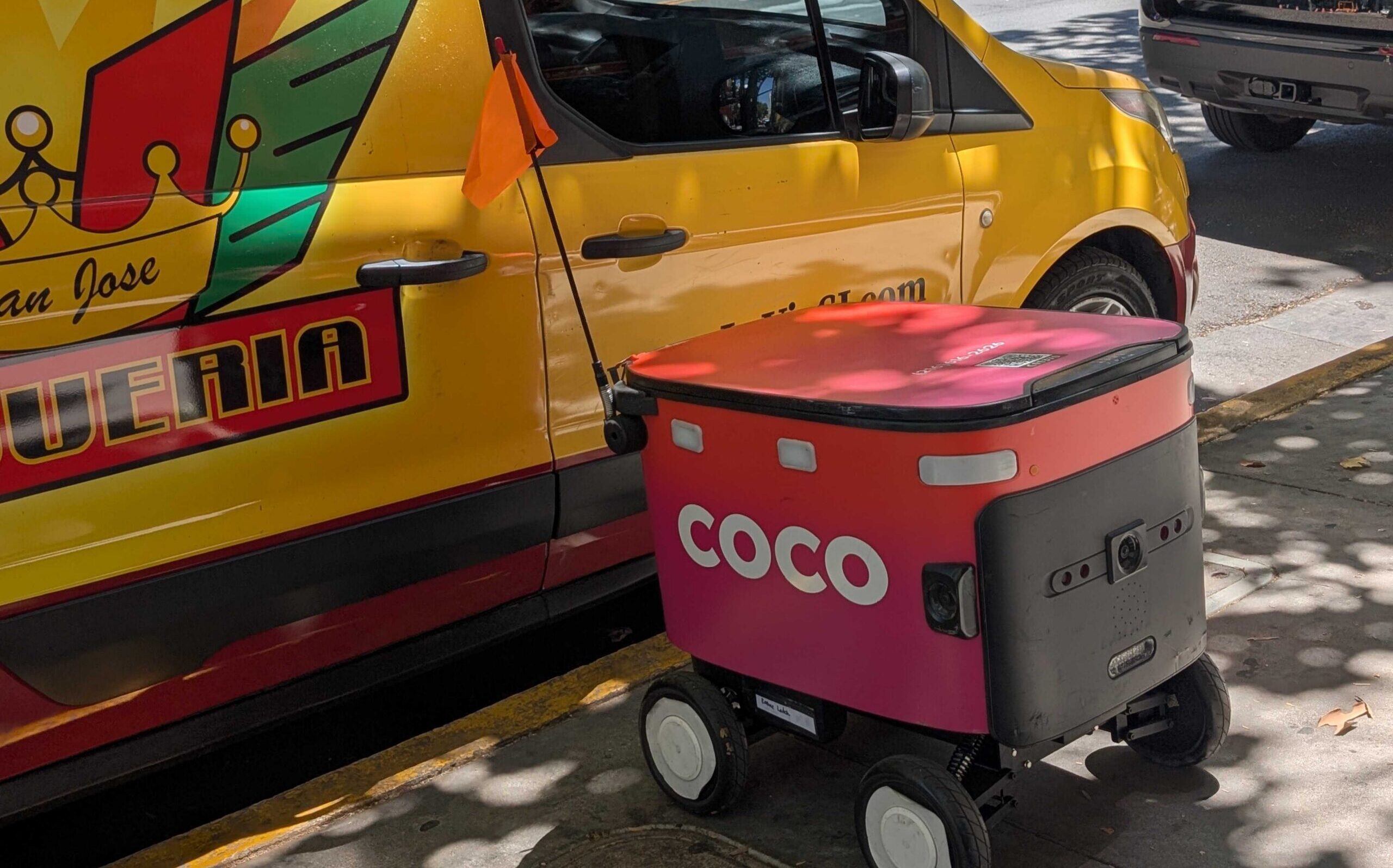
So far, the two companies operating in San Jose — Coco Robotics and Serve Robotics — have 35 bots between them, officials said.
The meeting was part of a broader outreach process intended to let residents weigh in as the city hammers out a finalized proposal, which is expected to go before the City Council in September. If approved, the permit program could launch in the late fall or winter.
Some residents expressed alarm that the city’s public rights of way could see an influx of autonomous delivery bots — summoned through apps like Uber Eats — carting around food orders.
“I understand what food delivery companies get out of this, but what do we get out of this?” Nick Wester wrote in to ask during the online meeting. “It feels like we’re ceding public paths to private companies in exchange for what, exactly?”
Meanwhile, officials also said that DoorDash, a behemoth in the food delivery sector, has expressed interest in deploying its own delivery robot in San Jose. At about five feet tall, the device, known as Dot, is substantially larger than the cooler-sized robots that have already become a common sight in downtown. These robots are designed to travel in bikeways at speeds of up to 20 mph, raising questions about how they will coexist with cyclists in the narrow channels.
During their presentation, transportation officials said the all-electric delivery bots could help to cut down on traffic by reducing the number of car trips people must take to pick up food. In addition, the automated deliveries could also make it easier for people with limited mobility to get food or vital medications.
Among the rules imposed by the draft regulations, the city plans to set a speed limit of 5 mph for all devices traveling on sidewalks, pedestrian pathways and crosswalks. In addition, smaller devices would be required to attach visibility flags, and companies would be responsible for removing devices that freeze up and block public areas “within a reasonable amount of time,” officials said.
The regulations do not impose any specific limit on the number of delivery bots allowed to operate on city streets, but the city would have the option to withhold permits if it determines “the numbers are getting too high,” a transportation department spokesperson told San José Spotlight.
Companies that violate the rules could face fines or have their permits revoked.
Ramses Madou, a transportation department division manager, said Tuesday the city would monitor how the introduction of DoorDash robots to bike lanes plays out, under a yearlong pilot program that will be extended only if deemed successful.
“We need to understand from the city’s perspective: Did this work?” Madou said. “Is it negatively affecting bicyclists? Is the introduction of the technology more on the pro than the con side of things?”
Several attendees urged the city to draw more input from disabled residents, noting that bots could cause major obstructions for people in wheelchairs.
Others asked the city to consider allowing the companies to operate outside of downtown.
Amid the barrage of concerns and questions, industry representatives also laid out their own plans for making sure the robots share sidewalks and bike lanes safely.
“We know the product won’t be successful if we can’t go into cities and have people be reasonably comfortable and okay with these operating there,” Jordan Mesch, a product manager with DoorDash, said during the meeting. “So that’s pretty important to us.”
Contact Keith Menconi at [email protected] or @KeithMenconi on X.
Leave a Reply
You must be logged in to post a comment.