


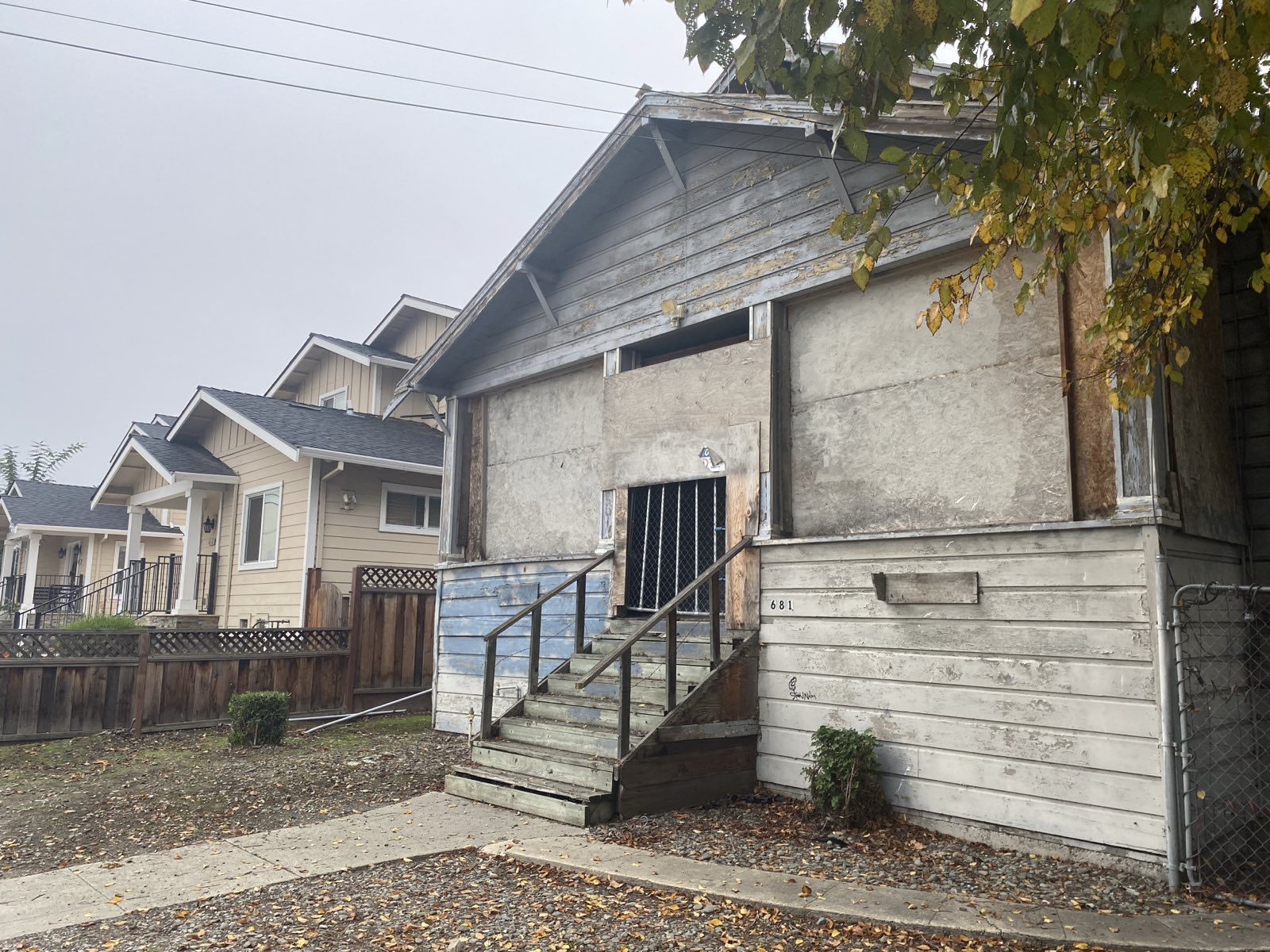
San Jose has taken the first step in a likely lengthy process to revamp the city’s approach to historic preservation.
Councilmembers have outlined reform proposals for city staff to study in the new year. These include measures to boost outreach to owners of historic properties, as well as reforms intended to make it easier to renovate such properties.
The effort, spearheaded by District 3 Councilmember Anthony Tordillos, comes in response to growing outcry from San Jose business leaders. They say existing preservation rules intended to protect the city’s historic character have instead created a tangle of cumbersome requirements that have, paradoxically, caused many historic buildings to fall into blight and disrepair.
Some of the loudest warnings have been issued from leaders in Japantown, a neighborhood home to a large number of properties on the city’s official inventory of historic buildings. Tamiko Rast, president of the Japantown Business Association, is applauding the proposed reforms.
“It would make all the difference in the world,” she told San José Spotlight. “I’m hoping that this policy allows us to make our property safer, makes our neighborhoods safer, and makes it so that we can grow as a community.”
Rast said the city’s preservation rules make it next to impossible to renovate Japantown’s aging buildings — many of which contain unpermitted structures — a problem that has driven out would-be entrepreneurs. Without proper upkeep, such blighted structures become a magnet for squatters and other illicit activities, she said.
“It’s not just affecting business,” Rast said. “It’s not just affecting land values. It’s affecting quality of life.”
A memo laying out the reform priorities — authored by Tordillos as well as Mayor Matt Mahan, Vice Mayor Pam Foley and Councilmembers Michael Mulcahy and David Cohen — gained approval from the Rules and Open Government Committee during its Dec. 3 meeting.
“(San Jose’s historic resources) connect us to our past, preserve communities, and enrich the urban landscape of San Jose,” the memo reads. “We have a responsibility to protect and restore them while minimizing the impact on our residents and business owners.”
But it could still be months before concrete legislation lands before council. Officials with the department of Planning, Building & Code Enforcement said given the project’s complexity, the review process will likely take nine to 12 months. Councilmembers are expected to set a firmer timeline in January as they set budget priorities for the next fiscal year.
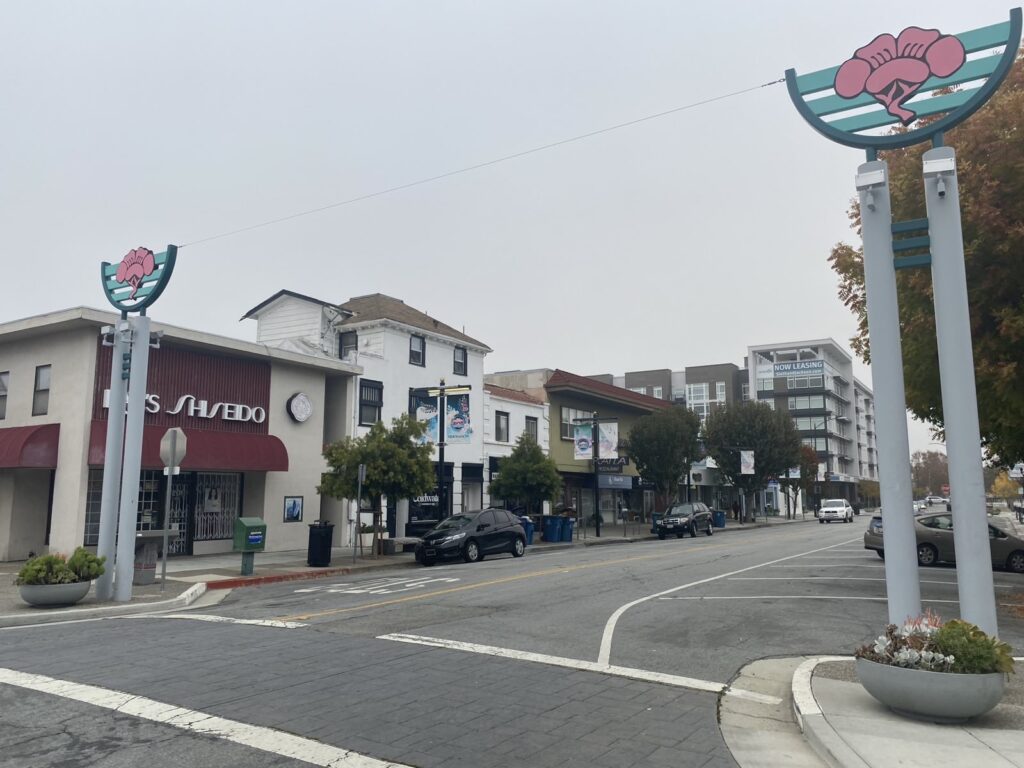
The controversy surrounding San Jose’s preservation rules has been underscored in recent months by the financial plight of Japantown business owners Jordan and Rina Trigg.
Jordan Trigg told San José Spotlight in November that when he purchased a property at Fifth and Taylor streets in 2022, he wasn’t aware the building was listed on the city’s official historic inventory. The bureaucratic roadblocks that followed delayed plans to turn the building into a restaurant. This led to spiraling financial troubles that now threaten the couple’s other businesses.
Backers of the reform push say improved outreach should help prevent other business owners from being caught unaware.
The memo’s other proposals include an amnesty program that would legalize certain unpermitted structures in historic buildings; a measure to make it easier for property owners to get rid of protected structures that have degraded to the point that they have already lost their historic character; and new rules intended to make it easier for the owners of historic properties to swap in modern building features, like double-paned windows. As the reform push moves forward, San Jose’s historic preservationists are watching closely.
“We’re always a little bit concerned when preservation is being described as a problem to get around,” Ben Leech, executive director of the Preservation Action Council of San Jose, told San José Spotlight.
Nevertheless, he said he would support a “good faith” effort to reform preservation rules that aren’t working.
 Meanwhile, others want the conversation to lead to even more far reaching changes for the city’s preservation rules. Kelly Snider, a land use consultant and urban planning professor at San Jose State University, said the city should adopt a system where property owners are allowed to opt into historic designations and offered incentives for doing so.
“Those (existing) regulations are imposed on property owners who don’t want it and who are burdened by this extra cost burden,” Snider told San José Spotlight.
Contact Keith Menconi at [email protected] or @KeithMenconi on X.
Leave a Reply
You must be logged in to post a comment.