

|
Getting your Trinity Audio player ready...
|
As voting rights become diminished, Santa Clara County officials and advocates are pushing back.
The Board of Supervisors is working with Black community leaders to encourage residents to participate in local elections, after officials recently approved a plan to draft a resolution to protect voting rights, which will go before supervisors on Sept. 15. Supervisors also voted to formally support the California Voting Rights Act of 2026 — Senate Bills 1164 and 1360 — which prohibits voter suppression. State lawmakers have approved the bills, which are awaiting Gov. Gavin Newsom’s signature.
The effort by county officials comes in response to the U.S. Supreme Court’s April 29 ruling in Louisiana v. Callais, which weakens the Voting Rights Act and makes it harder to create majority-minority districts.
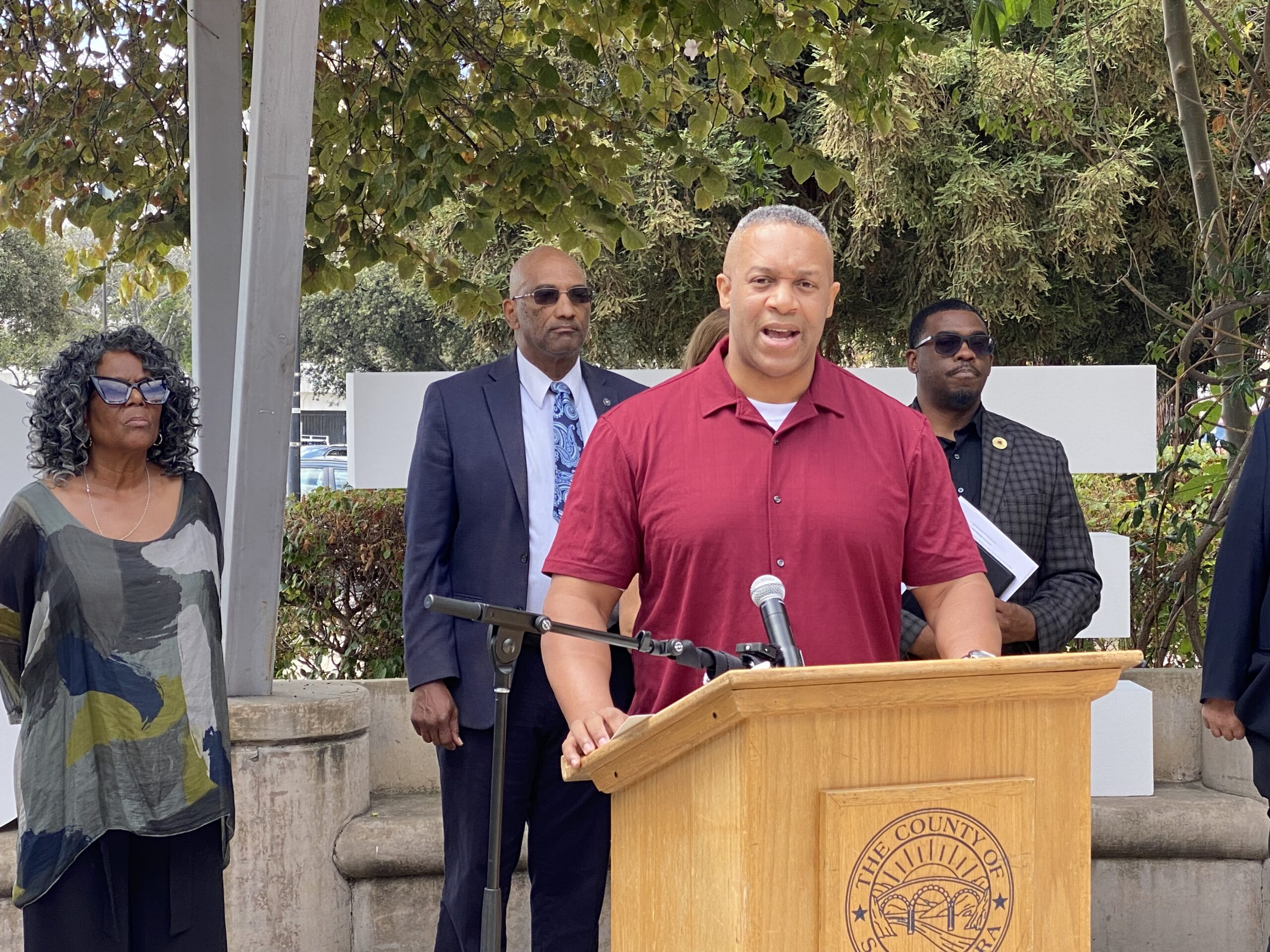
“The Louisiana v. Callais decision … removes legal safeguards against racial gerrymandering in Louisiana,” District 1 Supervisor Sylvia Arenas, who brought forth the proposal, said at a Monday news conference. “This threat to civil rights demands our immediate action and cannot afford further delay. It is critical that the board of supervisors and this county stand firm in supporting (the) Voting Rights Act.”
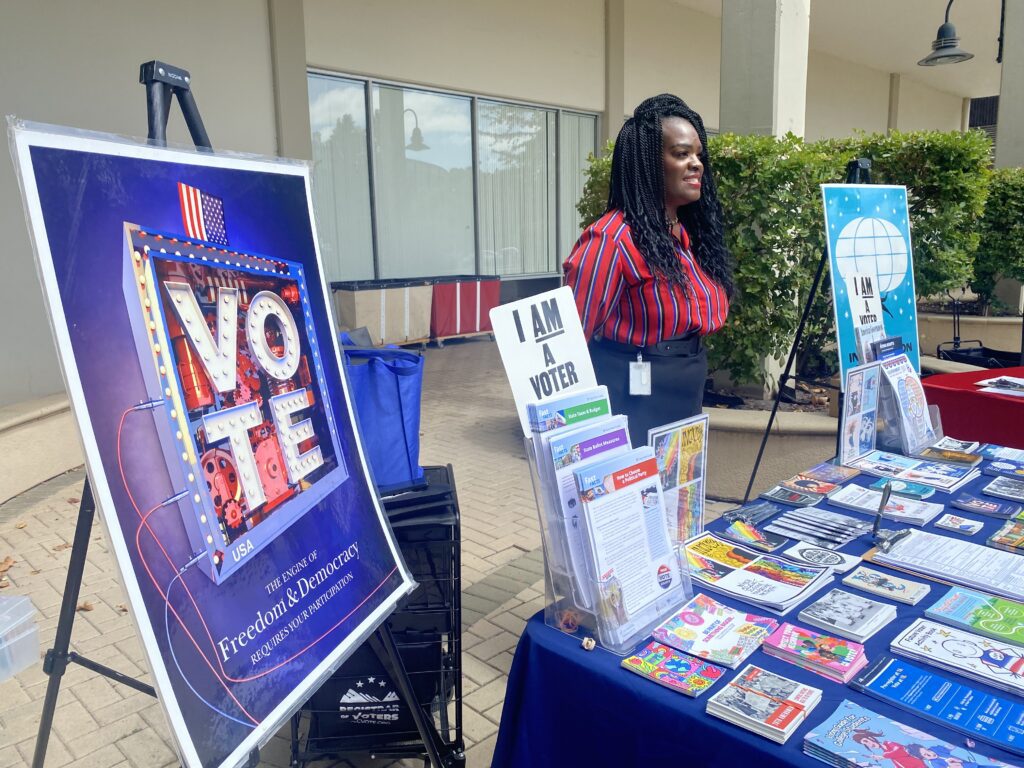
The idea to engage locals was spurred by Carmen Brammer, founder of civic engagement organization Global Majority Consulting. She said the dismantling of voting rights her ancestors fought for compelled her to act, and she met with Arenas and other county supervisors to urge them to protect residents.
“I felt so unsafe when that decision came, like I didn’t matter anymore to this country,” Brammer told San José Spotlight. “I said, ‘You know what? I got to do something.’”
Brammer is partnering with the county to educate and encourage people to vote. Her organization works to help voters understand what is on the ballot by providing facts and using conversational language.
“(Voting is) the one free thing we have,” she said. “It’s free because other people died to get it first, but a lot of folks don’t have that history.”
President Lyndon B. Johnson called on Congress to pass the 1965 Voting Rights Act after police beat civil rights activists during a peaceful march in Selma, Alabama led by the late Congressman John Lewis in what was known as Bloody Sunday.
The Voting Rights Act revoked the Jim Crow laws that disenfranchised Black communities from voting, ending systematic discrimination at the ballot box.
NAACP of San Jose/Silicon Valley President Sean Allen said that in the 117 years of the national organization’s existence, no fight has been greater than protecting voting rights.
“Our members organized, marched and were buried for the Voting Rights Act of 1965,” Allen said at the news conference. “A nation willing to deny the ballot to us would deny it to anyone.”

Allen said there are also concerns that the Supreme Court decision will make it harder to elect people of color locally. His group will be working to educate residents on the voting process and reaching out to communities that may not be politically engaged. For this upcoming election, NAACP will focus its efforts on cities with at-large voting that lack city council districts, such as Cupertino and Mountain View.
This method of voting favors whoever is most politically engaged, Allen said, since at-large voting allows residents to vote for candidates who don’t live in their neighborhood. At-large voting has disenfranchised communities like Gilroy, where nearly 60% of the population is Latino but the current councilmembers are white, he added.
Gilroy’s council elections have shifted from at-large to district races this year, with eight candidates emerging for three seats up for grabs this November.
“We’re hoping to see change with that, and we’re hoping that community is better represented in this election cycle,” Allen told San José Spotlight.
Contact Joyce Chu at [email protected] or @joyce_speaks on X.
Leave a Reply
You must be logged in to post a comment.