


|
Getting your Trinity Audio player ready...
|
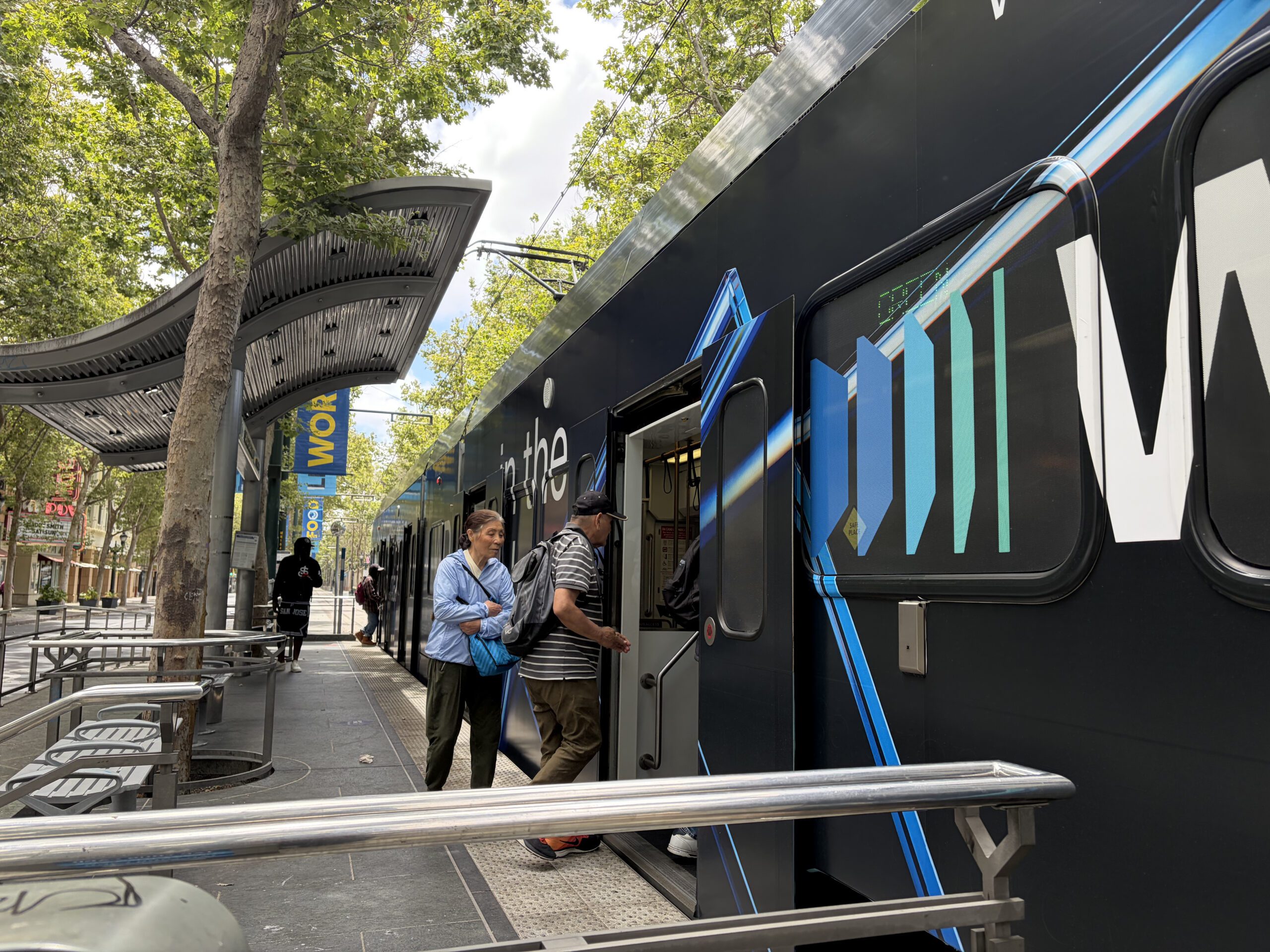
A highly touted Bay Area sales tax measure to fund public transit joins 14 other referendums that have qualified for the November election — and South Bay leaders said strong community support made it happen.
The transit sales tax measure — which proposes a 0.5% increase in Santa Clara County — collected an estimated 241,964 valid signatures, exceeding the 110% threshold of 205,831 signatures required to qualify for the ballot, according to the Public Transit Revenue Measure District.
The measure, also known as Senate Bill 63, would raise $1 billion annually for public transit service across five Bay Area counties. Approximately $264 million would go to VTA annually until the tax ends after 14 years.
“The fact that it had so many signatures is really due to something that’s unusual for a lot of ballot measures, which is you mostly had volunteer signature gatherers,” VTA Board Chair and Campbell Councilmember Sergio Lopez told San José Spotlight, speaking for himself. “The campaign met a high threshold for signatures, so I think that really speaks to the commitment of writers and advocates of the measure.”
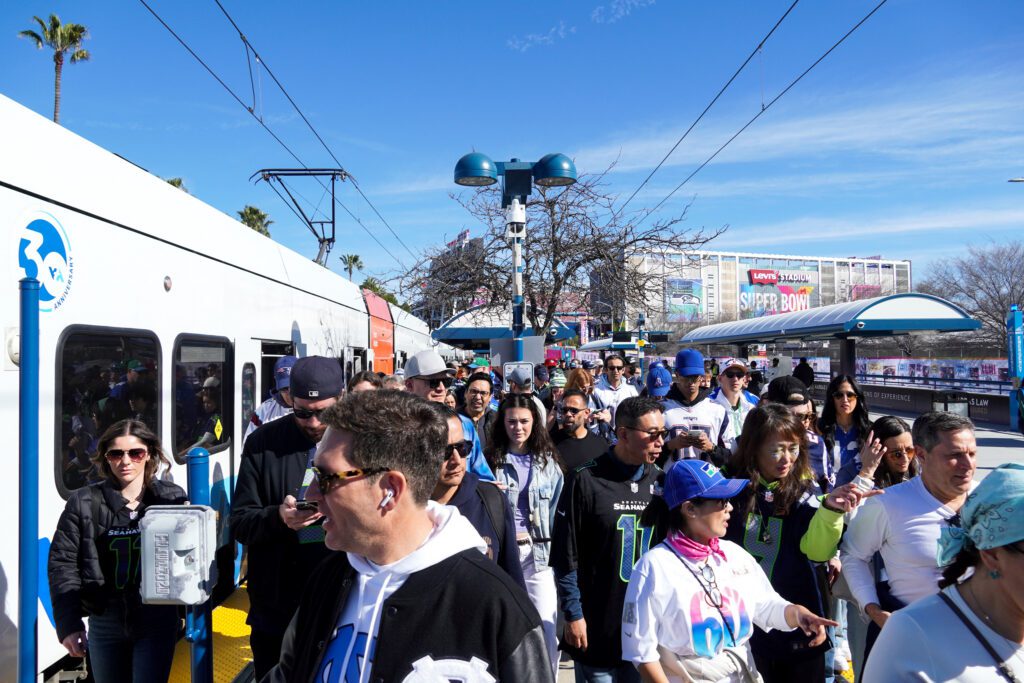
Agencies such as VTA and BART are the main ways to get around on public transit, but they are struggling with multiyear budget deficits.
VTA surpassed record ridership expectations with Super Bowl 60 in February and again last month with World Cup matches at Levi’s Stadium, but projects a $15 million deficit by 2027. BART on April 17 reported a 10% year-over-year surge in trips this month, but faces an annual structural deficit of $350 million to $400 million. The agency has warned it might close 15 stations with a 70% reduction in service if the proposed tax measure fails.
A November poll ranked Santa Clara County as having the lowest voter support for the initiative out of all five counties, which includes Alameda, Contra Costa, San Mateo and San Francisco.
“(Public) transportation is for people who can’t afford a large gas tank or don’t have a car that functions,” San Jose resident Salvador Solis told San José Spotlight. “If you raise taxes when you have individuals who are lower on the poverty line, they can’t purchase wholesale anything.”
Solis said he’s surprised things haven’t been done to lower costs for people impacted the most and doesn’t see how increasing taxes is going to help people who depend on public transportation.
Despite those shared concerns, resident Alvina Quan said supporting public transportation is needed.
“I think with the increase in tourism here, especially with the Super Bowl and World Cup, I presume other major events might happen here in the far future,” Quan told San José Spotlight. “Public transportation might actually be really necessary.”
The South Bay has seen numerous voter approved tax measures make it over the finish line since 2024.
Santa Clara County’s Measure A, a countywide five-eighth cent sales tax increase passed by voters last November, is expected to bring in $330 million in extra revenue annually to stave off the threat of hospital closures. There’s also Measure D, a Santa Clara Valley Open Space Authority parcel tax approved by voters in June, and local municipality sales tax measures that have been approved as stopgaps for budget deficits.
“Myself personally, living here and struggling with the cost of living I understand firsthand there are other costs like housing in this area,” Lopez said. “But I strongly believe that unlocking the potential of a strong mass transit system is essential to creating an affordable Santa Clara County.”
Contact Gabriel Symkowick at [email protected].
Leave a Reply
You must be logged in to post a comment.