

|
Getting your Trinity Audio player ready...
|
The Bay Area is a paradox – both the birthplace of mountain biking and a well of local opposition. Now Santa Clara County is poised to embrace the sport in a major way.
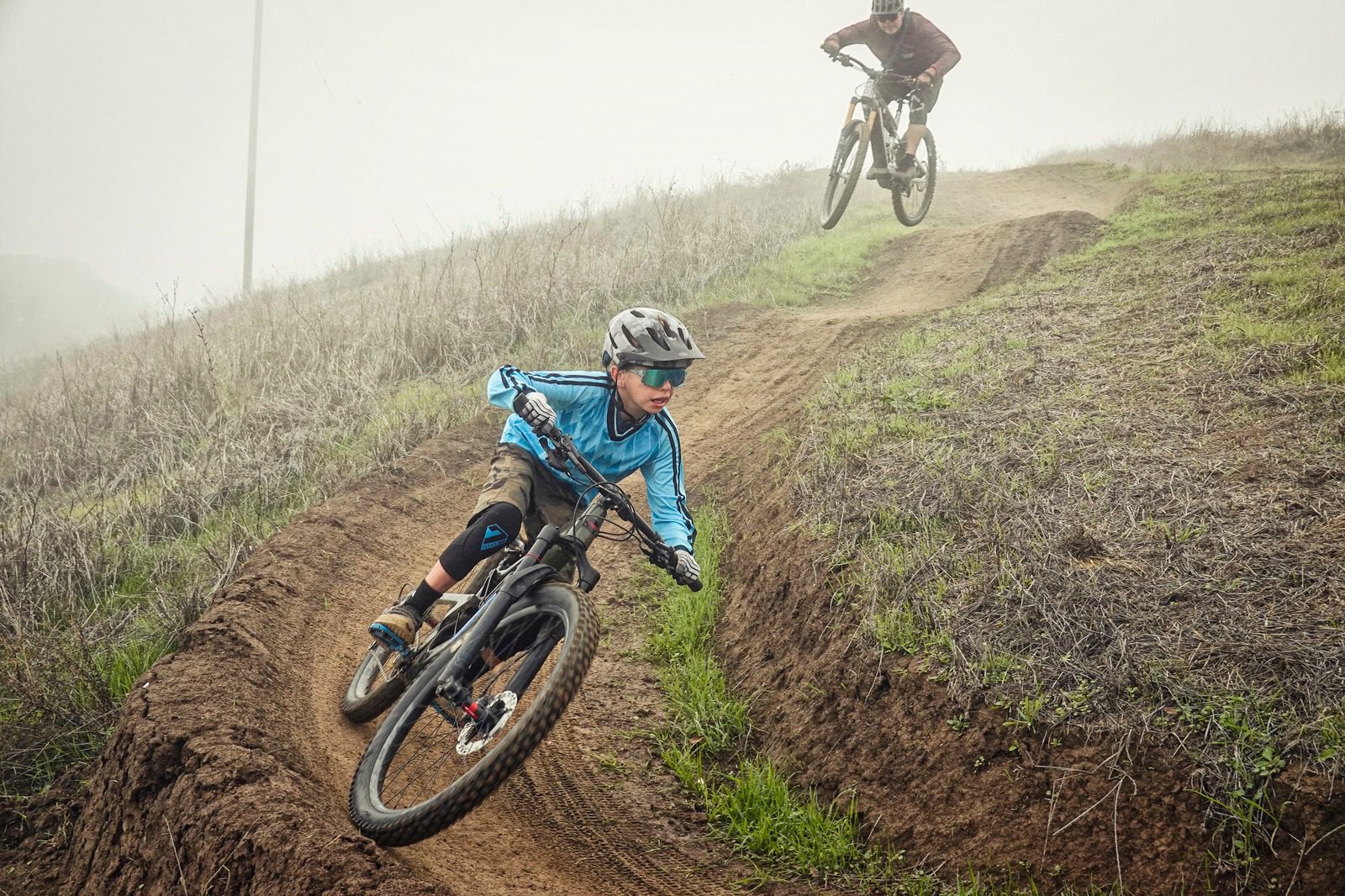
County leaders are exploring the creation of bike-only trails in county parks to avoid illegal tracks in sensitive areas and conflicts between bikers and hikers. Those efforts advanced this month with a comprehensive study finding two county parks – Ed R. Levin in Milpitas and Joseph D. Grant in San Jose – could “very likely” host downhill trails. The study also found six parks, including Sanborn and Santa Teresa, could “very likely” host a bike park with pump tracks, which are paved, circular loops of small hills and berms that serve as grounds for honing skills and social gathering.
The efforts have sparked an outpouring of support – and debate. In the process, Santa Clara County has struck a central nerve in the region’s ongoing struggle to regulate a sport where some advanced – and risk-taking – enthusiasts have gained online followings for going off the accepted map.
“A lot of positive comes out of building a sanctioned trail and bike center – they allow kids and adults to progress their skills and foster community cohesion – but more advanced bikers are more interested in pushing limits,” Teddy Hayden, a Bay Area biker who’s amassed 50,000 followers for uploading his stomach-dropping journeys to Instagram, told San José Spotlight. “It’s hard for a trail builder to justify building trails that are challenging enough for advanced riders when often that demographic goes vigilante and off the map. It’s a weird balance.”
The county already has bike-friendly trails. But bikers are forced to share those paths with hikers and equestrians – breeding conflict and hurting the sport’s reputation. Efforts by local groups to ban the sport have, over the decades, fostered a counter-reaction of well-organized and civically coordinated biking advocacy networks across multiple Bay Area counties.
That coalition is now turning its sights on Santa Clara County, where there are no bike-only trails, pump tracks or dirt jump parks across the county’s network of 28 parks and 352 total miles of trails. Of those trails, 190 miles are multi-use trails and nine are restricted to hiking and biking.
Jessica Tseng, a San Jose resident and president of the Silicon Valley Mountain Bikers, said mountain biking has been a way for her and her kids to peel away from their addictive but isolating devices and technology. While Santa Clara County has been more welcoming of mountain bikers than other communities, she said there are starker access barriers in the built environment.
“It’s a big struggle here unlike Santa Cruz, where kids can ride their bikes to a trail,” Tseng told San José Spotlight. “Here, in Silicon Valley, we have to drive at least 30 minutes to reach a trail. There aren’t a lot of ways kids can get out there.”
The sport has gained increasing popularity since its invention in the early 1970s by cyclists Gary Fisher, Joe Breeze, Charlie Kelly and Tom Ritchey, who – as the story goes – ran modified old cruiser bikes down Mount Tamalpais in Marin County, leading to the first mountain bike designs.
It’s also led to faster and faster bikes as enthusiasts swell and technology evolves – faster than other trail users may be expecting.
County Parks Commissioner Keith Ball is undecided on the idea of bike-only trails. He said he often hikes up the John Nicholas trail in Sanborn Park with his wife.
“It’s a very heavily used mountain biking trail,” Ball told San José Spotlight. “Ninety-nine-point-nine-nine percent of everyone is very nice — but there’s a small percentage of them where it doesn’t take much to cause problems. Even people who are very cautious almost hit us with blind turns. Those conditions are really serious.”
Alice Kaufman, the policy and advocacy director for Green Foothills, said the county’s efforts raise a number of questions for environmental conservationists. On one hand, she said she believes in public access to nature.
“Both for physical and mental health, but also because it’s important for people to be able to connect to nature, and they’re not going to support efforts to protect open space if they never have a chance to experience it,” Kaufman told San José Spotlight. “That being said — we need to be careful at the extent to which we put trails everywhere, because every time you introduce humans into wildlife habitat, you increase the stress and impacts on wildlife.”
Gita Dev of the Sierra Club’s Loma Prieta chapter questions how effective sanctioned trails will be at curbing illegal trails.
“Bikers seem to want to create their own challenges and make a lot of new trails, going straight up and down slopes, rather than keeping to trails,” Dev told San José Spotlight.
Joel Shrock, a biking advocate and board member at Bay Area Mountain Biking, pushed back on the notion.
He points to Briones Regional Park in the East Bay as a distinct case. Officials — using Strava data and aerial photography — found a large number of bootleg trails created by bikers. He said such trails take large amounts of time and effort to build.
“You have to be a pretty determined local person to take it upon yourself to go out and build your own,” Shrock told San José Spotlight. “I don’t see many other places like that where people are building lots of bootleg trails where legal downhill trails are available to ride.”
While he agrees that Santa Clara County’s efforts will largely serve beginner to intermediate bikers, he argues that challenging sanctioned trails in the Bay Area do exist. At Briones, staff agreed to legalize some of the bootleg trails, according to Santa Clara County’s feasibility study.

Tseng said mountain bikers can enhance county stewardship efforts.
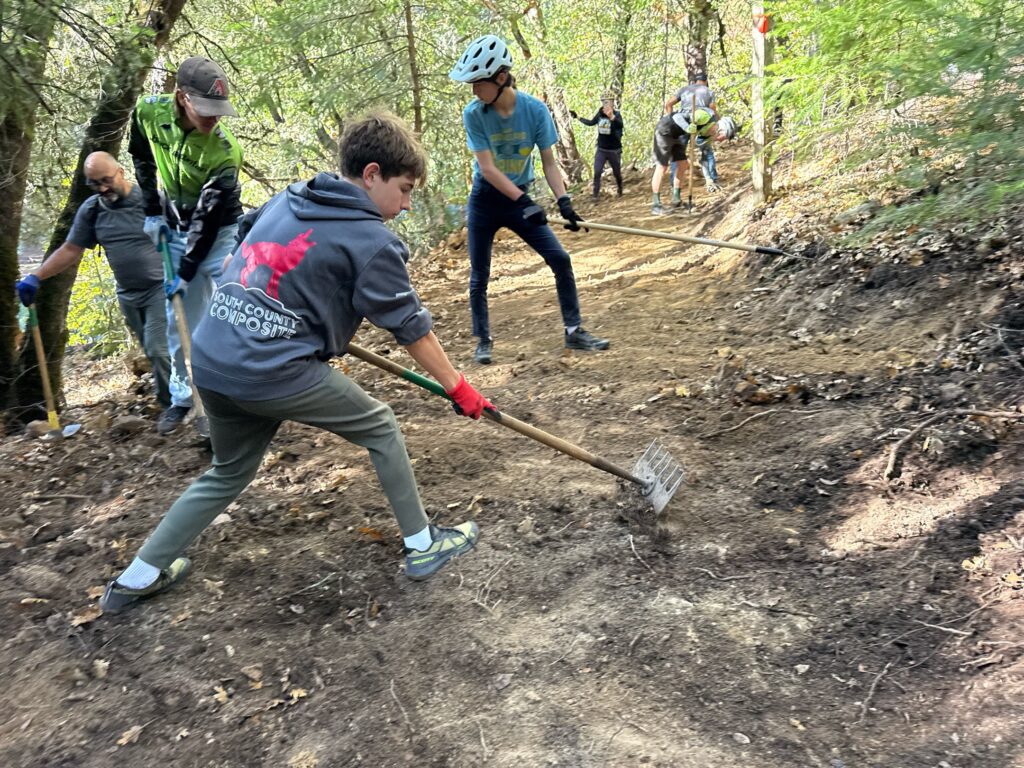
“A trail lead once told us they have acres of land and acres of trails to maintain and they don’t have the staffing to do it,” Tseng said. “What we’re aiming for is a partnership where can we get certified as trail stewards and increase visibility and monitoring across the county’s park networks.”
Contact Brandon Pho at [email protected] or @brandonphooo on X.
Leave a Reply
You must be logged in to post a comment.