

Latinos in Santa Clara County suffer from higher rates of poverty, lower rates of high school graduation and more deaths from diabetes than other groups. Officials want to find ways to close that gap.
The Santa Clara County Board of Supervisors on Tuesday unanimously declared a public health crisis for Latino residents, and is committing to address the disparities following a yearslong county health assessment released in May. Latinos comprise about a quarter of Santa Clara County’s total population — with most living in East San Jose and South County. Of the county’s 2 million residents, more than 480,000 are Latino.
Officials with the Santa Clara County Public Health Department are recommending the creation of a South County cultural center to serve as a safe youth space and resource hub for families. They also say the county should invest in more early childhood education programs, with the goal of having at least 40% of Latino children ready for kindergarten by 2030.
“We are the safety net for all of our community,” District 1 Supervisor Sylvia Arenas, who led the effort, told San José Spotlight. “If the majority of our community is dying from suicide or isn’t graduating or isn’t reading by third grade, it is our responsibility to do something about it.”
The Latino homeless population has grown over the years as more people slip into poverty. In 2007, Latinos made up 28% of Santa Clara County’s homeless residents. That peaked at 47% in 2022, and Latinos now comprise nearly 41% of the local homeless population, according to a 2023 point-in-time count. Data from a count conducted earlier this year has yet to be made available.
Latinos live in poverty at double the rate of other families, according to the health assessment. In Santa Clara County, 38% of Latino families lived at 200% below the federal poverty level between 2017 and 2021, compared to 18% for other families. In 2021, that was $53,000 for a family of four. That is now $64,300 for a family of four.
In addition, Latino renters are more cost-burdened at 57%, compared to 45% of all households renting. Fewer Latinos said they lived in a stable environment.
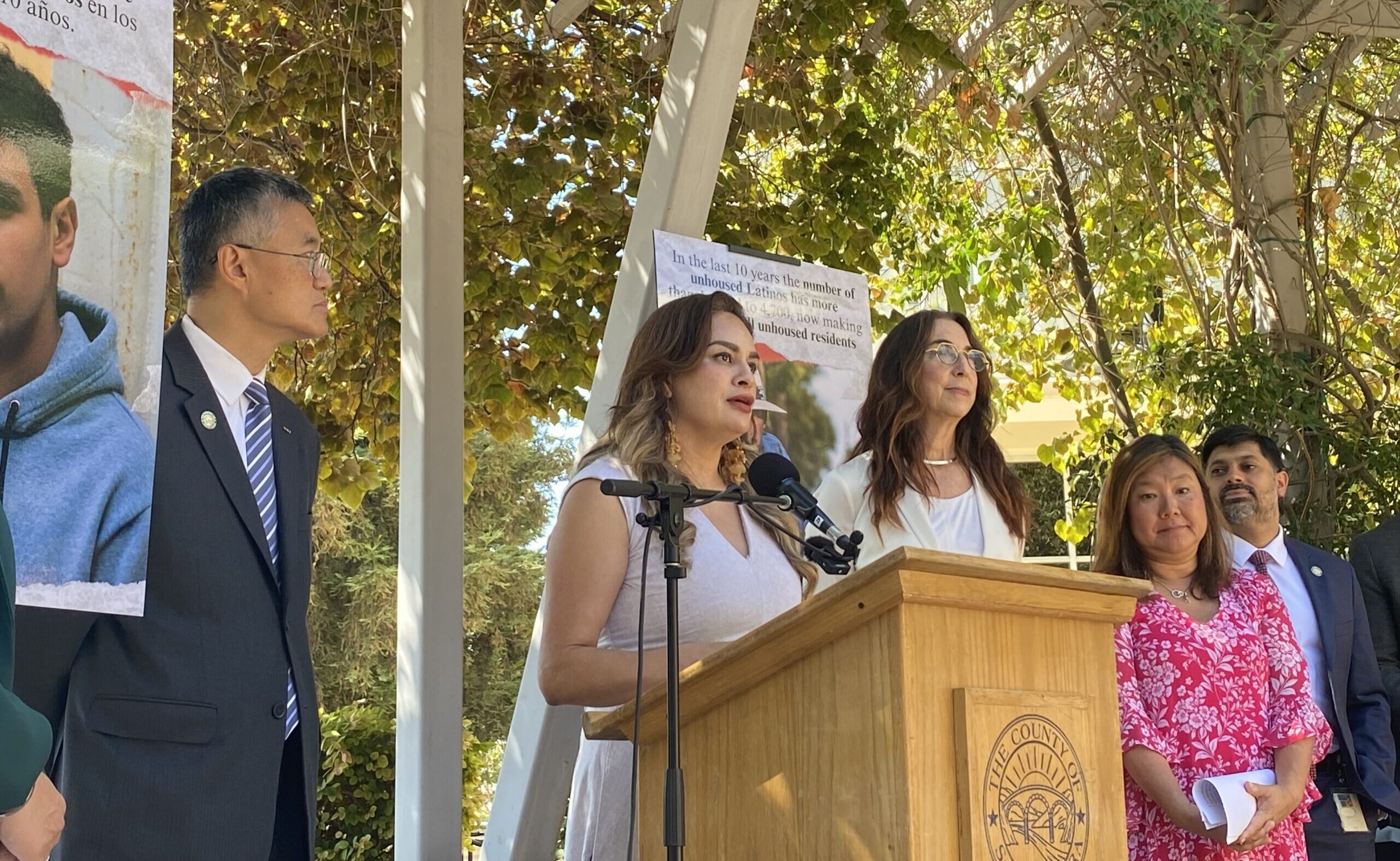
“Things are likely to get worse,” District 5 Supervisor Margaret Abe-Koga said at a news conference after the vote. “Unfortunately, with the federal cuts already taking place, and more coming with the slashing of Medicaid and food support, we can expect more of our county’s residents to be affected.”
The declaration of a public health crisis comes at a time when Latinos are being subjected to federal immigration raids, which is causing enough fear to keep students out of school and decrease foot traffic at Latino businesses.
 Angelica Diaz, Healthy Communities branch director for the county public health department, said they will use the recommendations in the report and collaborate with groups to address the Latino community’s social and health disparities.
“It’s (about) taking the results from the Latino health assessment, identifying those gaps and working in collaboration with dozens of partners, as well as our health care system to address those gaps to improve health for Latinos,” Diaz told San José Spotlight.
Contact Joyce Chu at [email protected] or @joyce_speaks on X.

Leave a Reply
You must be logged in to post a comment.