


|
Getting your Trinity Audio player ready...
|
Santa Clara County’s efforts to construct new jail facilities have repeatedly stalled due to rising costs and ongoing disagreements among officials and residents, but the deteriorating infrastructure is propelling the county to finally move forward.
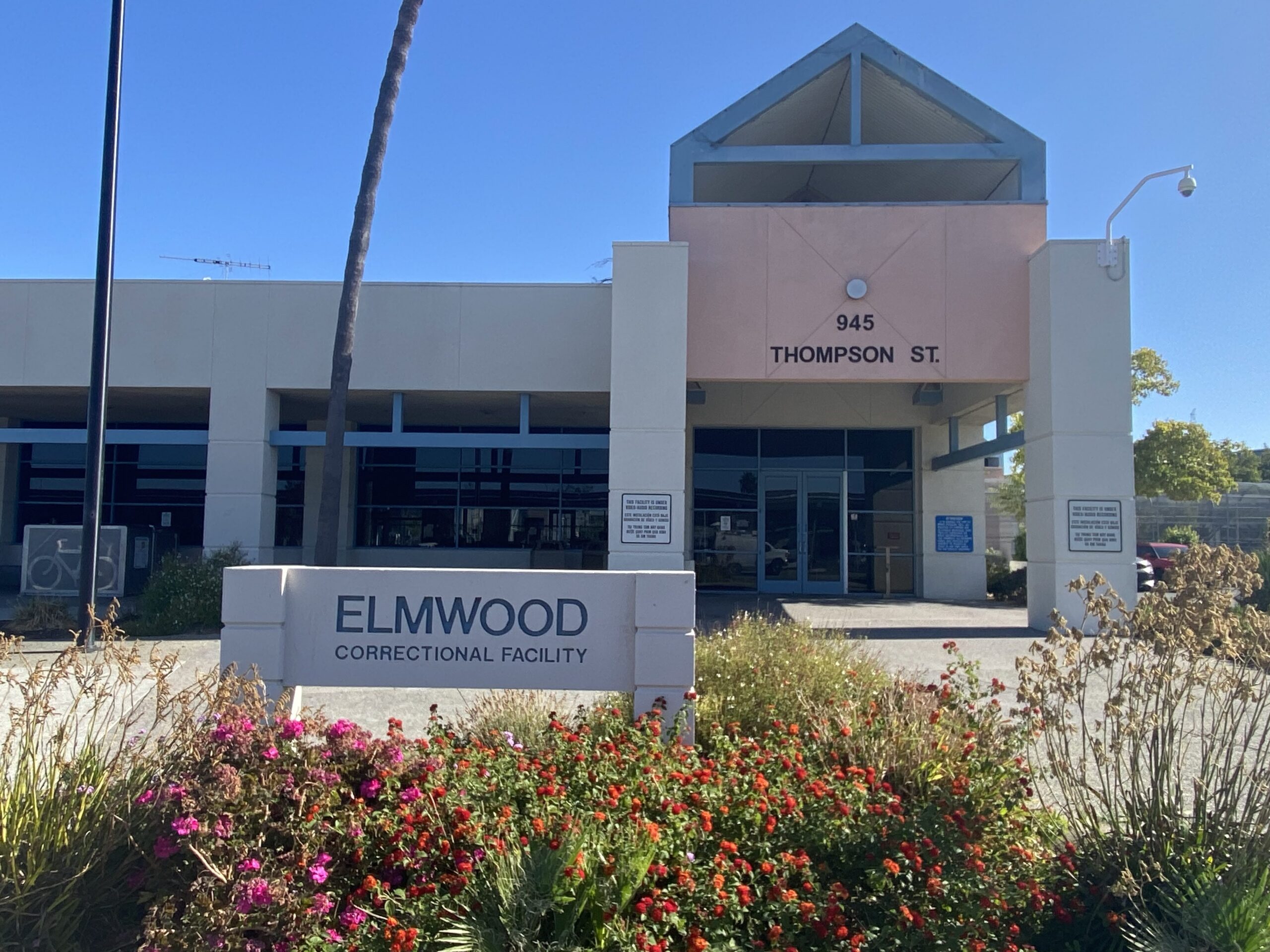
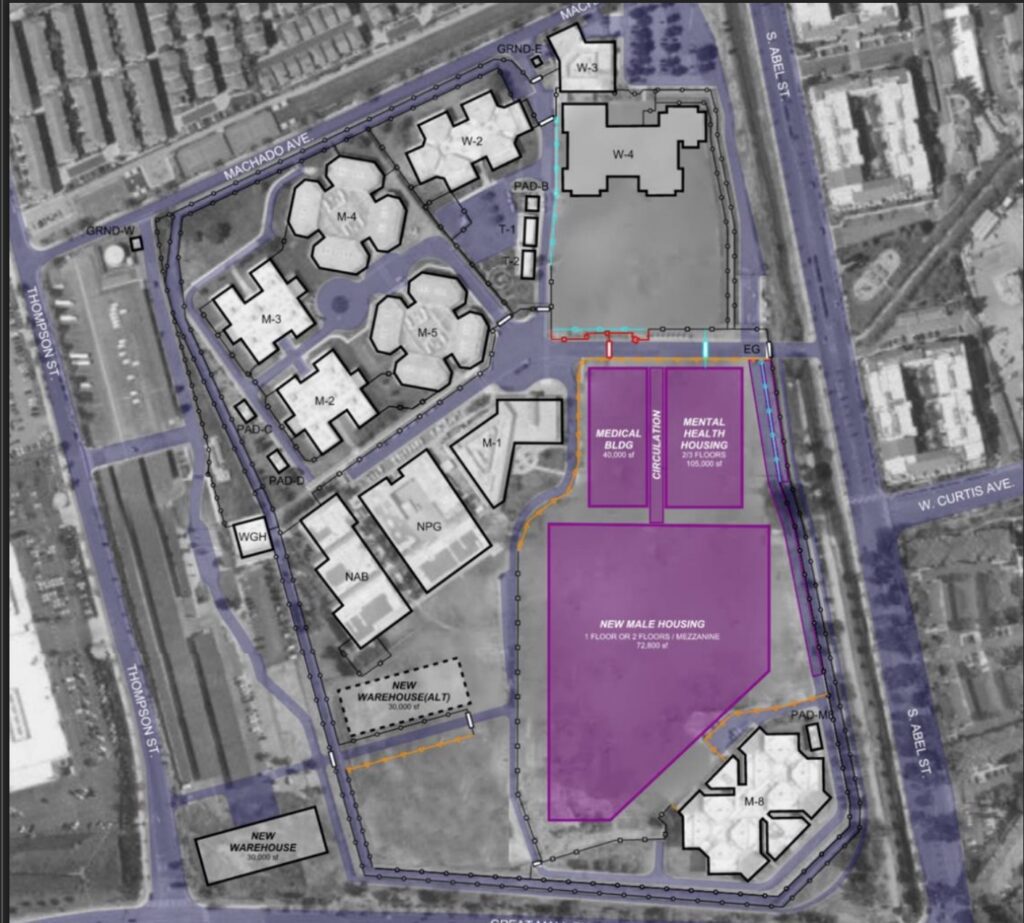
The Santa Clara County Board of Supervisors on Tuesday unanimously voted to proceed with a multistep plan to overhaul and modernize Main Jail North and Elmwood Correctional Facility. There are eight phases to the plan, with the first three phases slated for completion by 2034. Those phases include a decrease in the number of beds in the main jail; construction of a two-story 56,000-square-foot intake, booking and short-term housing building attached to main jail; building medical and behavioral health facilities at Elmwood; and a new male bed facility at Elmwood, demolishing the old location.
County officials said the plan is a replacement rather than an expansion, with supervisors placing a heavy emphasis on prioritizing medical and mental healthcare, along with rehabilitation and reentry services. One of the priorities is to reduce the main jail’s capacity by 1,011 beds, from 4,872 to 3,861, with the ultimate goal of eliminating an additional 404 beds once the project is completed.

Supervisor Susan Ellenberg, one of two current supervisors who sat on the board the last time the cost of a new jail was discussed in 2022, said the county cannot opt out of its duty to operate a jail.
“The county is legally required to operate a jail, and with that comes a moral obligation to ensure every person in our custody is safe, treated humanely and given a real chance at rehabilitation,” Ellenberg told San José Spotlight.
The board received a report from Deputy County Executive Consuelo Hernandez that outlined the jail facility transformation process. The cost has ballooned due to a lack of action, from $390 million in early 2022 to $689 million to $747 million by the end of 2022. The cost is now estimated to be between roughly $890 million to $1 billion.
That covers only the first three of eight phases the county has laid out over 15 years. The remaining five phases carry another $2.5 billion price tag, putting the full buildout cost at roughly $3.5 billion.
An estimated $392 million of the projected costs would be allocated toward the construction of new medical and mental health facilities at Elmwood, which would provide roughly 300 beds for people with behavioral health needs.
The county said Elmwood alone needs about $274 million in deferred maintenance over the next five years just to keep operating. The report also identified another $170 million in deferred maintenance at the main jail.
Residents remain strongly opposed to the decision, and want to see a stronger focus on preventive incarceration services instead of undergoing jail construction.
More than 50 people spoke during more than an hour of public comment at the meeting. Nearly all urged supervisors not to build. Raj Jayadev, executive director of Silicon Valley De-Bug, which has fought county jail proposals since 2019, said calling the Elmwood project a mental health facility obscures what it is.
“If it is in a jail, it is a jail,” Jayadev told San José Spotlight. “It’s not like you’re going to Good Samaritan. It’s within the confines of a jail that has some features to it that are speaking to mental health needs.”
Jayadev said splitting the program into phases makes the commitment look smaller than it is.
“It reduces the price tag, and I think it protects the culpability of the board,” he said. “It doesn’t contradict the idea that this was one coherent plan. They just cut it up.”
Indecision and delays
It’s not the first time the county has pitched mental health treatment as the centerpiece of its plans. Supervisors voted unanimously in 2020 to build a mental health facility instead of a new jail, then scrapped that plan in 2021 over concerns about timing and the county’s obligations under a pair of federal consent decrees.
This time, supervisors also authorized the county to initiate the Phased Adult Jail Facility Investment Plan, the first concrete step toward construction in years.
Ellenberg acknowledged the opposition and said the county needs to do more to reduce poverty, fund alternatives to incarceration and prepare people in custody for reentry. But she said its obligation doesn’t stop at the jail door.
“Today is not about an either-or situation,” Ellenberg said at the meeting. “We need to do everything we can to prevent people from entering the criminal legal system. When those investments are not successful, our obligation to care for people doesn’t end when they are incarcerated.”
Board President Otto Lee was also a supervisor when the jail proposal was last discussed in 2022. At Tuesday’s meeting, he cited the importance of acknowledging the past tragedies that took place within the county’s jails, highlighting the murder of Michael Tyree — a mentally ill man beaten by three correctional officers in 2015 — as a prime example of the county needing to do more.
“I have also wanted to have some sort of health facilities for those incarcerated. Michael Tyree was one of them, and I don’t want that to happen ever again,” he said.
All three officers were later convicted of murder, and Tyree’s death prompted a county investigation into the Sheriff’s Office.

Former state Sen. Jim Beall, who spent years pushing for mental health funding in Sacramento, said the county doesn’t have to choose.
“It’s not an either-or. We’ve got to have both,” Beall told San José Spotlight. “You’ve got to have treatment in the community and you have to have good, solid, practical treatment within the county jail.”
Supervisor Sylvia Arenas, who made the motion to move forward with the plans, called the report a starting point rather than a final plan. She said more community conversations and feedback from incarcerated people would be needed as the plan moves forward.
The county will refine the early phases and name members to a community leadership group that will help shape the design. Construction is years away, and the questions raised at the meeting over cost, staffing and reentry are far from resolved.
Rovina Nimbalkar, executive director of the National Alliance on Mental Illness in Santa Clara County, said the plan addresses a real need but won’t be judged by what gets built.
“You can build a state-of-the-art mental health facility, but the most important part is we need to have enough psychiatrists, clinicians, nurses, substance use professionals and peer support staff,” Nimbalkar told San José Spotlight. “Without them we will not accomplish what we are really hoping to do.”
She said the county laid out what the facilities will cost to build, but not what they will cost to run. She also questioned what will happen to these individuals upon release.
“I’m hoping that they’re looking into evidence-based models across the country and asking not only what happens when someone is incarcerated, but also what happens the day they leave,” she said. “It shouldn’t become a vicious circle of them coming back into the jail system again.”
Contact Gabriel Symkowick at [email protected] or @SymkowickGabe on X.

Leave a Reply
You must be logged in to post a comment.