


Santa Clara County has a new strategy for helping local families access childcare.
The Board of Supervisors on Tuesday unanimously approved the county’s Childcare Blueprint, which aims to expand childcare by addressing cost, access, workforce and facilities, especially in vulnerable communities. The plan, developed by the Santa Clara County Office of Children and Families Policy, is designed to strengthen how organizations support children and families, particularly those already connected to county services.
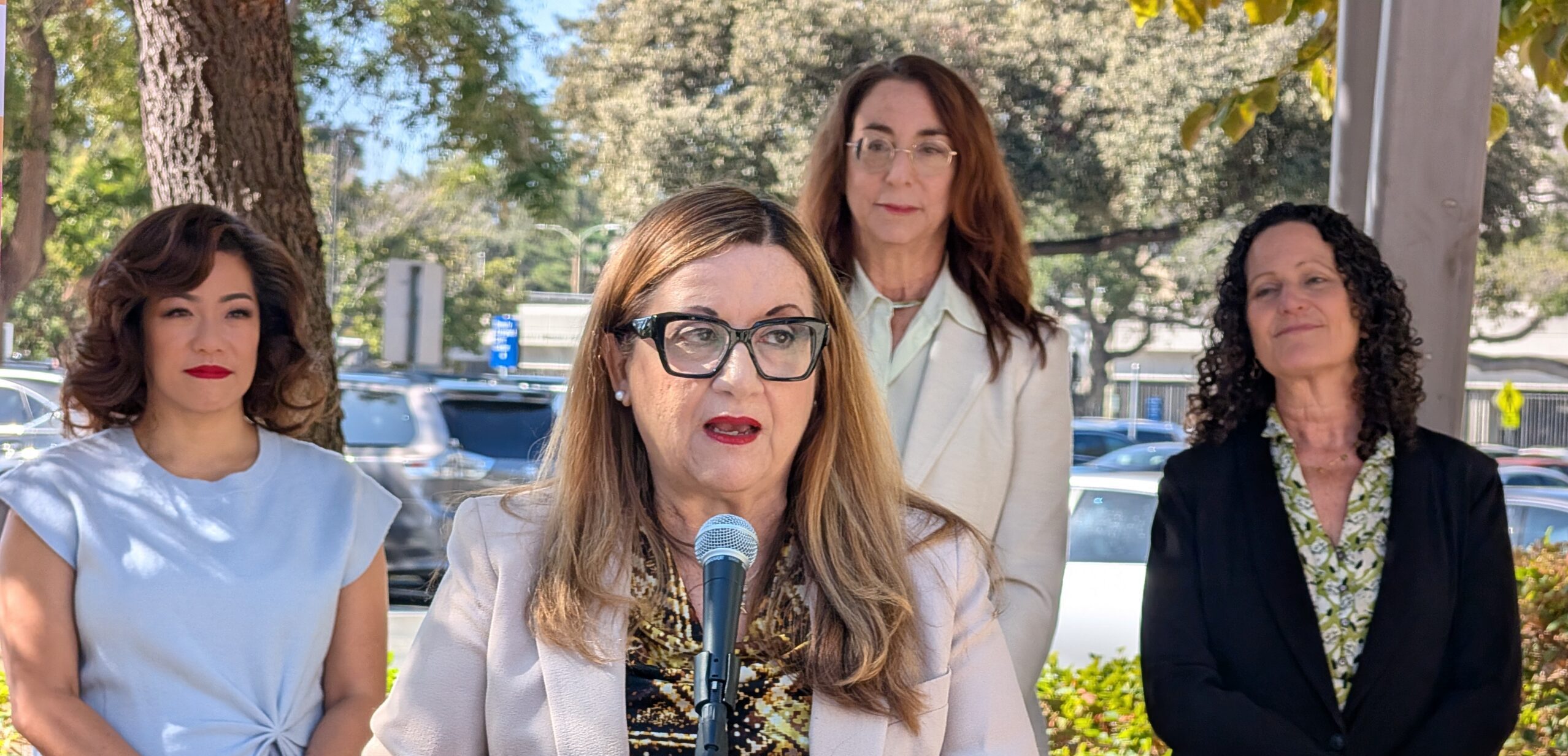
District 2 Supervisor Betty Duong said at a Monday news conference that the soaring cost of childcare, combined with the high cost of living, is pushing families to the breaking point — and the county must invest in raising wages for providers and expanding professional development.
“This blueprint is about building a county where the people who teach our kids, care for our families, run our small businesses and keep this valley moving can afford to raise their own families here too,” she said. “Investing in childcare means investing in our children, investing in our workforce and investing in the ability of working families to stay and thrive in the communities they call home.”
The county is working to advance compensation and strengthen the childcare workforce, and wants to increase the number of childcare facilities through capital investment and strategic site development to meet the community’s needs, especially for families with infants, toddlers and children with disabilities.
Although District 1 Supervisor Sylvia Arenas said she didn’t feel comfortable supporting the Childcare Blueprint due to the low number of parents surveyed for its roadmap, she still voted to move it forward. She pointed out that her district which encompasses South County is a childcare desert with an enormous need.
“Those are the folks who are at the lowest income levels,” she said at Tuesday’s board meeting. “They have the (childcare) voucher in hand, yet they’re not able to receive care. What are we doing for those families?”
Lynne Mobilio, assistant director with Clarity Social Research Group, said the people who participated in helping create the blueprint were representative and the researchers went deep with them. Clarity Social Research Group was contracted by the county and held 12 focus groups consisting of 95 people to help shape the plan’s strategies.
The group was a mix of parents and caregivers — including former foster youth, families facing housing insecurity and domestic violence, young mothers impacted by juvenile justice and child welfare systems and CalWORKs families, among others.
An action implementation committee will be created with a goal to maximize and prioritize current federal and state funding streams for childcare. Santa Clara County may also partner with San Mateo County, which recently released its own blueprint, on an advocacy plan to increase state investment in childcare.

District 4 Supervisor Susan Ellenberg wants to ensure the county utilizes its funding streams to the fullest.
“Are we leaving money on the table? Unfortunately, the answer is yes,” she told San José Spotlight. “San Mateo County just did a study of their different streams of funding for childcare. They are returning millions of dollars to the state every year. Awareness is the first step toward fixing it. Our county will do that same analysis and make sure that we are not returning unused dollars.”
In addition, Heidi Emberling, director of the children and families policy office, said the county went to childcare providers, healthcare partners and academic institutions that train childcare providers to explain their challenges.
“We told (our various partners) about current financial constraints because of the budget impacts of H.R. 1, and we asked them to develop goals, strategies and related actions that we could implement locally,” Emberling said. “Together, our community will align efforts to improve access to safe and nurturing childcare environments in which all children can thrive.”
Ellenberg said childcare is the infrastructure that supports a healthy economy.
“When parents cannot work, they’re more likely to experience housing or food insecurity, poor physical and emotional health,” she said. “Families who can’t work can’t afford to live here, and if we can’t keep young families in our cities and our county, then those cities will die.”
The median annual costs for childcare centers for infants and preschoolers in Santa Clara County are $30,399 and $23,652, respectively. Home-based care is $20,810 for infants and $19,990 for preschool-aged children. Subsidized care helped 10,801 county families with the costs of childcare in 2023. But even with the subsidies, only 13% of children ages 0 to 2 and 36% of children in qualified families received childcare.

Veronica Goei, executive director of Grail Family Services, said more childcare is needed in East San Jose.
“We have no openings in any of our settings. Everything is full with waitlists,” she told San José Spotlight. “The need is huge.”
Goei said childcare requires a mixed delivery system that includes center-based care, a network of licensed family childcare home providers and weekend childcare.
“A childcare system works when it provides quality choices that actually fit families’ lives,” Goei said. “When families cannot access affordable, reliable care, they may have to reduce their work hours, turn down work, leave the workforce or put their education on hold. Those impacts are felt not only by individual families, but across our local economy.”
Contact Lorraine Gabbert at [email protected].

Leave a Reply
You must be logged in to post a comment.