

|
Getting your Trinity Audio player ready...
|
When systems fail, people often turn toward each other.
In Santa Clara County, groups have been meeting each other’s needs through mutual aid efforts. Free meals, community gardens, medical supplies and rental assistance — these are all ways various groups are uplifting each other as social safety nets erode and more people find themselves in precarious situations.
“Mutual aid is a super defiant radical act,” Darcie Green, executive director at Latinas Contra Cancer, told San José Spotlight. “The idea that we keep each other safe, that we take care of each other — not just when systems are failing, but all of the time.”
Green has been cooking up ways to empower people to be each other’s social safety net, to provide for each other through community rather than just charity. It first started through organic WhatsApp channels with people asking for supplies, transportation and help with rent. Others pitched in or shared resources.
Her group then formed an effort called Apóyate South Bay to offer mutual aid on a larger scale. Latinas Contra Cancer created three overarching groups to meet the most pressing needs — health, housing and food.
In the health group, people provide wheelchairs, medical equipment, rides to appointments and more. In the housing group, people offer rental assistance and people supply groceries in the food group. The health group remains the most active due to the nonprofit’s advocacy work in the health sphere.
Mutual aid is rooted in the concept of solidarity, that everyone belongs to each other and their well-being is interconnected. Mutual aid is also an act of resistance toward systems that oppress people’s rights or freedoms, Green said. She points to examples such as the Black Panther Party, which created free medical clinics, food programs and legal aid to respond to the Black community neglect driven by systematic racism.
In addition to facilitating different mutual aid groups, the nonprofit also educates people on the purpose and historical need for solidarity.
“It really does have to be not only meeting each other’s basic needs, but the community education about who and what is to blame for you not having what you need to begin with,” she said. “And then mobilizing around that, doing something.”
The San Jose Peace & Justice Center is also a key player in convening groups that provide free services and offering community meeting spaces.
Groups such as San Jose Clothing Swap utilize the space to exchange clothing once a month and teach people how to mend their clothes. Food Not Bombs prepares meals in the kitchen and provides free food to homeless and low-income people every week at St. James Park.
For San Jose Peace & Justice Center board member Mike Paradela, one of the most pivotal functions of the decades-long institution during this time of crisis is the role it plays in educating people about historical movements.
“Having a huge emphasis on history education allows people to have more imagination about what they can do to fight for their communities in more sustainable ways,” Paradela told San José Spotlight.
Without the Peace & Justice Center, efforts to organize and offer mutual aid would be diminished, according to Kyle, an organizer with Silicon Valley Democratic Socialists of America (DSA) who didn’t want his last name printed for privacy reasons.
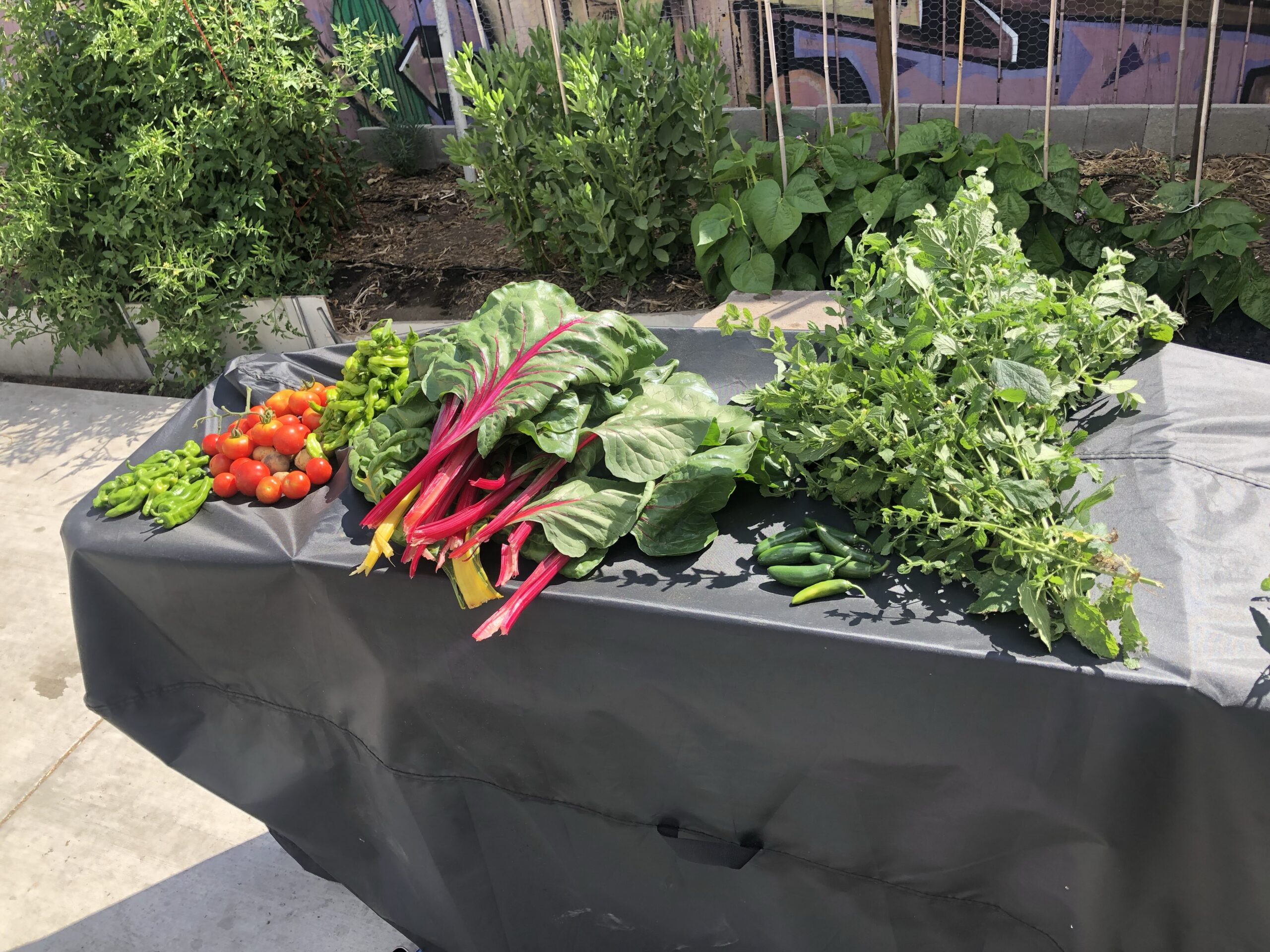
DSA partners with Food Not Bombs, runs multiple community gardens and a free store where members provide hygiene products, clothes and more. Last year, its gardens produced 500 pounds of peppers, and the produce is given to food banks and residents in need.
“We try to emphasize that mutual aid is for everyone, including our own members,” Kyle told San José Spotlight. 
He said he’s seen people leaning on each other more for resources as federal funds have dwindled and cities tighten their budgets, creating gaps in services. There’s been more people coming to their meal distributions and free store. He added that in times of crisis, community is vital for survival.
“Through Food Not Bombs, the community kitchen, it’s not just a way to provide food for people, it’s also for people to interact with each other, make friendships,” Kyle said. “The same thing with the gardens. It’s just as important that people are hanging out with each other as it is that we’re gardening.”
Contact Joyce Chu at [email protected] or @joyce_speaks on X.

Leave a Reply
You must be logged in to post a comment.