


|
Getting your Trinity Audio player ready...
|
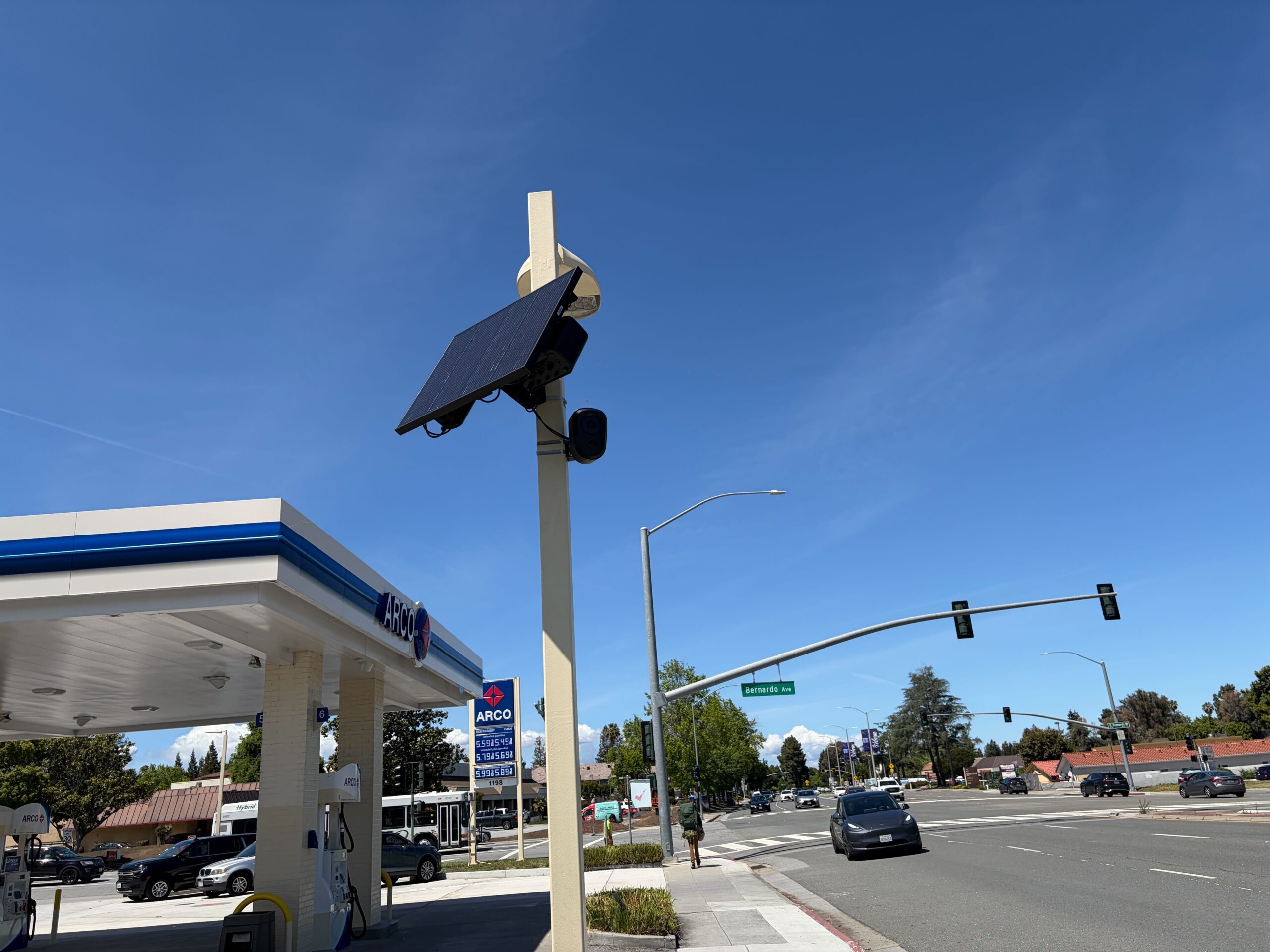
A heated debate over surveillance and public safety is unfolding in Sunnyvale, as residents fear license plate reader cameras could enable mass tracking — while city officials said the technology is critical to stopping crime.
The Sunnyvale City Council on Tuesday voted unanimously to continue using Flock Safety automatic license plate reader (ALPR) cameras, after a recent audit found no evidence its 20-camera system has shared data with federal immigration authorities. Councilmembers said they’re comfortable with the system, knowing information is automatically deleted after 30 days unless there is an active investigation. The decision follows growing concerns raised by residents and civil liberties groups about how the technology is used and who can access the data.
Mayor Larry Klein said the city is working to balance public safety with privacy concerns as it continues using the cameras.
“ALPRs have become an active solution. It’s not perfect, but hearing from some of the jewelry store owners tonight, it makes them feel safe,” Klein said in the meeting. “It makes their customers feel safer, changing their procedures and working with them, all that, but we will never have enough police officers to monitor and catch every stolen vehicle coming into the city.”
Sunnyvale first implemented the license plate reader system as part of broader effort to address property crimes and organized retail theft, including a series of violent robberies targeting jewelry stores last year. The incidents drew widespread attention and heightened concerns about public safety, prompting calls for stronger crime prevention tools.
Sunnyvale jewelry store owner Pavlinder Sigh said police warned him about a second attempted robbery days after an initial incident and wouldn’t have been able to do so without the ALPR system.
“Sunnyvale PD called me and let me know, ‘Six cars are on the way to you. Get prepared,'” he said in the meeting.
Public safety officials said the cameras helped identify suspect vehicles, track movements across jurisdictions and respond more quickly to crimes.
“It is difficult to quantify the level of hurt that families go through when they are victims of these crimes,” District 6 Councilmember Eileen Le said during the meeting.
Critics, however, said the technology poses broader risks to privacy and civil rights, warning it could enable mass surveillance and be misused despite safeguards.
Mariya Genzel, a Mountain View resident affiliated with Blue Turn Indivisible, a grassroots civic action group, said the debate is often framed as a tradeoff between safety and civil rights.
“We do not agree that privacy and safety are in opposition,” Genzel told San José Spotlight. “If you frame it that way, our safety actually loses — it’s just an illusion of safety that tools like this can sometimes appear to provide.”
The debate in Sunnyvale reflects a broader trend across Santa Clara County, where cities and the county are taking different approaches to automated license plate readers.
Mountain View turned off its system earlier this year after an audit found unauthorized federal access to city data. Los Altos switched off the national and statewide “”look up” setting after discovering it had been turned on without the town’s knowledge. Campbell ended it partnership with Flock, according to Councilmember Sergio Lopez. San Jose has restricted the use of the technology as a crime-fighting tool, including limits on how long data can be stored and who can access it. The city is also fighting multiple lawsuits over the system.
Sunnyvale officials said the system doesn’t use facial recognition and doesn’t collect personal identifying information. The system uses ALPR cameras to capture images of vehicles, including license plates, the make, color and location data, which can be searched by law enforcement during investigations.

Some councilmembers raised questions about how the system operates and its long-term use — and if there’s a better option than using Flock cameras. Vice Mayor Richard Mehlinger said he supports the system’s effectiveness, but remains skeptical of the company behind it.
Flock Safety officials have previously said the company’s customers are able to control who accesses their data.
“I believe these ALPRs are useful … They have stopped crimes and solve crimes, serious violent crimes that have caused serious harm to our community,” Mehlinger said in the meeting. “I believe that evidence is incontrovertible. I do not trust Flock as a vendor. I am going to just straight up say that.”
Sunnyvale officials said the system will continue operating with additional safeguards, including annual audits and increased oversight, with a reevaluation planned before the city’s contract expires in 2027.
“Even with strong policies and safeguards, bad actors don’t care about what’s legal,” resident Peggy Shen Brewster said over Zoom.
Contact Maryanne Casas-Perez at [email protected] or @CasasPerezRed on X.

Leave a Reply
You must be logged in to post a comment.