


|
Getting your Trinity Audio player ready...
|
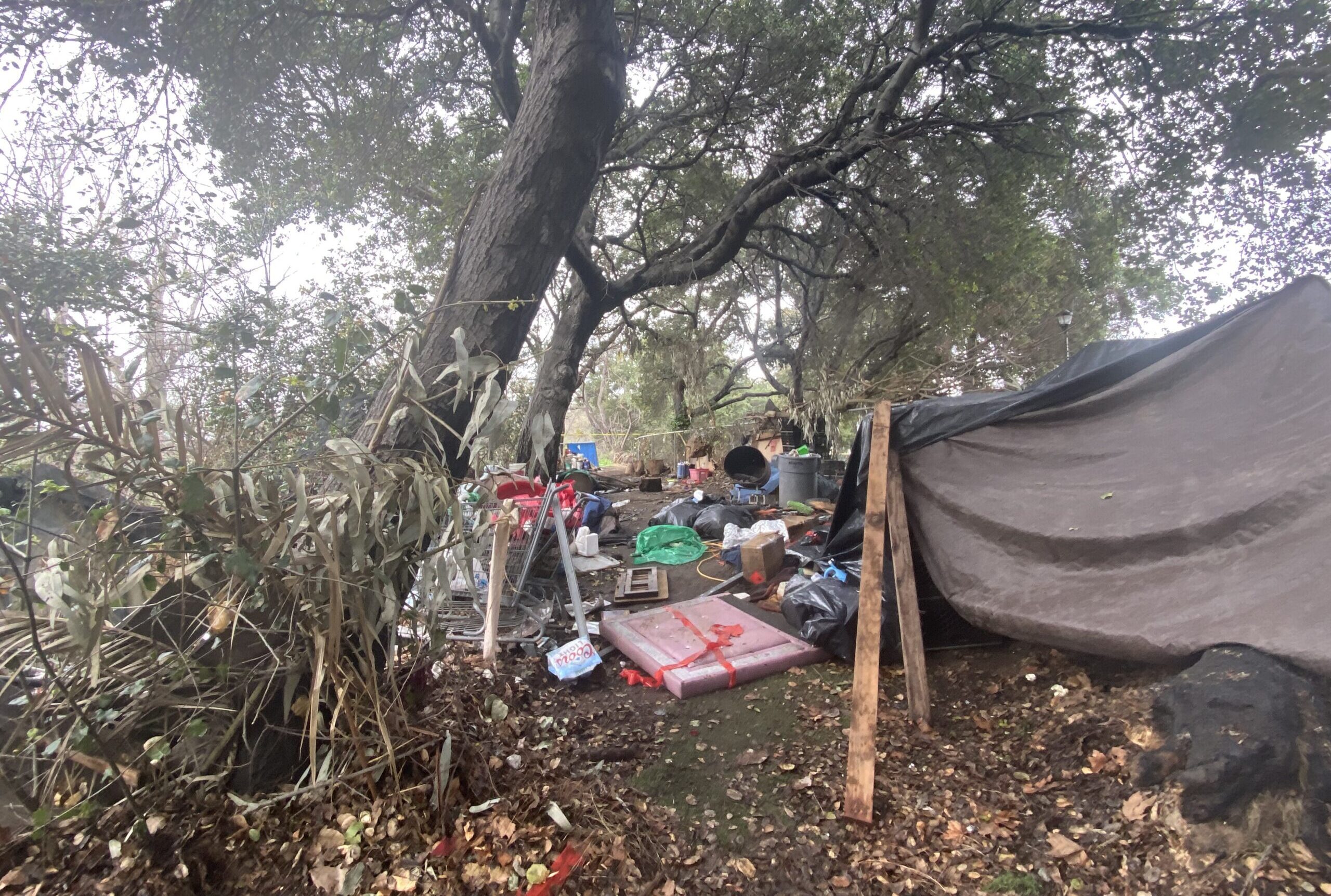
There is an increasingly popular story being told about homelessness: We’ve tried everything. We’ve spent billions of dollars. Nothing works.
It’s an understandable conclusion. Anyone who lives in Santa Clara County can see that homelessness remains painfully visible. Our latest count found 10,711 people experiencing homelessness on a single night. And for every household we help into stable housing, nearly two more become homeless.
But understandable doesn’t make it true.
Over the last five years, our community helped nearly 21,000 people move into permanent housing, nearly doubled emergency shelter capacity and increased the capacity of our Homelessness Prevention System by 75%.
Those aren’t signs of a system where nothing works. They are signs of something more frustrating: We know a great deal about what works, but the scale of the problem continues to exceed the resources available to solve it. And those resources are now under extraordinary pressure.
Federal homelessness policy is undergoing a dramatic shift. The U.S. Department of Housing and Urban Development (HUD) has explicitly moved away from the Housing First model — a highly studied, best practice approach that has guided much of our local system — toward treatment, recovery, transitional housing and self-sufficiency. The future of that shift is itself uncertain: A federal court set aside HUD’s 2026 Continuum of Care funding notice in August, and HUD now says the application deadline is no longer in force.
California remains a significant partner, including $900 million for the next round of Homeless Housing, Assistance and Prevention funding, but those dollars are still just one-time commitments and now come with new local matching and accountability requirements. Meanwhile, the pandemic-era resources that helped communities respond over the last several years have largely disappeared, and here in Santa Clara County, all $950 million of Measure A affordable housing bond funding has been committed.
This is not the moment to throw up our hands. It is the moment to have a plan.
The new 2026-2030 Santa Clara County Community Plan to End Homelessness is not a promise that homelessness will disappear by a particular date. It is something more useful: A roadmap for how we use increasingly scarce resources to achieve the greatest possible impact. And importantly, that roadmap is grounded in evidence.
The plan leads with prevention because preventing homelessness is both humane and cost-effective. Our local Homelessness Prevention System now serves nearly 2,700 households each year. A randomized controlled trial by the University of Notre Dame found that immediate financial assistance helps families remain housed and is a cost-effective way to address homelessness before it begins. That locally pioneered approach is now being taken to communities around the country as an innovative model that can work anywhere.
Think about the significance of that for a moment. At a time when we’re being told that nothing works, a homelessness intervention developed here in Santa Clara County has produced strong enough evidence that other communities across the U.S. want to replicate it.
The plan also recognizes something equally important: prevention alone isn’t enough.
It establishes concrete goals to increase prevention capacity by 20% and house 15,000 people by 2030, while maintaining our temporary housing capacity. It calls for continuing to build and preserve permanent housing, strengthening housing retention, improving access to behavioral health care, improving outreach to people living outside and creating better connections among housing, healthcare, employment and other systems.
This isn’t about choosing between housing and services, or prevention and shelter, or compassion and accountability. A functioning homelessness system needs all of them. It also needs to be willing to measure whether they work.
That may be the most important commitment in the entire plan. Its strategies are explicitly built around evidence-based practices, better service delivery, coordination across systems and maximizing the impact of available resources. Because the public is right to demand results.
We should be able to say how many people remained housed after receiving prevention assistance. How many people moved from temporary shelter into permanent homes. How many people retained supportive housing. Where disparities persist. And when something isn’t producing results, we should be willing to change it.
The choice facing our community isn’t between believing homelessness can be “solved” and accepting that it can’t. The real choice is whether we allow frustration to convince us to abandon approaches that demonstrably work — or use evidence, experience and accountability to make them work better.
We have spent over a decade building one of the country’s most coordinated homelessness response systems. The new community plan to end homelessness doesn’t pretend the next five years will be easy. In fact, it explicitly acknowledges that declining funding will make the work harder.
But scarcity makes strategy more important, not less. We know how to prevent many families from becoming homeless. We know how to help people move from the streets into homes. We know how to help people remain housed.
The question isn’t whether anything works. It’s whether we have the resolve to keep investing in the things that do.
San José Spotlight columnist Ray Bramson is the chief operating officer at Destination: Home, a nonprofit that works to end homelessness in Silicon Valley. His columns appear every second Monday of the month. Contact Ray at [email protected] or follow @rbramson on X.
Leave a Reply
You must be logged in to post a comment.